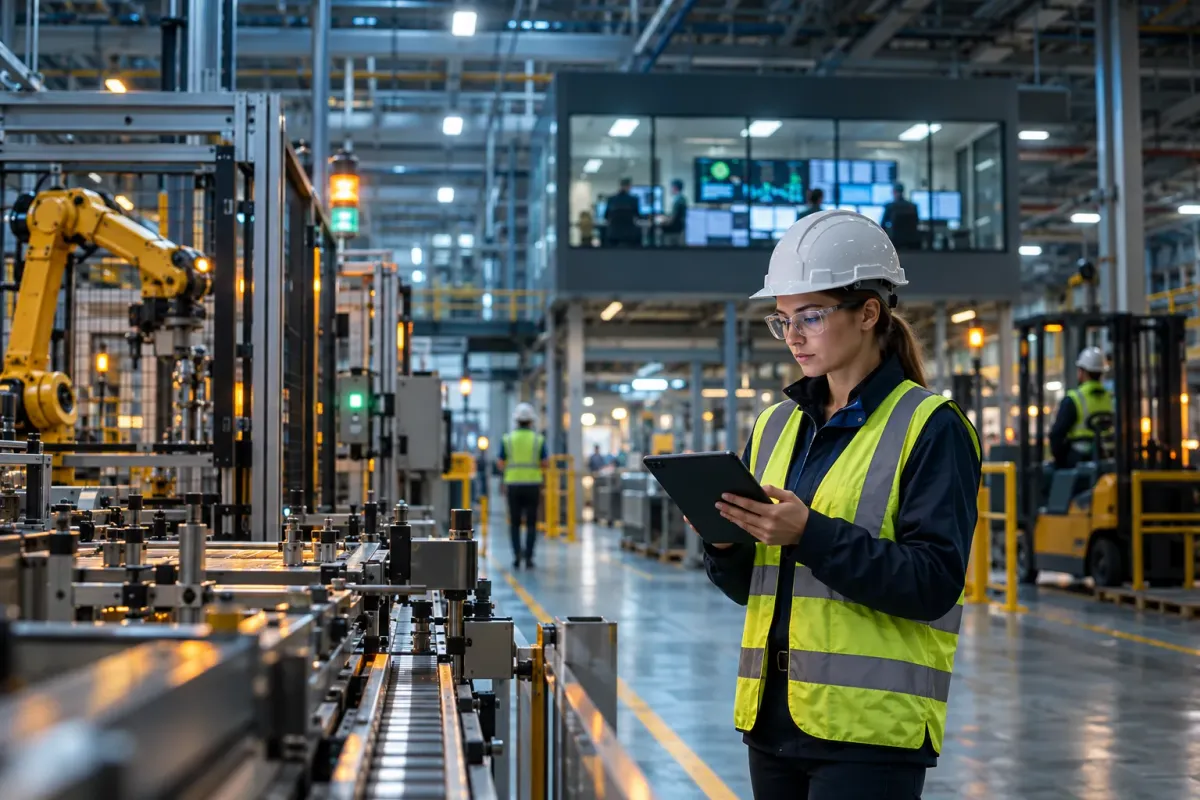
manufacturing industry trends
A new production system can promise faster decisions, but it can also expose an old controller, an undocumented connection, or a network nobody can safely change mid-shift. Read manufacturing industry trends by asking what each one demands from your plant before it reaches production.
Key Takeaways
- Every trend you read should be evaluated for what it demands from your plant floor, not for what it promises on paper.
- New production systems tend to expose weaknesses that already existed, such as unsupported controllers and undocumented network connections.
- Adopting technology mid-shift is rarely safe, so plan changes around your production schedule instead of around the vendor's timeline.
- A trend only creates value when your network, your legacy equipment, and your team are ready to support it.
- Asking what each change costs in uptime before it delivers in efficiency is the discipline that separates progress from IT Drag™.
The Deloitte 2026 outlook points to major shifts in manufacturing. A mid-size plant does not need to adopt every new tool. It needs to identify uptime risks, assign ownership, and choose a first move that does not put a live line at risk.
What the Deloitte 2026 Outlook Says, and What It Leaves Off the Page
The Deloitte 2026 manufacturing industry outlook describes a sector investing in smart manufacturing, exploring artificial intelligence (AI), and adapting to supply chain, workforce, and energy pressures. For your plant, those shifts depend on connected information systems, operational technology (OT), and clear ownership. Check whether your network and equipment can support a change without interrupting production.
The Five Trends Deloitte Names for 2026
Deloitte’s 2026 outlook coverage points to technology adoption alongside operating pressures that affect investment decisions. The practical themes are smart manufacturing, physical AI, workforce readiness, supply chain resilience, and energy demand. New equipment and software need reliable data, people who understand the process, and infrastructure that can support them.
Two data points show why these themes matter to plant leaders:
- Deloitte’s 2025 survey found that 80% of manufacturers planned to invest 20% or more of their improvement budgets in smart manufacturing initiatives, as summarized in Deloitte’s 2026 outlook coverage.
- Deloitte’s 2026 outlook coverage reported that the share of manufacturers planning physical AI deployment rose from 9% to 22% in two years.
Reading the Outlook Like a Plant Manager, Not an Analyst
A forecast tells you where investment may go, not whether a machine can exchange data with a new system or whether the production schedule can absorb a test. It also cannot name who will respond when a connection fails overnight. Those plant-level questions decide whether an initiative becomes a working process.
For each proposal, ask what production step it changes, what happens if the system becomes unavailable, and who approves a safe recovery. Treat the Andromeda Managed IT Services for Industrial/Manufacturing Clients as a way to assess the IT and OT support required, not as a reason to rush into a technology purchase.
The Gap: Your Plant Network, Your OT Perimeter, and Who Answers the Phone at 2 AM
The outlook cannot map your plant network, identify unpatchable production controllers, or show where office systems connect to machine networks. It cannot tell you whether an after-hours call reaches someone who understands the consequence of stopping a line. Those details decide whether a trend can be adopted safely.
Before a pilot, document the systems it touches, the production owner, the support path, and the rollback plan. That is how you prepare to act on manufacturing industry trends rather than just follow them as headlines.
Five Manufacturing Industry Trends, Each With the Risk It Creates on Your Floor
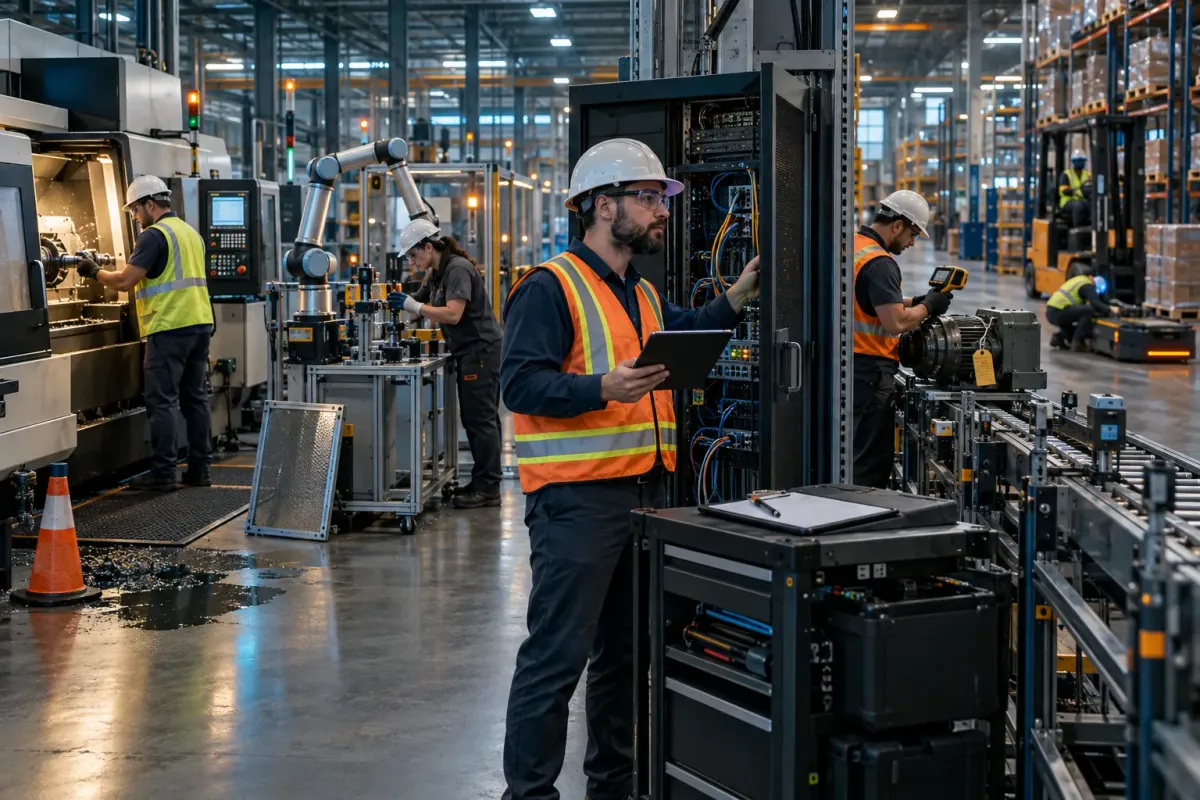
Each initiative has a potential operational benefit and a failure mode. Assign an owner before work begins. Use the first 90 days to establish current conditions, test one bounded change, and decide whether production can support a wider rollout.
The Andromeda Managed IT Services for Industrial/Manufacturing Clients can support manufacturing environments where IT systems and production operations must be considered together. Whatever the initiative, document how to pause or reverse a change if the floor is affected.
1. Smart Manufacturing Investment: New Systems, Old Machines That Cannot Talk to Them
Smart manufacturing connects production equipment, enterprise resource planning (ERP) systems, manufacturing execution systems (MES), and reporting tools so teams can use timely operating data. Older machines may not provide clean data, and a new connection can change how a controller communicates. A visibility project can then become a shift of troubleshooting.
Owner: Operations and the IT or engineering lead responsible for the connection. First 90 days: Choose one process, inventory its machines and interfaces, record available data, and test a read-only connection before changing machine controls.
2. Agentic AI and Physical AI Move From Pilot to the Plant Floor
Agentic AI can carry out sequences of digital tasks, while physical AI applies AI to machines or other equipment acting in the real world. A wrong recommendation or action can affect scheduling, quality checks, or equipment behavior. Keep early trials away from automatic production equipment control.
Owner: The process owner, with IT and controls engineering reviewing access, data, and safeguards. First 90 days: Select a low-risk task, define what the system may read or suggest, require human approval for action, and log results. Do not connect a pilot directly to a live control loop without a tested safety case.
3. Digital Twins, IoT Sensors, and Analytics That Depend on Clean Data
A digital twin is a digital representation of a physical asset or process. Internet of Things (IoT) sensors can supply operating data, but missing readings, mismatched timestamps, or inconsistent equipment labels make analysis unreliable. A precise-looking dashboard can still reflect bad source data.
Owner: The production or maintenance lead who understands the process, supported by the data and IT team. First 90 days: Select one asset, check sensor readings against operator observations, document units and naming conventions, then set a data-quality threshold before building broader analytics.
4. Cybersecurity and OT Risk: Ransomware That Stops a Line, Not Just a Laptop
Ransomware affecting OT can interrupt machine access, production scheduling, or the systems operators need to keep work moving. Legacy equipment may be difficult to patch, and a flat network can let a problem spread beyond its starting device. Response plans must account for safe operation, not just restoring office files.
Owner: IT security, plant operations, and the people responsible for controls. First 90 days: Map connections between business and production systems, confirm backups and recovery steps, identify machines that cannot be patched, and rehearse who makes production decisions during an incident.
5. Supply Chain Pressure, Tariffs, and Reshoring: Resilience Demands Visibility
Changing suppliers, sourcing locations, or input costs can affect material availability and delivery commitments. The National Association of Manufacturers’ (NAM) 2025 third-quarter outlook survey found that 78% of manufacturers named trade uncertainty as their top concern and expected input costs to rise an average of 5.4% over the next year. Timely inventory and supplier information helps, but disconnected systems can leave planners with stale records.
Owner: Supply chain and finance, with operations confirming the production impact of shortages. First 90 days: Identify critical materials and single-source dependencies, check how often inventory and supplier data are updated, and agree on an escalation path when a delay threatens the schedule.
IT and OT Readiness: The Precondition Every Trend Assumes
A new system cannot protect production if your plant network hides connections, equipment, or ownership gaps. Information technology (IT) and operational technology (OT) increasingly share data, but have different uptime and safety requirements. A business system outage can delay orders; an unsafe change to a machine connection can interrupt a live process. Before adding tools, establish which systems communicate, who approves changes, and how your team restores service if a test fails.
Why Flat Plant Networks and Unpatchable Controllers Block Every Initiative
Many plants have equipment that cannot be patched without vendor approval, a production window, or a replacement plan. On a flat network, office devices and machine controllers may share paths, making it difficult to contain a compromised laptop or troubleshoot a failing connection. New software can add traffic and access points without resolving those risks. Legacy equipment is not inherently wrong, but its limits must be visible before it connects to a new system.
- No current inventory of controllers, servers, and network connections
- Unknown paths between office systems and production equipment
- No agreed owner for changes affecting both IT and OT
- Recovery steps that have not been checked with operations
Segmentation, Monitoring, and Patching: What Readiness Actually Requires
Readiness starts with a network map showing which systems need to communicate and which should stay separated. Segmentation limits unnecessary paths between business systems and production equipment; monitoring helps your team notice unusual activity or a connection failure. Plan patching equipment by equipment: apply updates where supported, and document safeguards where controllers cannot be changed safely.
Andromeda Managed IT Services for Industrial/Manufacturing Clients can help document dependencies and coordinate changes around production requirements. Start with a joint review involving operations, controls, and IT, then prioritize risks, maintenance windows, and recovery responsibilities.
The Workforce Reality: Retiring Experts and Undocumented Process Knowledge
When an experienced maintenance technician retires, the plant can lose informal knowledge about machine behavior, safe restart sequences, vendor contacts, and workarounds. New monitoring or analytics cannot replace that knowledge unless the process and its exceptions are recorded. Ask experienced staff to walk through critical equipment and document what they check before restarting production.
“A network map shows connections. A usable operating record also explains who can change them, when, and how the plant recovers.”
Support must preserve that record and route incidents to people who understand production impact. Andromeda Managed IT Services for Industrial/Manufacturing Clients can coordinate support for IT systems and plant operations, with changes planned around the floor rather than treated as routine office maintenance.
The Manufacturing IT Maturity Ladder: Find Your Plant, Take the Next Rung
A maturity ladder helps you choose a practical next step instead of treating every proposed project as urgent. Place your plant according to what is documented and repeatable today, not what is planned or promised. Modern business software does not remove dependence on undocumented network changes or recovery steps. Use the table to identify the current pattern and focus budget on the next rung.
| Rung | What you see | Next operational focus |
|---|---|---|
| 1. Break-fix and flat networks | Recurring outages, limited equipment records, unclear paths between office and production systems | Inventory critical systems and document connections |
| 2. Stabilized and documented | Common issues have owners, recovery steps are recorded, changes follow a planned process | Close remaining support and recovery gaps |
| 3. Secured and compliance-ready | Access, patching exceptions, backups, and security responsibilities are documented | Test controls and prepare evidence against applicable requirements |
| 4. Data-driven and modernizing | Production data has defined owners and quality checks, and pilots have bounded scope | Expand only after results and recovery procedures are reviewed |
Rung 1: Break-Fix and Flat Networks
At this rung, support starts after a failure, and the plant may lack a dependable map of systems or connections. A network change can affect equipment beyond the request because dependencies are unclear. Start with production assets and connections, then record who approves changes and handles recovery.
Rung 2: Stabilized and Documented
Recurring problems have owners, critical systems are recorded, and staff can find current recovery instructions. Document machine and server dependencies, vendor contacts, backup status, and approved maintenance windows. This groundwork makes support more predictable, but does not replace security controls or testing.
Rung 3: Secured and Compliance-Ready
Access is reviewed, supported devices receive planned updates, and equipment that cannot be patched has documented safeguards. Check recovery plans with operations, not only IT. If customers, contracts, or assessments require compliance evidence, assign an owner to keep records current.
Rung 4: Data-Driven and Modernizing
The plant can assess new tools against known system dependencies, data quality, and production safeguards. Pilot projects have a process owner, a defined boundary, and a safe way to stop or reverse changes. Modernization is a sequence of controlled decisions, not a single technology purchase.
Sequencing When Budget Is Limited: What Comes First, Second, Third
When funds are constrained, prioritize by production consequence. First, stabilize systems and document connections that could interrupt a shift. Second, address security and recovery gaps, including patching exceptions and backup checks. Third, fund a narrowly scoped data or automation pilot only when the plant can support it.
- Name the production owner and IT owner for each change.
- Confirm the maintenance window and recovery steps.
- Choose one measurable operational outcome before expanding scope.
Andromeda Managed IT Services for Industrial/Manufacturing Clients can help assess your plant’s current rung and sequence support around production requirements. The next investment should address the constraint making every other project harder.
What This Looks Like on a Real Plant Floor
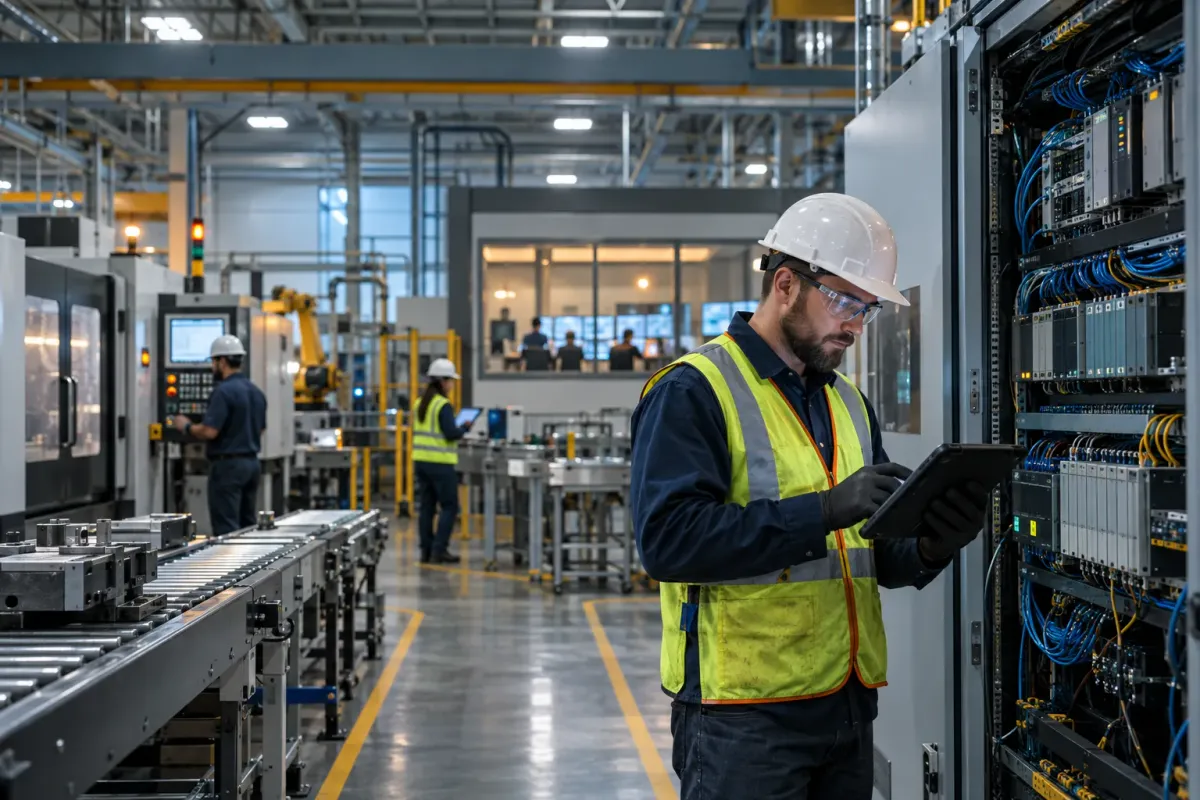
A useful plan changes what happens during an ordinary shift: fewer recurring disruptions, clearer ownership, and documented steps when a system needs attention. You do not need to adopt every new tool at once. Start with a measured baseline, an accountable owner, and enough time to see whether a change works under actual operating conditions.
Case Example: A Chicagoland Multi-Site Manufacturer Cuts IT Issues by Half
In a documented case study, a Chicagoland multi-site manufacturer saw roughly a 50% decrease in IT issues. This result is specific to that organization, not a typical-results promise. Tracking issue patterns and addressing root causes lets leaders see whether day-to-day support is becoming more stable.
Set a baseline before making changes. Track recurring tickets, production interruptions tied to technology, time spent on manual workarounds, and unresolved recovery questions. Review the trend with operations so a lower ticket count does not hide a problem that has moved onto the floor.
Your 90-Day First Moves, Trend by Trend
Use the first 90 days to turn a proposed initiative into a bounded operational decision. Document systems, owners, and current production impact, then select one change that fits the plant’s readiness. Test it within an agreed scope and review the result with the people responsible for the process.
For AI or analytics, confirm data access, human review, and a safe stop condition before testing. For security work, prioritize recovery responsibilities and equipment that cannot be patched. For supply chain visibility, check whether planners’ information is current enough to support decisions. Andromeda Managed IT Services for Industrial/Manufacturing Clients can support planning where IT and production requirements meet.
The practical goal is a plant with known dependencies, named owners, and changes sequenced around uptime. To discuss your starting point, schedule a 30-minute discovery call. If you are not ready to talk, use the IT Drag™ Calculator to identify inefficiencies your team may be absorbing each day.
Frequently Asked Questions
What are the biggest manufacturing industry trends right now?
The biggest manufacturing industry trends for 2026 are smart manufacturing, physical AI, workforce readiness, supply chain resilience, and energy demand. Deloitte's 2026 outlook highlights these five themes. For your plant, each one depends on connected systems, operational technology (OT), and a named owner before any tool reaches the production floor.
What does the Deloitte 2026 manufacturing industry outlook actually say?
The Deloitte 2026 manufacturing outlook describes a sector investing in smart manufacturing, exploring AI, and adapting to supply chain, workforce, and energy pressures.
What new technology is changing manufacturing the most?
Smart manufacturing technology is driving the largest change, connecting production equipment, ERP systems, manufacturing execution systems (MES), and reporting tools so teams can act on timely operating data. Physical AI and IoT sensors are close behind, but all of them depend on clean data, reliable networks, and machines that can share information safely.
How does a mid-size manufacturer adopt AI without disrupting production?
A mid-size manufacturer should start AI with one low-risk task, define what the system may read or suggest, and require human approval before any action. Keep early trials away from live equipment control, log the results, and document a rollback plan before the pilot ever touches a running line.
Where does AI fit on a factory floor, and where does it not?
AI fits on the factory floor for scheduling, quality checks, and analytics, where a wrong recommendation can be caught by a person. It does not belong directly in a live control loop without a tested safety case. Agentic AI carrying out digital task sequences is a safer starting point than AI acting on machines.
Why do smart manufacturing projects fail on older equipment?
Smart manufacturing projects fail on older equipment because legacy machines may not provide clean data, and a new connection can change how a controller communicates. A visibility project can turn into a shift of troubleshooting. Test a read-only connection first and inventory every interface before touching machine controls.
What should a plant document before piloting a new manufacturing technology?
A plant should document the systems a pilot touches, the production owner, the support path, and the rollback plan before work begins. That paperwork answers the questions a forecast cannot: who responds when a connection fails overnight, and how production recovers safely without putting a live line at risk.