
are managed IT services secure enough for building materials manufacturing facilities with ransomware threats
A ransomware incident can stop a building materials line while orders, dispatch, and shipping wait on systems that no longer work. The question, are managed IT services secure enough for building materials manufacturing facilities with ransomware threats, has a conditional answer: only when the provider can protect production technology, respond quickly, and account for the risk its own access creates.
Key Takeaways
- Managed IT can be secure enough for building materials manufacturing, but only when the provider covers both office systems and operational technology on the production floor.
- Ransomware risk grows where flat networks let a single infected laptop reach machine controllers, order systems, and shipping schedules at the same time.
- Response speed matters in production terms, and Andromeda's published median ticket response of 12.0 minutes reflects the accountability a plant should expect.
- Layered controls such as EDR, which stands for endpoint detection and response, and Zero Trust reduce the chance that one compromised credential stops a shift.
- A strong provider will also acknowledge the risk of its own access, document its safeguards, and support compliance expectations like CMMC and NIST.
Many plants have legacy controllers and narrow maintenance windows. Security changes must account for both. Andromeda Managed IT Services for Industrial/Manufacturing Clients supports manufacturing environments where protection and production schedules have to be considered together.
The Direct Answer: When Managed IT Is and Is Not Secure Enough for a Building Materials Plant
The Short Verdict for Plant Owners and CFOs
Quick answer: Managed IT can reduce ransomware risk, but a generic help desk, antivirus, and an annual security review are not enough for a building materials plant. To decide whether are managed IT services secure enough for building materials manufacturing facilities with ransomware threats describes your situation, ask whether the provider monitors endpoints, controls account access, segments plant and office networks, and has a documented incident response process.
That standard matters because an outage can affect more than office computers. A compromised server or network connection may disrupt production scheduling, weigh scales, shipping records, or the systems employees use to coordinate a shift. Andromeda Managed IT Services for Industrial/Manufacturing Clients is built around manufacturing IT and operational technology, rather than treating a plant like an office with a larger network.
Why Ransomware Groups Target Building Materials Manufacturers Specifically
A plant under pressure to fill orders may have limited time to absorb an outage. Attackers look for organizations where interrupted operations create urgency, while production networks may include older equipment that cannot be patched on a standard schedule. The risk is not proof that every building materials manufacturer is a target. It is a reason to plan for threats to business systems and production operations together.
Industrial Cyber For a building materials business, the practical concern is a disruption that travels from email or file systems into order processing, production coordination, or shipping. A provider should understand those dependencies before changing access or network settings.
The Uncomfortable Truth: Attackers Break In Through MSPs Like Ours
An MSP has administrative access that helps it support client systems. If attackers compromise that provider’s accounts or tools, they may try to use the access to reach multiple customers. Managed IT does not remove third-party risk. It adds a relationship that needs its own access controls, monitoring, and clear accountability.
Ask how the provider protects privileged accounts, separates customer environments, records administrative activity, and handles a suspected compromise in its own systems. The question are managed IT services secure enough for building materials manufacturing facilities with ransomware threats cannot be answered by naming a security product. You need to know who can reach your systems, what activity is monitored, and who contacts your team during an incident.
How Ransomware Actually Gets Into a Building Materials Facility
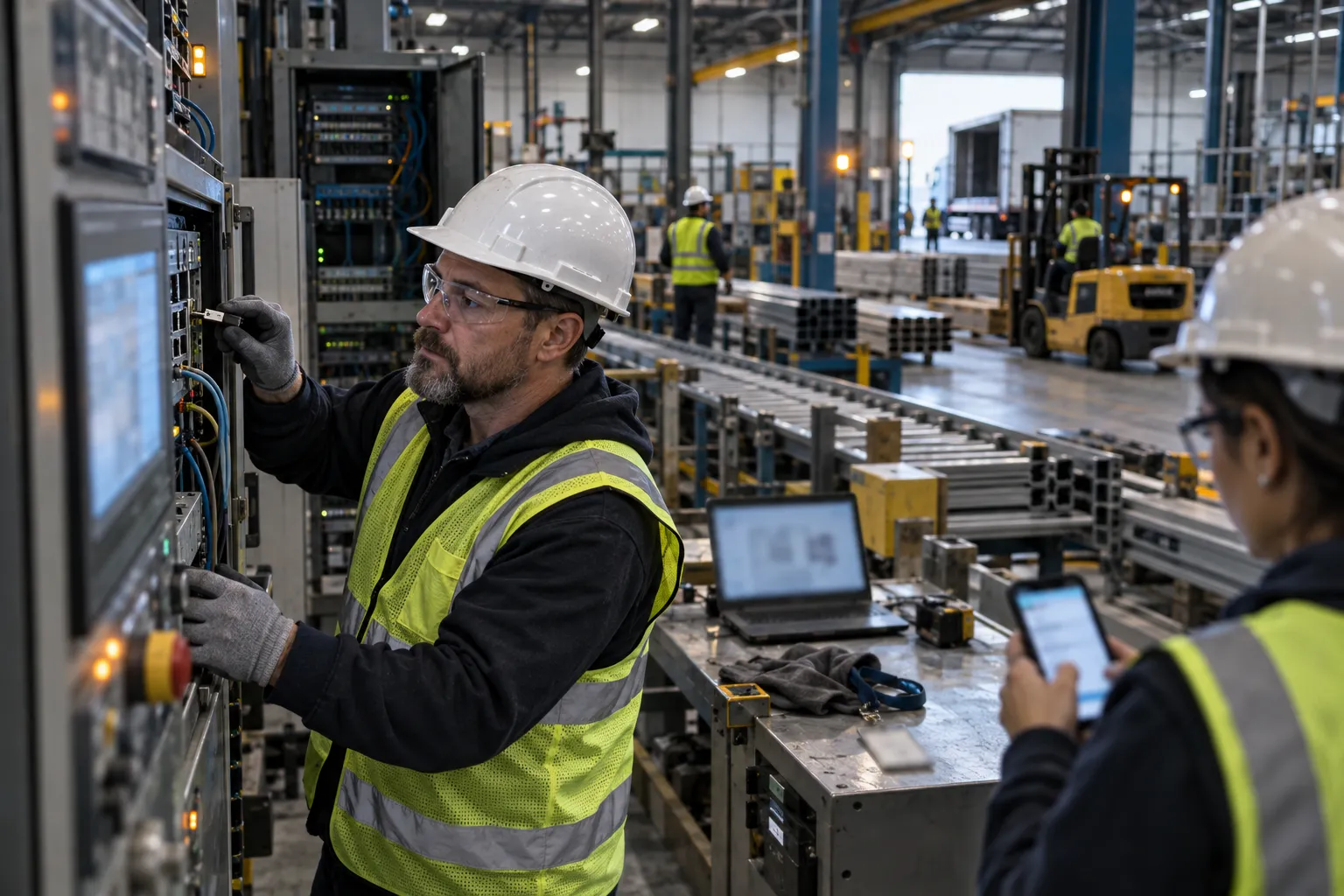
Entry Vectors on the Production Floor: Exposed Interfaces, Phishing, and Stolen Credentials
Many ransomware incidents begin with an ordinary weakness, not a sophisticated attack on a machine controller. An exposed remote access interface, a convincing phishing message, or a stolen password can give an intruder a starting point. From there, attackers may seek broader access to servers, shared files, user accounts, and systems connected to plant operations.
Watch for warning signs that deserve investigation:
- Remote access that remains open without a current business need
- Shared administrator accounts or passwords reused across systems
- Unexpected login activity from unfamiliar locations or devices
- Office and production networks with few limits on communication
Why Antivirus Alone Fails Against Modern Ransomware
Antivirus can identify known malicious files, but ransomware activity may involve stolen credentials, harmful scripts, or legitimate tools used in unusual ways. A single endpoint product cannot show whether an account is behaving abnormally across the network or stop every path between office systems and operational technology (OT), the equipment and systems that support production.
Building materials facilities need layered safeguards, including endpoint detection and response (EDR), which watches devices for suspicious behavior, along with access controls and network monitoring. That activity measure is not a promise that every attack will be stopped.
The Patching Treadmill Is Not a Security Strategy
Unpatched software can leave a known opening, but patching every production-connected device immediately is not always safe or feasible. A programmable logic controller (PLC) or supervisory control and data acquisition (SCADA) system may depend on a specific software version, vendor support, or a planned maintenance window. Applying a change without testing can create production risk.
Security work should identify exposed systems, prioritize updates by risk, and document exceptions when a patch cannot be applied. For equipment that cannot be updated, the provider should explain how access is restricted and how the system is monitored. The goal is to manage the exposure, not to pretend the patch queue can disappear.
Double Extortion and Repeat Attacks: Why Recovery Is Not the End
Some ransomware groups steal data before encrypting systems, then threaten to publish the stolen information. Restoring files may return systems to service, but it does not resolve the risk of exposed employee, customer, or business data. A recovery plan needs to address evidence preservation, account security, communication responsibilities, and how the initial access route will be closed.
Ask whether incident procedures cover both restoration and data exposure, and whether backup access is separated from ordinary user accounts. The question are managed IT services secure enough for building materials manufacturing facilities with ransomware threats also depends on what happens after detection: who leads response, how production priorities are considered, and what prevents the same route from being used again.
The Manufacturing-Grade Bar: What a Managed IT Provider Must Actually Deliver
A security plan for a building materials plant has to protect business systems without treating production equipment like office computers. That means controlling access, detecting suspicious activity, limiting how threats can move, and planning changes around equipment requirements and production windows. A provider should be able to explain who owns each control, how it is monitored, and what happens when it detects a threat.
Andromeda Managed IT Services for Industrial/Manufacturing Clients applies manufacturing-focused IT and operational technology support to these requirements. The name of a security product is not enough. Ask for the operating process behind it.
The Layered Security Stack Explained Layer by Layer
One missed alert should not leave the plant exposed. Endpoint detection and response (EDR), access controls, web filtering, and antivirus serve different purposes, so the provider should show how those controls work together and how alerts reach a technician. Blocking activity is a measure of observed threats, not a guarantee that an attack will be stopped.
Use the layers to test whether the provider can describe both prevention and response:
| Control layer | What it should do | What to verify |
|---|---|---|
| Endpoint detection and response | Identify suspicious activity on computers and servers | Who reviews alerts and escalates confirmed threats? |
| Identity and access controls | Limit account privileges and reduce misuse of stolen credentials | Are administrative accounts protected and activity recorded? |
| Web filtering and antivirus | Block known harmful destinations and malicious files | How are detections investigated and resolved? |
| Network monitoring | Help identify unusual traffic between business and plant systems | Can the team isolate affected systems without broad disruption? |
Protecting Legacy PLCs, SCADA, and MES Without Ripping and Replacing
A legacy programmable logic controller (PLC), supervisory control and data acquisition (SCADA) system, or manufacturing execution system (MES) may be too sensitive for routine patching. Protection can still improve without replacing the equipment. Network segmentation separates systems into controlled zones, while allowlisting restricts which applications or devices may communicate with protected equipment.
The provider should map necessary connections before applying restrictions. A controller may need to exchange data with a specific engineering workstation or production server, but it should not have broad access to office devices. Documented exceptions and monitoring matter, especially when a machine cannot be patched or taken out of service.
Change Sequencing Around Production Windows
A security update applied at the wrong time can interrupt a production run or affect a system that depends on a particular software version. The provider should inventory system dependencies, coordinate with operations and maintenance, test changes where practical, and schedule work during approved maintenance windows. If a change cannot wait, the plan should name the operational risk and the person authorizing it.
Ask how emergency changes are handled, how rollbacks work, and where completion is recorded. Andromeda Managed IT Services for Industrial/Manufacturing Clients sequences IT work with production requirements rather than assuming every system can be changed on the same schedule.
Your Own Backups Are the First Thing Attackers Target
Backups are useful only if attackers cannot readily alter or encrypt them along with production data. Keep recovery copies isolated from ordinary network access, restrict who can administer them, and monitor changes to backup settings. A backup report showing successful jobs does not prove that the plant can restore the systems it needs.
Test restoration of representative files and systems, record how long recovery takes, and confirm which dependencies must return first for production to resume. Include order data, shared files, and relevant manufacturing systems in the recovery plan. A tested, isolated backup gives your team a defined recovery path, not an assumption.
The Evaluation Checklist: Questions to Ask Before You Sign or Renew an MSP Contract
A provider’s proposal should make security responsibilities and response expectations verifiable. Ask for written answers, not just a list of tools: who monitors alerts, who can access your systems, how incidents are escalated, and how the team coordinates with production. If you are evaluating are managed IT services secure enough for building materials manufacturing facilities with ransomware threats, assess the service process as carefully as the security stack.
Security Stack and SLA Questions With the Answers That Should Satisfy You
Use these questions to establish what the contract covers and what evidence the provider can supply. Andromeda Managed IT Services for Industrial/Manufacturing Clients is one example of a manufacturing-focused service to evaluate against these criteria.
| Ask the provider | A useful answer includes |
|---|---|
| Who reviews security alerts, and at what times? | Named coverage, escalation steps, and a way to reach a responsible technician. |
| What does the service-level agreement (SLA) measure? | Defined response and resolution measures, their business-hour rules, and how performance is reported. |
| How is the provider’s own access controlled? | Protected administrator accounts, customer access boundaries, and records of privileged activity. |
| How are security changes coordinated with operations? | Documented approvals, maintenance windows, and escalation when a change could affect production. |
Response Metrics That Actually Mean Something (With Real Numbers)
A response-time figure only helps if you know what starts the clock and what happens after the first reply. Andromeda reports a 12.0-minute median ticket response time, 97% of issues resolved within 8 business hours, and an average time to live tech phone pickup of 1 minute 34 seconds. Ask for the reporting period, definitions, and whether security incidents follow a separate escalation path. A fast acknowledgment is not the same as containment or recovery.
Cyber Insurance Questionnaires, NIST Alignment, and the Co-Managed Option
Before renewing, compare your provider’s evidence with the controls requested by your cyber insurance questionnaire. Ask how the provider maps safeguards to the National Institute of Standards and Technology (NIST) framework, records exceptions, and helps prepare for an audit or assessment. Andromeda’s M*AR*S™ stack blocks 100+ attacks per month per endpoint and more than 300,000 attempted attacks per month across the client base. Treat that as reported blocking activity, not a guarantee of prevention.
Co-managed IT can suit a plant with an internal IT lead who needs added security operations or manufacturing expertise. Andromeda Managed IT Services for Industrial/Manufacturing Clients can also be assessed for defined responsibilities, escalation ownership, and reporting.
What to Weigh Before Committing
Pros
- Documented monitoring and escalation can make accountability clearer.
- Manufacturing experience can help align security work with production needs.
Cons
- A provider relationship creates third-party access that must be governed.
- Reported response metrics do not prove that every incident will be contained quickly.
What Recovery Really Looks Like: A Midwest Manufacturer's 72-Hour Outage
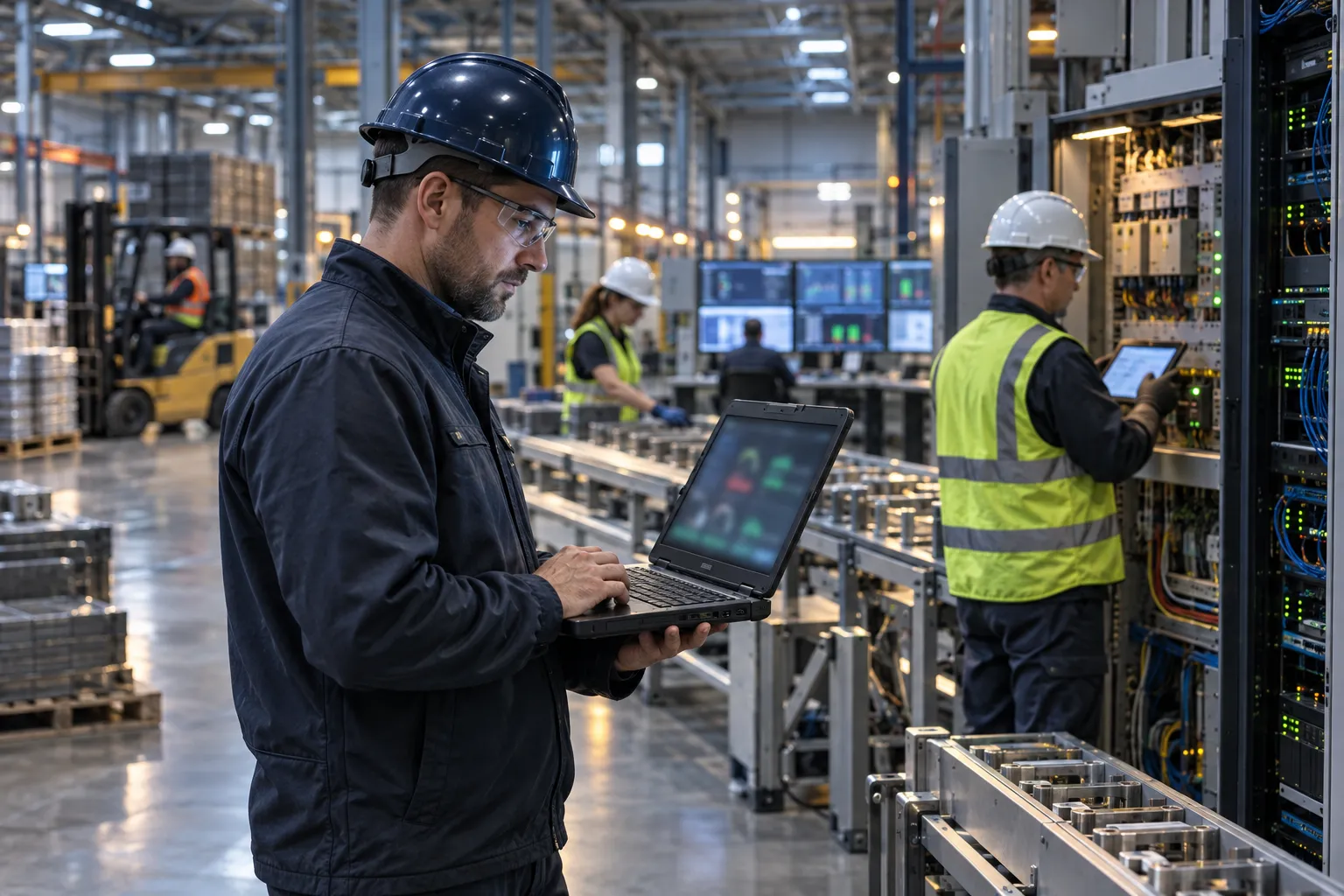
The Attack, the Downtime, and the $3 Million Cost
A ransomware incident can turn a technology failure into missed production and delayed orders. The attack halted production for 72 hours, resulting in missed deadlines, unhappy customers, and $3 million in lost revenue.
Six Months Back: What Changed and What Held
The manufacturer partnered with a managed IT service provider (MSP) to overhaul their cybersecurity systems. They implemented real-time threat detection, automated software updates, and strong backup solutions to support recovery. The MSP also provided employee training to strengthen internal defenses. Within six months, the manufacturer had fully recovered from the incident. Their new proactive cybersecurity measures reduced the risk of future attacks, and they reported no downtime from cyber threats in the following year.
Your Next Step: From Hoping to Measuring
Ask a prospective provider how it would document your recovery priorities, test restoration, and report security and service performance. Are managed IT services secure enough for building materials manufacturing facilities with ransomware threats? The answer depends on controls you can verify and responsibilities you can measure. To review your situation, schedule a 30-minute discovery call with Carl Utz, or use Andromeda’s IT Drag™ Calculator if you are not ready to talk.
Frequently Asked Questions
Are managed IT services secure enough against ransomware, or do they add third-party risk?
Managed IT services are secure enough for a building materials plant only when the provider protects production technology, responds quickly, and controls its own administrative access. Because an MSP holds privileged accounts, a compromised provider can expose every client it serves. Ask any provider how it separates customer environments, records admin activity, and handles a suspected breach in its own systems.
What security capabilities should a manufacturing MSP have beyond antivirus?
A manufacturing MSP should offer endpoint detection and response (EDR), strict account access controls, network monitoring, and network segmentation between office and production systems. Antivirus alone cannot spot stolen credentials or abnormal account behavior across a network. Layered safeguards matter because ransomware often uses legitimate tools and valid passwords, not just malicious files.
How do ransomware attacks typically get into a building materials plant?
Most ransomware attacks enter through an exposed remote access interface, a convincing phishing message, or a stolen password, not a direct assault on machine controllers. From there, attackers seek broader access to servers, shared files, and systems tied to plant operations. Remote access left open without a business need and shared admin passwords are common warning signs.
Can legacy OT equipment be protected without ripping and replacing it?
Yes, legacy operational technology (OT) can be protected without replacement by segmenting the plant network and controlling what can reach the equipment. A programmable logic controller (PLC) that cannot be patched stays exactly as it is. What changes is which devices, users, and office systems have a path to it, and that risk can be documented and monitored.
What should I ask an MSP before signing for a manufacturing facility?
Before signing, ask how the MSP protects privileged accounts, separates client environments, monitors endpoint and network activity, and executes a documented incident response plan. Request specifics on response times, what happens during a production-impacting incident, and references from other manufacturers. A provider that cannot explain its own access controls is a third-party risk.
Is patching every system immediately a good ransomware defense for a plant?
Immediate patching of every production-connected device is not realistic or safe in a manufacturing environment, because a PLC or SCADA system may depend on a specific software version or vendor support. Applying an untested change can stop a line. A better strategy prioritizes updates by risk, uses planned maintenance windows, and documents exceptions for equipment that cannot be patched.
Why do ransomware groups target building materials manufacturers?
Ransomware groups target building materials manufacturers because order pressure makes downtime expensive and urgent, which increases the likelihood of a ransom payment. Older production equipment with narrow maintenance windows makes recovery harder, so planning for threats to both business and production systems matters.