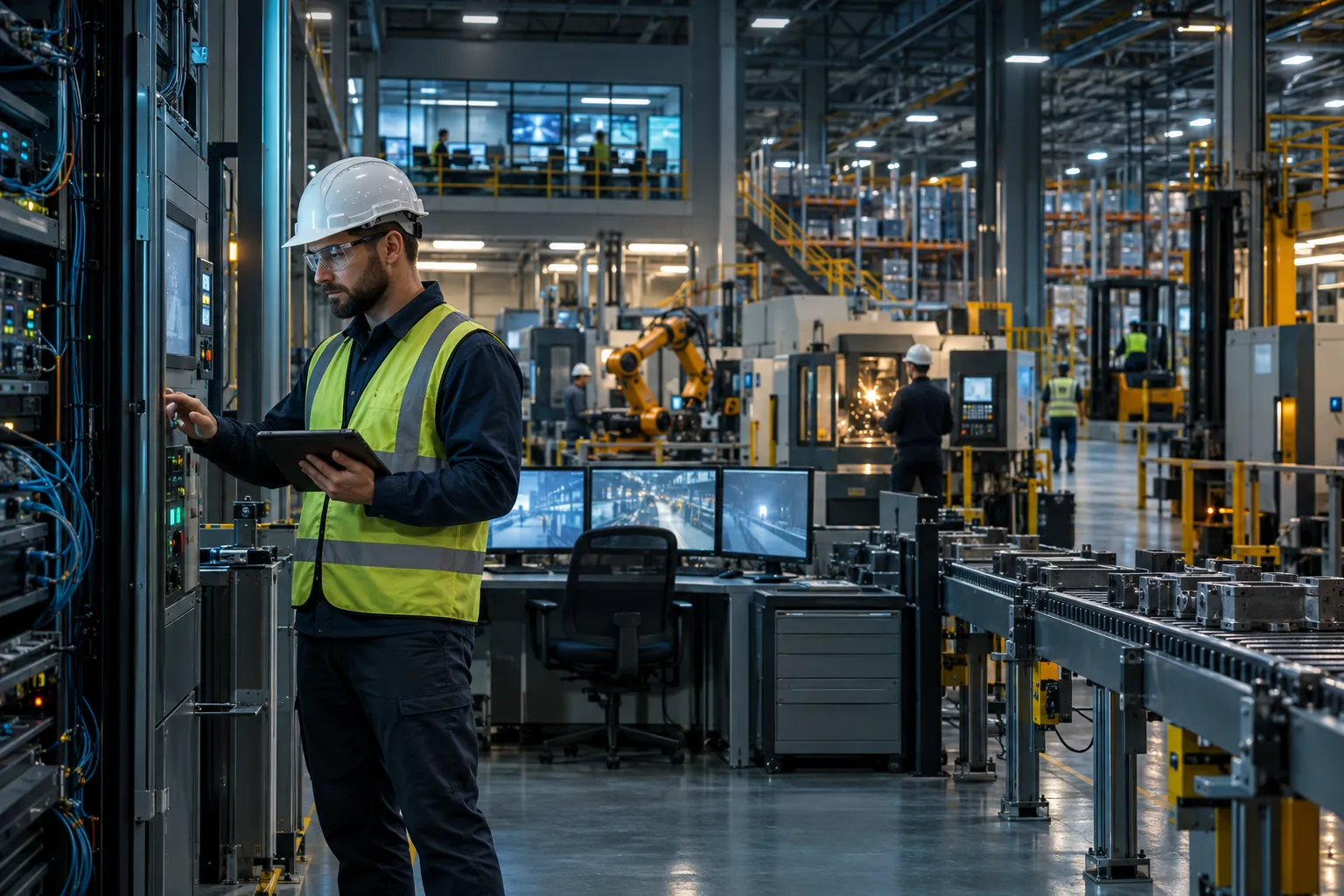
industrial technology services
When an enterprise resource planning (ERP) system fails during a shift, order processing can stop while production teams work from stale information. Industrial technology services support the systems and people behind production, with changes planned around the realities of your plant.
Key Takeaways
- Industrial technology services keep the systems your floor depends on, including ERP and OT equipment, stable enough to protect uptime and shipping dates.
- A provider familiar with manufacturing plans IT changes around maintenance windows and production schedules instead of treating your plant like a standard office.
- When evaluating providers, ask whether they understand legacy equipment, flat plant networks, and the compliance requirements your customers and insurers expect.
- Stability comes from having fewer recurring problems, not from faster repairs after something breaks mid-shift.
- Andromeda recommends starting with the IT Drag™ Calculator if you want to measure what inefficiency is costing your operation before talking to anyone.
For manufacturers, the work spans office technology and operational technology (OT), the systems that monitor or control production. The goal is operational continuity, not simply installing tools. Andromeda Managed IT Services for Industrial/Manufacturing Clients is one example of a service built for that environment.
What Industrial Technology Services Mean on a Production Floor
A plain-English definition of industrial technology services
Industrial technology services are the people, processes, and systems that support a manufacturer’s business IT and OT while accounting for production needs. That can include maintaining user accounts and business software, supporting plant networks, coordinating system changes, and helping staff resolve technology problems. The category describes an operating function, not a particular device or software package.
How IT, OT, and the overlap support production
IT typically supports business systems and information, such as email, servers, and ERP software. OT includes technologies that monitor or control production, such as machine networks and programmable logic controllers. The two connect when production data moves into business systems, or when a network issue affects both office users and the plant floor.
| Area | Typical systems | Production connection |
|---|---|---|
| IT | Email, user accounts, servers, ERP | Supports orders, inventory, scheduling, and business communication |
| OT | Machine controllers, sensors, production networks | Monitors or controls equipment and production processes |
| Overlap | Network connections and data exchange | Links production information with planning and business operations |
What a manufacturing-focused provider handles day to day
Day-to-day support may include answering employee requests, monitoring systems, managing access, reviewing recurring incidents, and coordinating planned maintenance. In a plant, the order of work matters: a change that is routine in an office may require coordination with operations if it could affect a machine connection or production schedule.
Andromeda Managed IT Services for Industrial/Manufacturing Clients is intended to support this combination of business IT and manufacturing requirements. The useful measure is whether support helps your team keep information moving and production disruptions from recurring.
Why This Phrase Returns Company Names, Not a Clear Definition
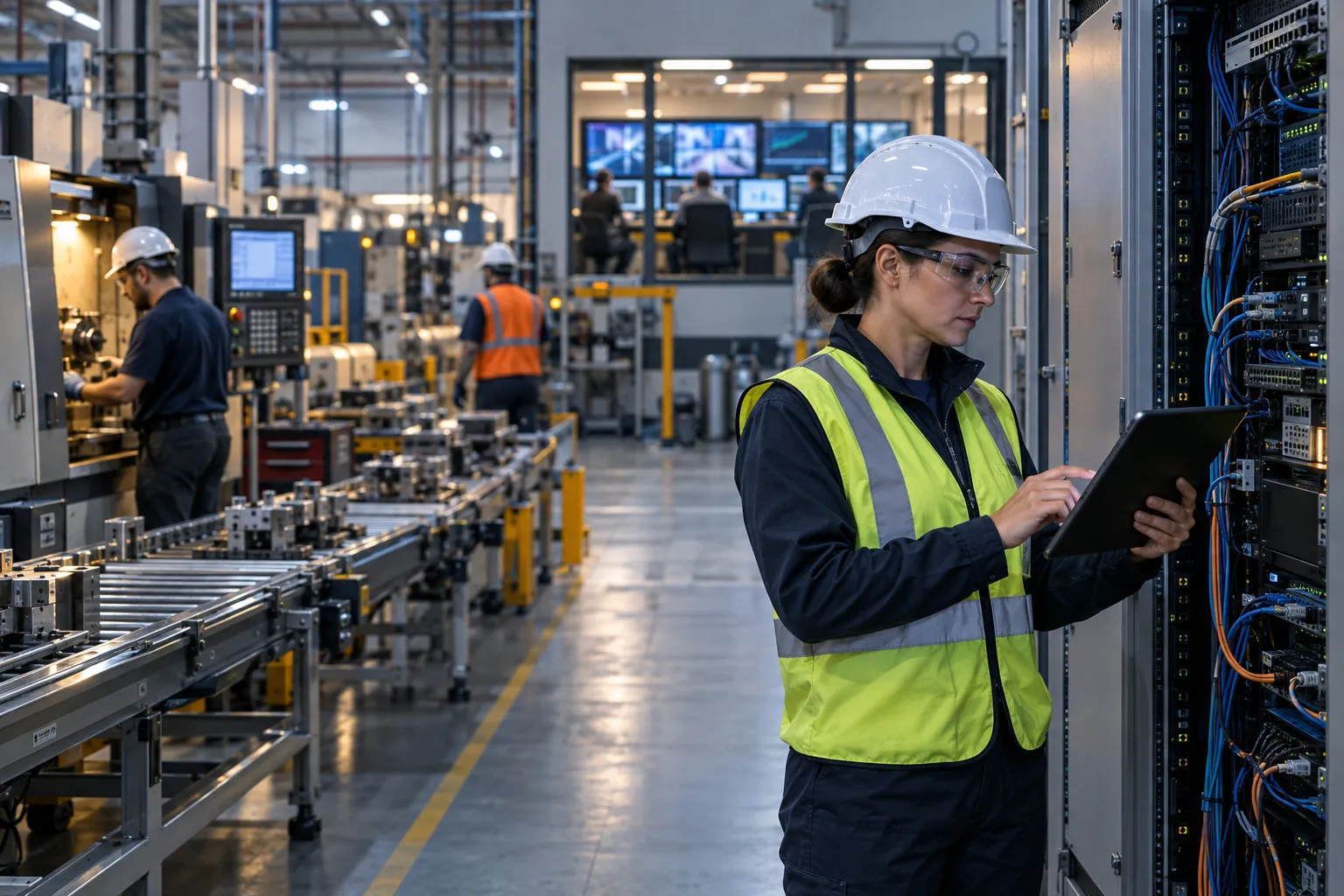
Ingersoll Rand’s Industrial Technologies and Services segment
Searches for industrial technology services can return corporate segment names because the wording is also used in company descriptions. Ingersoll Rand uses Industrial Technologies and Services as the name of a business segment. That corporate label refers to a defined part of a company’s operations, not to every service provider supporting factory IT, plant networks, or production systems.
The Gardner Denver connection and merger lineage
The segment name is associated with the 2020 combination of Gardner Denver and Ingersoll Rand’s industrial segment. That history helps explain why searches may surface references to both names. It does not make the phrase a general definition of managed support for manufacturing environments.
What an “Industrial Technologies and Services LLC” name does and does not tell you
A similarly named LLC may be a separate legal entity. Its name alone does not establish ownership, affiliation, or a connection to Gardner Denver or Ingersoll Rand. Confirm the specific organization’s current official materials and public filings before drawing conclusions about its ownership, portfolio, or services.
How Manufacturing-Specialized Services Differ From Generalist IT
IT and OT responsibilities on a plant network
A network problem can affect office staff, production data, and machine communications at the same time. Information technology (IT) typically supports business systems, while operational technology (OT) includes production systems such as programmable logic controllers (PLCs), machine networks, and controls. When those systems connect, support decisions need to account for both information security and production requirements.
A manufacturing-focused provider understands that a plant network is not just an office network with more devices. Changes may need coordination with operations, maintenance, and production schedules. The distinction matters when a routine fix could interrupt a machine connection or delay a shift.
Why legacy equipment changes security and support decisions
Some controllers and production machines cannot be patched on a normal schedule, or at all, without testing and coordination. A provider needs to identify those constraints before recommending updates, replacing equipment, or changing network access. Applying office practices without checking their effect on production can create avoidable risk.
Manufacturing-specialized support also pays attention to who knows the plant. Andromeda reports average employee retention of **8+ years**, which can help preserve operational context across support interactions. Retention alone does not prove service quality, so buyers should also look for documented ownership, clear escalation, and evidence that recurring problems receive root-cause attention.
Managed, co-managed, and network infrastructure service models
The right service arrangement depends on your team’s capacity and responsibilities. Fully managed support covers ongoing IT operations; co-managed support adds capacity or specialist help alongside an internal IT team; network infrastructure management focuses on the design, administration, and support of networks and connected devices.
Andromeda Managed IT Services for Industrial/Manufacturing Clients is an example of a service offering focused on manufacturing environments. Before choosing any arrangement, define who owns user support, plant network changes, after-hours escalation, and coordination with operations. Clear ownership matters as much as the service model.
| Area | Generalist IT approach | Manufacturing-focused approach |
|---|---|---|
| Plant knowledge | May center on office systems and standard business hours | Accounts for production schedules, machine connections, and maintenance windows |
| Technician continuity | Plant context can be lost when assigned staff change | Maintains documented context and clear responsibility for follow-through |
| Recurring failures | May close individual tickets without tracking patterns | Reviews trends and investigates root causes |
| Leadership reporting | May report activity without explaining operational impact | Connects service performance, recurring risks, and planned work to production needs |
Service-level metrics that show how support performs
Service-level indicators make support performance easier to evaluate, but no single metric guarantees uptime. Request written definitions for initial response and resolution, including business-hour rules and how priority incidents are handled. Andromeda publishes a **12.0-minute median ticket response time** and reports that **97% of issues are resolved within 8 business hours**; those are company-reported measures, not a prediction for every plant or incident.
Ask how the provider records escalation paths, after-hours coverage, repeat tickets, and unresolved dependencies. Confirm how often leadership receives reports and whether those reports show trends, open risks, and accountable owners. Useful measurement connects support activity to the work your plant needs to complete.
What Good Industrial Technology Services Must Protect
ERP and MES support without disrupting production
An enterprise resource planning (ERP) system connects information such as orders, purchasing, and inventory. A manufacturing execution system (MES) helps coordinate and record activity on the production floor. When data exchange between these systems fails, teams may face stale schedules, manual workarounds, or incomplete production records.
Support should account for system dependencies, the equipment involved, and available maintenance windows before changes are made. A test plan and an agreed rollback approach help your team understand what will change and how to respond if the change affects production. Andromeda Managed IT Services for Industrial/Manufacturing Clients supports this kind of manufacturing environment.
Plant network security, segmentation, and endpoint protection
A flat network can allow office devices and production systems to communicate more broadly than necessary. Segmentation limits which systems can reach particular devices. For a vulnerable controller, the goal may be to restrict network paths without changing the controller itself, which can reduce exposure while respecting equipment constraints.
CMMC, NIST, and ISO alignment for applicable requirements
Compliance work depends on your contracts, customer requirements, systems, and assessment scope. The Cybersecurity Maturity Model Certification (CMMC) applies to relevant defense contractors and suppliers. The National Institute of Standards and Technology (NIST) publishes cybersecurity guidance, while the International Organization for Standardization (ISO) maintains standards used by organizations for defined management and security purposes.
Ask a provider to identify the requirements being addressed, the systems in scope, and the evidence your team needs to maintain. Alignment with CMMC, NIST, or ISO does not by itself establish that every obligation is met. Confirm responsibilities with the people accountable for your compliance program.
Documentation, training, and root-cause ownership
If knowledge lives only in a technician’s memory or informal messages, your team may need to reconstruct decisions during an incident. Useful records include network diagrams, system owners, approved changes, recovery steps, and known equipment limitations. Staff training should help internal employees follow those procedures and understand when to escalate.
Reviewing recurring tickets can reveal a system fault or process gap behind repeated interruptions. Assign an owner to investigate, document corrective work, and check whether the issue returns. That discipline supports operational maturity and gives your team a clearer view of what still threatens production.
How to Choose a Provider and What to Ask Before Signing
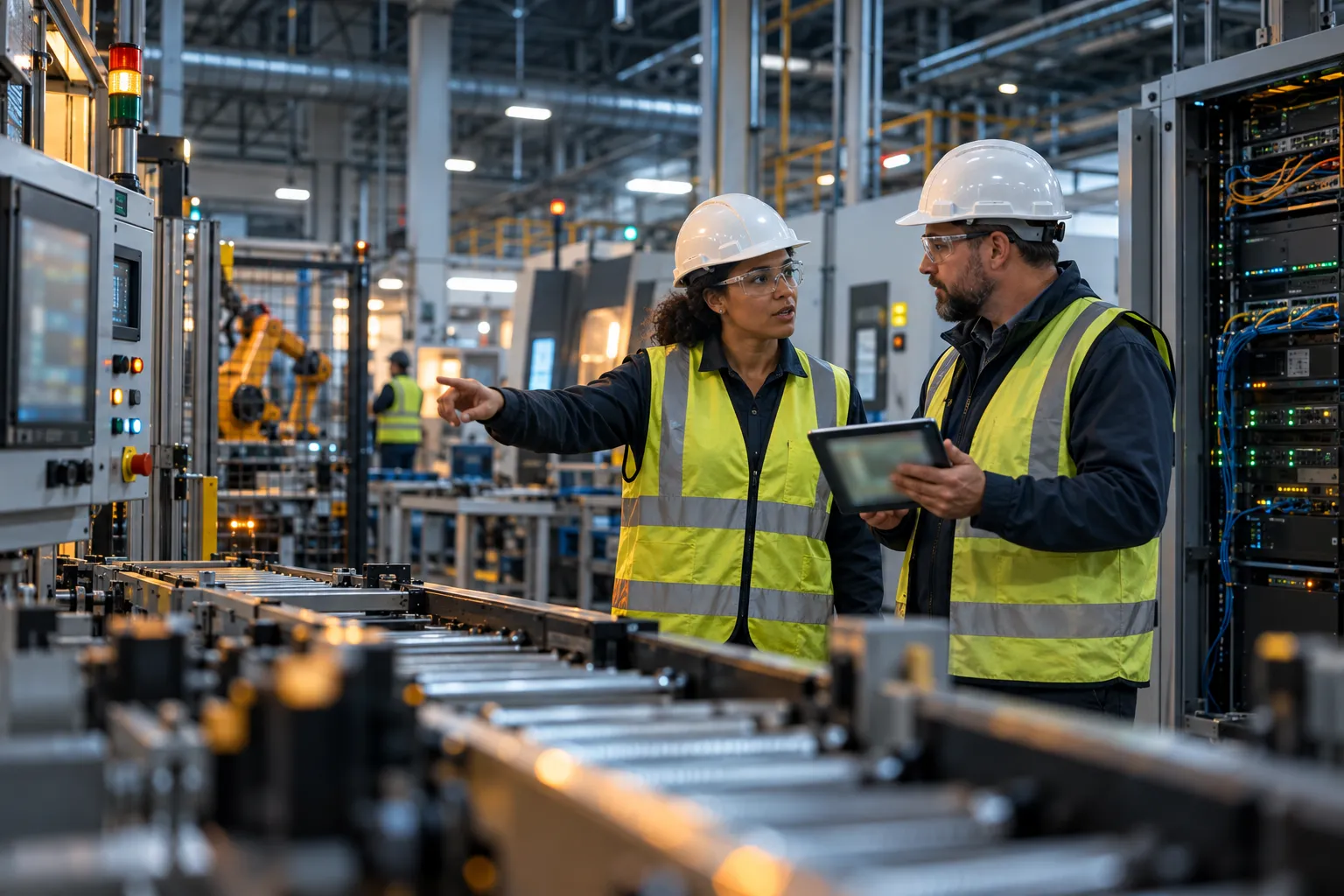
A service agreement should make ownership, production coordination, and reporting clear before support begins. Evaluate how the provider will work with your plant, not just which tools it supplies. Andromeda Managed IT Services for Industrial/Manufacturing Clients is one option designed for manufacturing operations. Use the same practical criteria to assess any proposed support arrangement.
A pre-signing checklist for manufacturing buyers
Before signing, get specific answers and responsibilities in writing. Your checklist should cover:
- Experience with production environments, plant networks, and operational technology (OT).
- A named escalation owner and a clear path for urgent incidents.
- How technician continuity is supported and plant knowledge is documented.
- How recurring issues are investigated, assigned, and checked after corrective work.
- How changes are approved and scheduled around shifts and maintenance windows.
- Which security and compliance requirements are in scope, and who owns each task.
- What system documentation and staff training will be maintained.
- Written definitions for response, resolution, after-hours coverage, and priority levels.
- Leadership reporting that covers trends, open risks, planned work, and accountable owners.
Confirm that the agreement describes how these commitments will be reviewed. A list of services is not enough if no one owns follow-through.
Questions that reveal whether a provider understands your plant
Ask for a walkthrough of real situations, including an unpatchable controller, a recurring manufacturing execution system (MES) issue, and an after-hours production incident. Listen for how the provider would assess risk, involve operations, document decisions, and communicate status. The answer should recognize that an immediate technical change may not be safe during an active run.
Ask how a recurring fault moves from ticket closure to root-cause investigation, and who confirms whether it returns. Andromeda Managed IT Services for Industrial/Manufacturing Clients is built around support for manufacturing settings, but the agreement should still spell out responsibilities, service measures, and reporting for your environment.
Frequently asked questions about industrial technology services
What are industrial technology services? They are the people, processes, and systems supporting business IT and production technology while accounting for plant requirements.
How do they differ from generic IT support? They include planning for production schedules, equipment limits, plant-network dependencies, and coordination with operations.
What does Ingersoll Rand’s segment refer to? It is the company’s named Industrial Technologies and Services business segment, not a general definition of manufacturing IT support.
Is a similarly named LLC necessarily connected to Ingersoll Rand or Gardner Denver? No. Verify the specific organization’s current official materials and filings rather than inferring affiliation from its name.
What does a manufacturing-focused managed service provider (MSP) do each day? It supports users and systems, tracks incidents, coordinates changes, and follows recurring problems through to documented ownership.
Look for fewer recurring disruptions, clearer accountability, and changes planned around production. A practical next step is a 30-minute discovery call, or the IT Drag™ Calculator if you prefer to assess operational friction before speaking with a provider.
Frequently Asked Questions
What are industrial technology services, and how do they differ from generic IT support?
Industrial technology services are the people, processes, and systems that support a manufacturer's business IT and operational technology (OT) while accounting for production needs. Generic IT support treats a plant network like an office with more devices, but manufacturing-focused support plans changes around shift schedules, machine connections, and legacy equipment that cannot be patched on a normal cycle.
What does a manufacturing-focused MSP actually do day to day?
A manufacturing-focused managed service provider (MSP) answers employee requests, monitors systems, manages access, and coordinates planned maintenance in an order that protects production. A change that is routine in an office may need coordination with operations first, because it could interrupt a machine connection or delay a shift.
What is the Industrial Technologies and Services segment of Ingersoll Rand, and which businesses sit inside it?
Industrial Technologies and Services is the name of a business segment within Ingersoll Rand, not a general description of factory IT support.
Is 'Industrial Technologies and Services LLC' the same as Gardner Denver or Ingersoll Rand?
No, a similarly named LLC may be an entirely separate legal entity, and its name alone does not establish ownership or affiliation with Gardner Denver or Ingersoll Rand. Verify the specific organization through its official materials and public filings before drawing conclusions about its ownership, portfolio, or services.
Why does searching 'industrial technology services' return mostly company names instead of an explanation?
The phrase appears in corporate segment names like Ingersoll Rand's Industrial Technologies and Services, so search results surface those companies instead of a plain definition. The wording describes both a service category and a company label, so treat the company name and the category as two different things and review each organization's documented offerings.
Why do legacy machines change how IT support and security decisions get made in a plant?
Some machine controllers and production equipment cannot be patched on a normal schedule, or at all, without testing and coordination. A provider needs to identify those constraints before recommending updates or changing network access, because applying office practices without checking their effect on production creates avoidable risk.
What is the difference between IT and OT on a plant network?
IT supports business systems such as email, servers, user accounts, and ERP software that handle orders, inventory, and scheduling. OT includes technologies that monitor or control production, like machine networks and programmable logic controllers (PLCs). The two overlap where production data moves into business systems, so a network issue can affect office staff and the floor at the same time.