
fully managed it services
When an ERP connection fails during a production shift, the cost extends beyond an IT ticket. Operators may lose work instructions, warehouse staff may stop scanning inventory, and supervisors may make decisions from stale data. Fully managed IT services address these interruptions through planned oversight, maintenance, security, and accountability rather than waiting for failure.
For manufacturers, the right model connects technology decisions to uptime, throughput, shipment schedules, and audit readiness. This guide explains what the model includes, where reactive support breaks down, and how Andromeda uses its Andromeda Managed IT Services offering to reduce avoidable friction across the plant.
What Fully Managed IT Services Mean for Your Production Floor
Fully managed IT means one accountable team continuously monitors, maintains, secures, documents, and improves technology supporting production. The scope goes beyond a help desk to include servers, endpoints, wireless networks, backups, identity access, cybersecurity controls, vendor coordination, business applications, and change planning that protects active shifts.
The Hidden Costs of Reactive IT: Why Break-Fix Fails Manufacturers
Break-fix support begins after damage has started. A locked terminal delays an operator; warehouse Wi-Fi problems interrupt scanning and material movement; a failed ERP or MES connection leaves production and shipping teams with incomplete information. Repeated interruptions create lost labor, overtime, missed delivery windows, and pressure to recover output at week's end.
Emergency visits, out-of-scope charges, rushed equipment purchases, and repeated troubleshooting can make a low monthly fee expensive. High technician turnover adds time because unfamiliar staff must learn the plant topology during each incident.
Defining Fully Managed IT: Beyond the Help Desk
A help desk answers requests; a managed operating model addresses the conditions creating them. It includes patch scheduling around production windows, backup review, endpoint and server monitoring, network capacity checks, access control, vulnerability management, disaster recovery planning, and environment documentation.
It also establishes predictable boundaries. Plant leaders should know which systems are monitored, who owns escalation, how changes are approved, and how projects differ from routine support. This structure helps IT align with NIST practices, CMMC expectations, or ISO requirements without disrupting manufacturing operations.
The Andromeda Approach: A Disciplined Operating Model for Manufacturing
Andromeda starts with the floor rather than a generic service catalog. The team documents how offices, production cells, warehouse areas, remote sites, equipment, applications, and outside vendors connect. That baseline informs maintenance windows, network segmentation, user access, backup recovery, and cybersecurity protection.
Andromeda Managed IT Services replaces emergency reaction with ongoing monitoring, service review, risk reduction, and measured improvement. It gives internal leaders daily support while preserving attention to throughput and shipped orders. Andromeda reports an average live technician pickup time of 1 minute 34 seconds and a median ticket response time of 12 minutes across mid-market accounts, based on its published service metrics.
Erasing “IT Drag™”: How Proactive Management Restores Operational Capacity
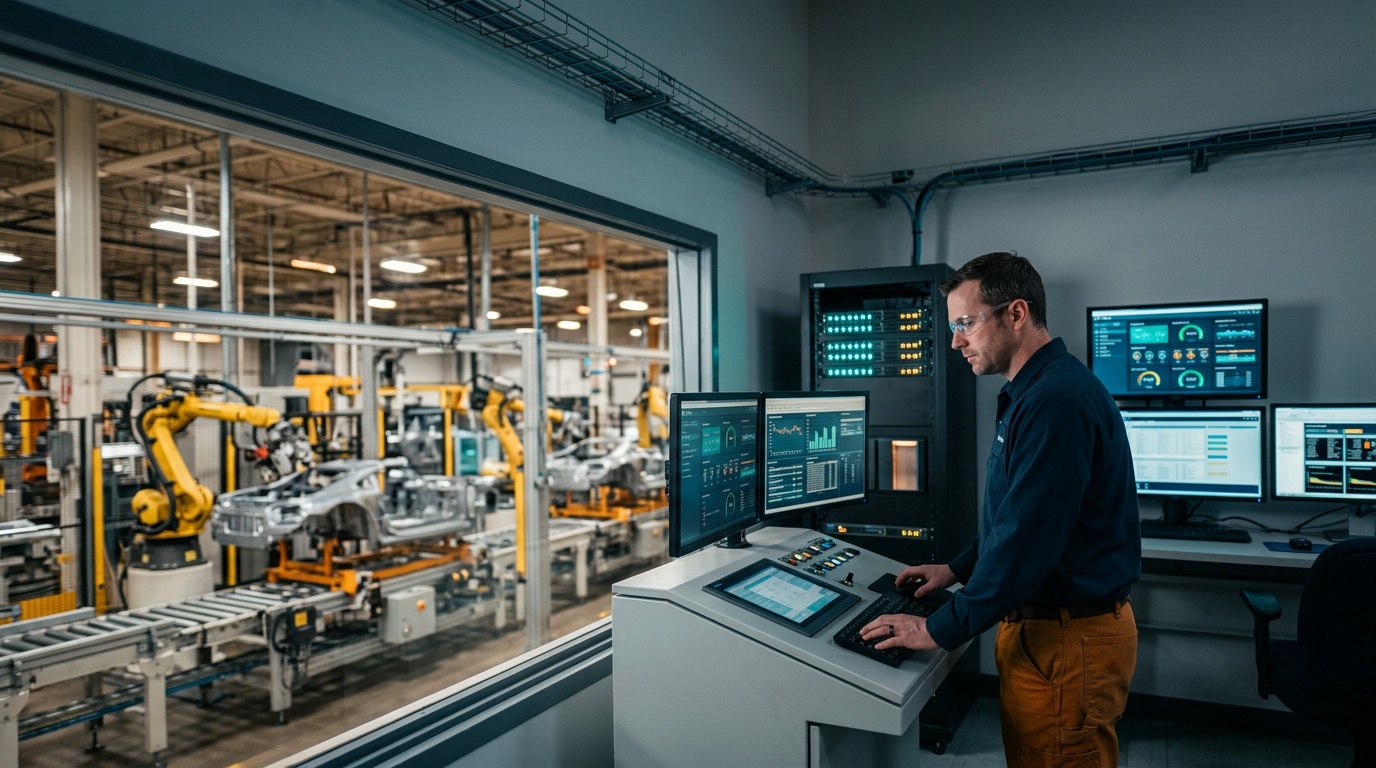
What Is IT Drag™? The Compounding Inefficiencies You’re Already Paying For
IT Drag™ is production capacity lost to recurring technology friction: a supervisor waits for a login reset, a planner reloads an application, a scanner disconnects, or a maintenance employee works around an unreliable workstation. These small delays interrupt handoffs, increase workarounds, and pull skilled people from production priorities.
The original cause often remains after a ticket closes. The symptom returns, the same equipment receives another temporary fix, and ticket churn makes the queue look active while the plant remains exposed.
Identifying IT Drag™ Symptoms on the Plant Floor: From Locked Terminals to Stale ERP Data
Look for repeated exceptions: locked terminals at shift change, unstable warehouse wireless coverage, slow file access, delayed label printing, stale ERP information, missed alerts, users sharing workarounds through informal messages, frequent reboots, and manual spreadsheets. These may show that a system is operating outside its intended design.
Ask how often the interruption occurs, which role absorbs the delay, and what downstream work waits for recovery. The answers connect technical incidents to labor utilization, order flow, inventory accuracy, and schedule adherence.
The Five-Step Operating Model to Eliminate IT Drag™: Assess, Command, Secure, Report, Modernize
Assess inventories assets, applications, dependencies, risks, and plant priorities. Command establishes a service desk, escalation path, maintenance calendar, and change control. Secure protects identity, endpoints, networks, backups, and privileged access. Report turns incidents, risks, response times, and recurring causes into management information. Modernize addresses aging equipment, capacity limits, unsupported software, and process gaps according to the production schedule.
- Assess the environment and its production dependencies.
- Command the support process with defined ownership.
- Secure systems against interruption and unauthorized access.
- Report patterns that affect uptime and labor.
- Modernize technology according to operational priority.
Measuring Progress: How Root-Cause Resolution Replaces Ticket Churn
Track recurring incidents by location, asset, application, and shift. Review reopened tickets, repeat passwords resets, wireless trouble spots, backup exceptions, and changes causing unplanned disruption. A declining incident count matters more when its cause has been documented and corrected.
“The useful question is not whether the ticket was closed. It is whether the plant should expect the same interruption again.”
Andromeda’s published metrics report that 97% of reported technology issues are resolved within eight business hours. This measure is most useful with root-cause review, clear ownership, and plant context. The objective is a steadier production environment where support removes friction instead of merely recording it.
The IT/OT Convergence Challenge: Why Generalist MSPs Fall Short on the Plant Floor
Understanding the Divide: Office IT vs. Operational Technology (OT)
Office IT supports communication, finance, scheduling, and administration. Operational technology controls or monitors processes that make, move, inspect, and ship products. A brief office application outage may delay a meeting; an OT disruption can stop a production cell, interrupt material flow, or leave operators without current work instructions.
Maintenance and support must account for shift schedules, machine dependencies, safety considerations, vendor access, and recovery procedures. A plant cannot treat every update like a routine office patch.
Critical Manufacturing Systems Requiring Specialized Oversight
Manufacturing systems depend on one another. An ERP platform may provide orders and inventory data to a manufacturing execution system, while warehouse wireless networks connect scanners, printers, tablets, and shipping stations. Supervisory control and data acquisition systems, programmable logic controllers, historians, engineering workstations, and quality applications may sit further down the process chain.
A failure between systems can leave operators without electronic instructions, planners with stale counts, and shipping personnel unable to scan finished goods. Andromeda Managed IT Services accounts for application dependencies, hardware partners, remote access, backup recovery, and the boundary between business systems and plant equipment.
The Risk of Flat Networks and Unpatched Legacy Equipment
A flat network lets activity move too easily between areas. A compromised office credential, unmanaged vendor laptop, or vulnerable warehouse device can create a path toward production assets. Legacy operating systems, controllers, and specialized applications may not support current patches or modern authentication.
The answer is not an unsupported change during an active shift. A sound plan maps assets, separates network zones, limits privileged access, validates backups, and documents compensating controls. NIST, CMMC, and ISO-aligned practices can guide this work while fitting the plant's equipment, staffing, and recovery requirements.
How Andromeda Protects Production Uptime During IT Changes
Change control begins by identifying what could stop production. Andromeda reviews dependencies, confirms maintenance windows, tests recovery steps, and coordinates with operations before updates or infrastructure work. Monitoring and documentation give technicians a working view of plant topology instead of forcing them to learn it during an outage.
This discipline matters when a wireless redesign, server replacement, identity change, or security control affects multiple departments. Andromeda Managed IT Services provides approvals, escalation, rollback planning, and post-change validation so leaders face fewer production surprises.
Co-Managed IT (CoMITS) vs. Fully Managed for Manufacturing: Choosing the Right Fit
Co-managed IT suits an internal team that has defined capacity and needs specialized help with cybersecurity monitoring, after-hours coverage, network engineering, compliance documentation, or projects. The internal team retains daily ownership.
A fully managed model suits a manufacturer needing one accountable team for routine support, monitoring, maintenance, security coordination, documentation, and improvement. Decide based on whether internal staff can cover every shift, maintain plant documentation, respond to incidents, manage vendors, and complete preventive work without pulling attention from production.
| Operating need | Co-managed IT | Fully managed IT services for manufacturing |
|---|---|---|
| Internal IT ownership | Internal team retains primary responsibility | Provider owns defined technology operations |
| Plant-floor expertise | Added where internal skills are limited | Built into the service operating model |
| Best fit | Capacity gaps or specialized projects | Continuous coverage and shared operational accountability |
Before selecting either model, confirm who owns the following:
- ERP, MES, warehouse, and production network dependencies
- Patch timing, change approval, and rollback decisions
- Vendor coordination and remote access controls
- Backup testing, incident response, and recovery documentation
- Recurring issue analysis instead of repeated ticket closure
Accountability That Protects Your Bottom Line: SLAs and Guarantees for Manufacturers
Beyond Promises: What “Managed” Should Actually Mean in Practice
A managed agreement should define preventive work, not only assistance after a ticket arrives. It should identify monitored systems, maintenance responsibilities, security controls, backup checks, escalation ownership, change approval, reporting cadence, included services, and separately billed projects.
For a plant, accountability also means understanding production windows, documenting dependencies, coordinating equipment vendors, and explaining effects on throughput or shipment timing. Service-level agreements turn these expectations into measurable commitments.
Key Performance Indicators (KPIs) That Matter for Plant Operations
Track measures showing how quickly people resume work. Live pickup shows access to a technician; ticket response shows when ownership begins; resolution time shows how quickly an issue reaches a working outcome. A fast temporary fix should not count as success when the failure returns.
Review reopened tickets, recurring incidents, aging requests, after-hours events, change-related disruptions, and root-cause actions. Pair them with the affected department, production status, and any delay to shipping, inventory, or quality records.
Andromeda’s Published Metrics: Demonstrating Operational Excellence
Andromeda’s published service metrics report an average live technician phone pickup time of 1 minute 34 seconds, a median ticket response time of 12 minutes across mid-market accounts, and 97% of reported technology issues resolved within 8 business hours. Evaluate these figures by asking how each measure is calculated and which account types are included.
| Measure | What it reveals | Questions to ask |
|---|---|---|
| Live pickup | Access to a technician when work is blocked | Is the figure measured by clock time or business hours? |
| Ticket response | How quickly a request receives ownership | Does an automated acknowledgment count? |
| Resolution | How many issues reach a working outcome within the target | Are repeat incidents and reopened tickets included? |
The Andromeda Guarantee: Service Delivery with Financial Backing
A guarantee matters when missed standards carry a defined remedy. The Andromeda Guarantee provides financial backing by crediting invoices when stated delivery standards are missed. Andromeda Managed IT Services combines service expectations with reporting on support quality, recurring risk, and unresolved friction.
Evaluating Your Next MSP: A Checklist for Operational Accountability
Before signing, ask the provider to document the following:
- Live pickup, response, and resolution targets
- Included services, exclusions, project fees, and after-hours charges
- Escalation ownership for ERP, MES, wireless, server, and security incidents
- Change controls that respect shifts and production windows
- Reporting that identifies recurring causes, not only closed tickets
- Staff continuity and familiarity with the plant’s topology
- Remedies available when service commitments are missed
Your Next Step Toward Operational Maturity
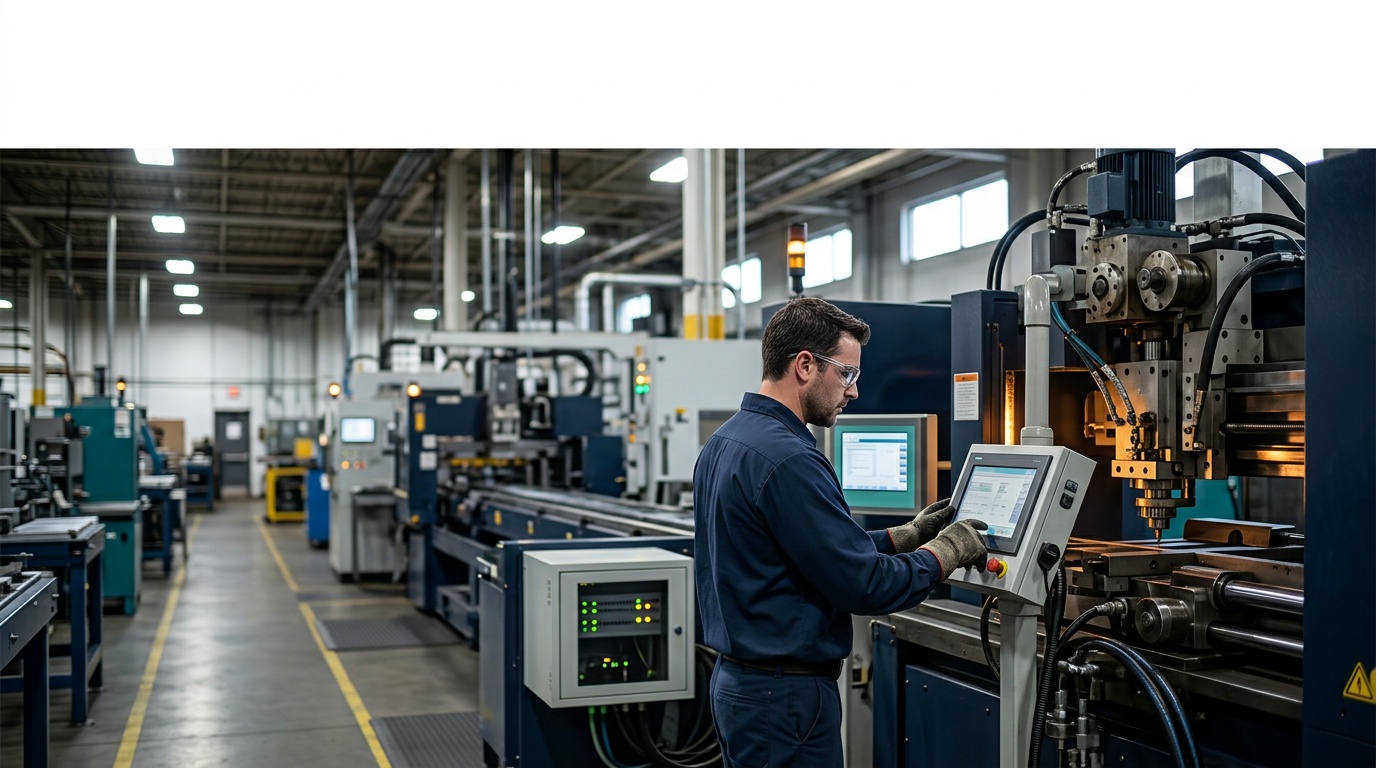
Recap: Fully Managed IT as a Strategic Operating Model
Fully managed IT services create disciplined ownership around systems that keep production moving. The right model reduces recurring friction, protects maintenance windows, improves security readiness, and gives leaders evidence that support produces operational value.
Ready to Eliminate IT Drag™? Schedule Your Discovery Call
Talk with Andromeda about your plant topology, recurring incidents, service expectations, and operational priorities. Andromeda Managed IT Services can help define a practical path forward.
Not Ready to Talk? Calculate Your Potential IT Drag™
Start with recurring delays, affected employees, recovery time, and overtime used to catch up. Even a basic estimate can show where technology friction consumes production capacity.
Frequently Asked Questions
What are managed IT services?
Managed IT services are an operating model in which one accountable team continuously monitors, maintains, secures, documents, and improves the technology supporting a business. Rather than waiting for failures, this model covers servers, endpoints, networks, backups, identity access, and cybersecurity controls so problems are addressed before they interrupt operations.
How much do managed IT services cost?
The cost of managed IT services depends on scope, environment size, and support needs, typically structured as a predictable monthly fee. Emergency break-fix support often costs more over time because out-of-scope charges, rushed equipment purchases, lost labor, and missed delivery windows add hidden expenses beyond any low monthly rate.
What is included in managed IT services?
Fully managed IT services include server and endpoint monitoring, patch scheduling around production windows, backup review, network capacity checks, access control, vulnerability management, disaster recovery planning, and environment documentation. The scope extends beyond a help desk to vendor coordination, business applications, and change planning that protects active shifts.
How do managed IT services benefit manufacturing companies?
Managed IT services benefit manufacturers by connecting technology decisions to uptime, throughput, shipment schedules, and audit readiness. Proactive monitoring and root-cause resolution reduce production interruptions, protect warehouse scanning and ERP connections, and produce cleaner audit evidence aligned with NIST practices, CMMC expectations, or ISO requirements.
Why does break-fix IT support fail manufacturers?
Break-fix support begins after damage has already started, so a locked terminal, failed ERP connection, or unstable warehouse Wi-Fi interrupts operators and shipping teams. Repeated interruptions create lost labor, overtime, emergency visit charges, and repeated troubleshooting because unfamiliar technicians must learn the plant topology during each incident.
What is IT Drag and how does it affect a plant?
IT Drag is production capacity lost to recurring technology friction, such as a supervisor waiting for a login reset, a scanner disconnecting, or a planner reloading an application. These small delays interrupt handoffs, increase workarounds, and pull skilled people from production priorities even after individual tickets close.
What is Andromeda's five-step operating model for managed IT?
Andromeda's five-step operating model is Assess, Command, Secure, Report, and Modernize. The sequence inventories assets and production dependencies, establishes a service desk with escalation and change control, protects identity and backups, turns incident patterns into management information, and modernizes aging equipment according to operational priority.