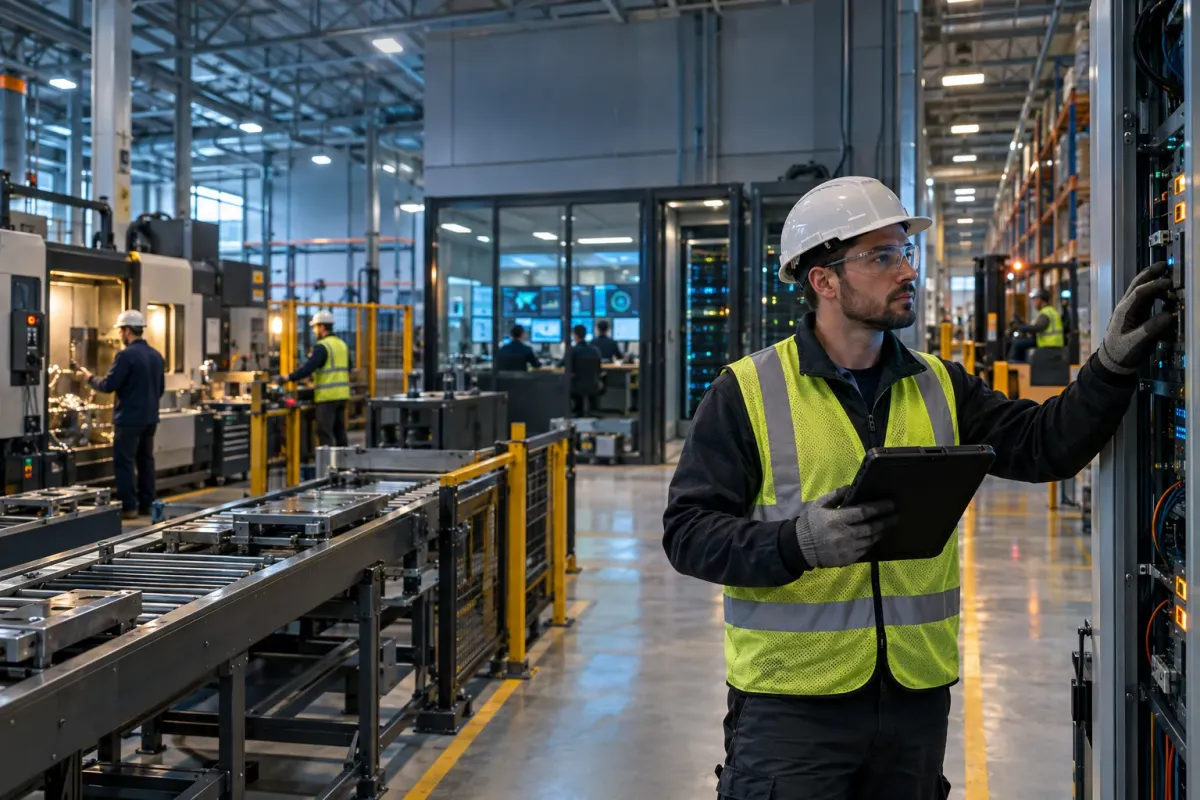
manufacturing companies chicago
When you search for manufacturing companies chicago, you will find directories, employer lists, and job postings, but rarely one current map of the region’s manufacturing sectors. This guide organizes the picture by industry and location, while noting where public lists can leave gaps.
Key Takeaways
- Chicago's manufacturing base spans food and beverage processing, metal fabrication, electrical equipment, and packaging, each with different technology and staffing demands.
- Public directories and job boards can help you identify employers, but they rarely reveal how well a plant's IT and OT systems support production.
- Many area plants still run flat networks and legacy machine controllers that cannot be patched, which raises both uptime and cyber insurance questions.
- Specialized managed IT support that understands operational technology can reduce recurring issues, with most clients seeing steady ticket declines within the first 3 to 9 months.
- A 30-minute discovery call with Andromeda can show you where IT Drag is quietly costing your plant production hours.
Chicagoland manufacturing includes plants, suppliers, warehouses, and transportation links. Job seekers can investigate different kinds of employers. For plant leaders, production depends on reliable movement of materials, orders, and information.
Why Chicago Is Still a Manufacturing Powerhouse
Location and Logistics: Rail, Interstates, O'Hare, and Midwest Supplier Density
Chicago’s manufacturing role reflects its connections to suppliers and markets across the Midwest. Rail lines, interstate highways, and O’Hare offer several ways to move materials and finished goods. Nearby suppliers can support production with components, packaging, maintenance, and specialized services.
For a plant, location affects receiving schedules, shipping options, and the time needed to get a replacement part. A manufacturer may source inputs from one part of the region, assemble or process them elsewhere, then ship finished orders across the country. That connected footprint helps explain why chicago american manufacturing includes many plant types, not one dominant factory model.
What That Means for Jobs and Plant Leaders Alike
Job seekers can explore work in food processing, machining, packaging, equipment production, and other fields. Work and qualifications vary by plant, so a company’s sector and location are useful starting points. For plant leaders, supplier access and transportation connections shape sourcing choices, inventory plans, and delivery commitments.
Quick Answer: Chicago’s manufacturing base is supported by transportation access and a dense regional supplier network. To explore the area by sector and geography, use the Sector Guide for Plant and Operations Leaders alongside employer directories, then confirm details directly with each company.
Chicago Manufacturing Companies by Sub-Sector and Location
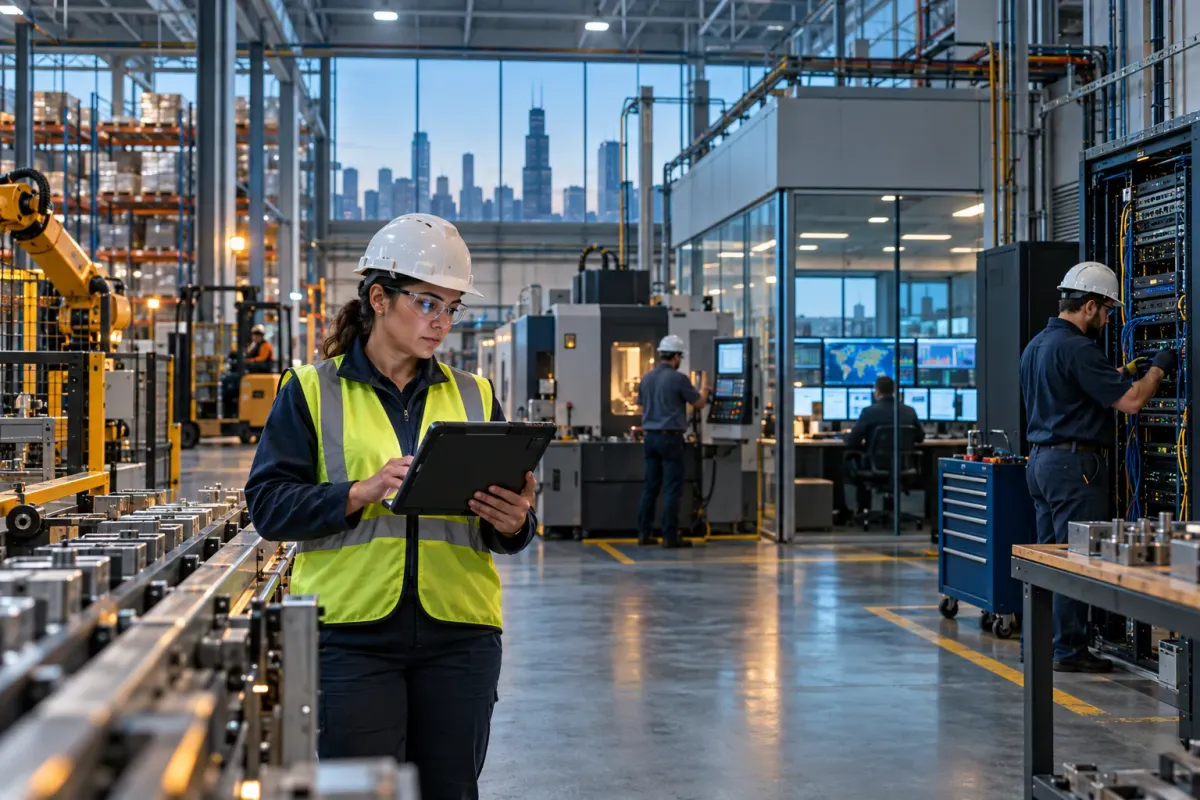
No single public directory reliably captures every plant, company location, or current hiring status. Searches for manufacturing companies chicago can mix headquarters, operating facilities, suppliers, and job listings. Sort results by sub-sector and verify each facility before treating a list as complete.
Food and Beverage: Co-Packers, Snacks, Dairy, and Bottling
Food and beverage production spans packaged snacks, dairy products, bottling, and contract packaging. Conagra, Frito-Lay, and Lactalis are named employers to investigate, but a company name alone does not confirm what a specific site makes or whether it is hiring. Check the facility’s own information for its location, operations, and open roles.
Metal Fabrication, Machining, and Industrial Machinery
Metal fabricators and machine shops supply parts and assemblies for equipment makers and other industrial customers. Work can involve cutting, forming, welding, machining, inspection, or final assembly. Caterpillar and Wirtz Manufacturing are among the named companies in the broader regional picture. Confirm the local facility and its function before assuming a particular product or job is based there.
Building Materials, Chemical, Plastics, and Electrical Equipment
These sectors cover distinct production needs, from processed materials and molded parts to chemical products and electrical equipment. Plant requirements vary in equipment, material handling, quality controls, and shipping. Lakeside Book Company is another named employer to check when building a regional search; verify facility details through current company information.
Named Employers and Where They Cluster: Ford Chicago Assembly, Caterpillar, Lactalis, Conagra, Frito-Lay, Lakeside Book Company, Wirtz Manufacturing
These names offer leads, not a complete directory of Chicago-area plants. Ford Chicago Assembly is a named production site, while the other companies have operations or facilities to check individually for location and activity. Search by employer and municipality, then confirm whether a result refers to a headquarters, plant, distribution site, or job listing.
For a broader overview of sector coverage, the Practical Guide for Plant and IT Leaders can help frame operational questions behind a company search. If your review also includes a plant’s support model, Andromeda Managed IT Services for Industrial/Manufacturing Clients describes a manufacturing-focused service option.
How to Vet Any Chicago Manufacturer List Before You Trust It
Lists can mix active employers with outdated entries, corporate offices, and facilities outside the city proper. Treat a ranking such as “top 100 manufacturing companies in illinois” as a starting point, not a verified count of current local plants. Check the company’s own site, facility address, and recent job postings before drawing conclusions about production activity or hiring.
For a plant leader assessing technology support, the Partner That Understands Plant Uptime guide outlines questions to ask about manufacturing experience. The Network Convergence Without Downtime resource covers how business and production networks connect. Companies working toward defense-contract requirements can also review CMMC Audit Readiness With an MSP. Andromeda Managed IT Services for Industrial/Manufacturing Clients is another option for plants evaluating managed support.
| Sector | Examples to investigate | What to verify |
|---|---|---|
| Food and beverage | Conagra, Frito-Lay, Lactalis | Facility location, product type, and current openings |
| Industrial equipment and metalwork | Caterpillar, Wirtz Manufacturing | Local production activity and the skills used at the site |
| Other manufacturing | Ford Chicago Assembly, Lakeside Book Company | Whether the result is a plant, office, or another facility type |
Manufacturing Jobs in Chicago: Roles, Pay Paths, and Where to Apply
Chicago-area manufacturing jobs range from production and warehouse work to skilled trades, quality, engineering, and supervision. A first role does not require a degree at every plant, but employers may expect safety awareness, reliable attendance, and a willingness to learn equipment and procedures. Job titles vary, so read the duties and shift requirements instead of relying on a title alone.
Entry Points With No Experience: Production, Warehouse, and Quality Roles
For applicants without plant experience, production associate, packer, material handler, warehouse associate, and entry-level quality inspector roles can provide a starting point. Work may include following a work instruction, moving materials, checking product dimensions, recording production data, or organizing a work area. Ask whether the employer provides hands-on training and what safety gear or certifications are required before the first shift.
Skilled Trades and Apprenticeships: CNC Machinist, Tool and Die, Maintenance Technician
Computer numerical control (CNC) machinists set up or operate machines that cut parts to specified dimensions. Tool and die workers build, maintain, or repair tooling used to form parts, while maintenance technicians troubleshoot mechanical, electrical, and control-system problems. These careers require practical skill developed through supervised work, technical education, or an apprenticeship. Ask about the training pathway, machine types, measurement tools, and how new workers progress to setup or troubleshooting.
Engineering and Career Progression Paths
Manufacturing engineers, process engineers, quality engineers, and production supervisors work across equipment, product specifications, staffing, and production targets. A degree can help open the door, but plant knowledge takes time to develop. Early-career professionals can build credibility by learning the process, spending time near the work, and asking operators how changes affect cycle time, defects, and safety. An MBA or engineering credential is useful when paired with an understanding of how the plant runs.
Where to Search and How to Evaluate a Posting (Indeed, Glassdoor, LinkedIn, ZipRecruiter)
Search Indeed, Glassdoor, LinkedIn, and ZipRecruiter, then confirm openings on the employer’s careers page. Listings can be stale, duplicated, or unclear about the worksite. Use this checklist before applying:
- Confirm the facility location, shift, schedule, and whether the job is on-site.
- Check the duties, physical requirements, required experience, and training offered.
- Look for details on pay range, benefits, overtime, and employment type.
- Verify that the company and opening appear on an official employer page.
Directories and postings are useful leads, not a complete or always-current map of local employers. Apply directly when possible and keep notes on each facility, role, and follow-up.
The Onboarding Gap: What New Hires and Employers Both Get Wrong
Why Institutional Knowledge Lives in a Few Heads (and the SOP Documentation Problem)
A new hire may be shown a machine once, then expected to remember every adjustment, safety step, and quality check. In busy plants, experienced workers often carry process knowledge that never made it into a current standard operating procedure (SOP). Training can become inconsistent, leaving the team exposed when a knowledgeable employee is absent or leaves.
Employers can improve the handoff by documenting the task at the machine, reviewing instructions with operators, and assigning someone to keep each procedure current. Documentation should explain the sequence, inspection points, escalation steps, and safety requirements, not just name the task.
A New-Hire Onboarding and Training Checklist for Plant Employers
Training works best when a new employee can see what competent, safe work looks like and knows who can answer questions. A practical onboarding plan should cover:
- Site safety rules, required protective equipment, and emergency procedures.
- Role responsibilities, shift expectations, and the person providing instruction.
- Machine-specific steps, quality checks, and where current work instructions are stored.
- How to report a defect, equipment problem, or unsafe condition.
- A supervised practice period and a check-in to identify gaps before independent work.
What Job Seekers Should Expect and Ask For
Before accepting a role, ask who trains new employees, how long supervised training lasts, and how readiness for independent work is checked. Ask where procedures are documented and what happens when a process changes. A clear answer shows the employer has considered how people learn the job. If the response is only “you will pick it up,” ask how questions are handled during a shift and who is accountable for your training.
The Layer Competitors Ignore: Plant IT, OT Uptime, and How to Pick a Manufacturing-Focused IT Partner
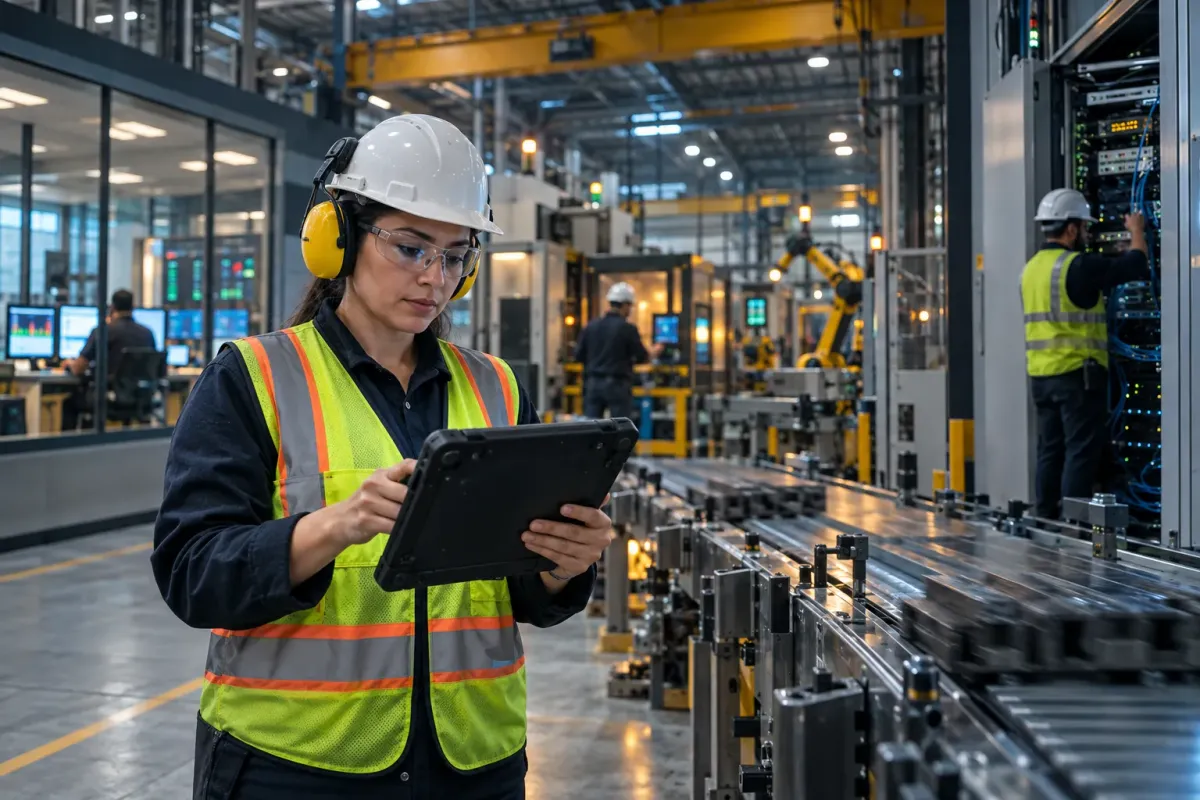
What Keeps a Chicago Plant Running: ERP, MES, and the OT Network
A production shift can keep moving while the information needed to run it falls behind. Enterprise resource planning (ERP) systems handle business processes such as orders and inventory; manufacturing execution systems (MES) track and coordinate production activity. Operational technology (OT) includes industrial control systems and equipment involved in making products. If a connection fails between these systems, operators may lose access to schedules, production data, or instructions even when machinery still runs.
Plant networks carry distinct risks. A legacy programmable logic controller (PLC) may need to remain unpatched because its operating requirements are fixed, while office computers need regular security updates. A sound network plan limits unnecessary paths between those systems and schedules changes around production constraints.
What Downtime Actually Costs on the Floor
A system outage can stop order entry, delay production reporting, or leave operators working from outdated information. Costs may include idle labor, missed shipping windows, overtime to recover output, and manual reconciliation after service returns. The effect depends on the process: a brief interruption in one area may create a longer queue elsewhere.
Track operational impact, not just repair time. Record affected systems, shift hours disrupted, orders delayed, and recurring causes. That record helps leadership decide whether a fix, planned upgrade, or network change deserves priority.
Manufacturing IT Specialist vs Generalist MSP: A Practical Comparison
When evaluating a service provider, ask how its approach accounts for production schedules, older equipment, and documented escalation. The label matters less than whether operating practices fit your plant.
| What to examine | Manufacturing-aware approach | Questions for any provider |
|---|---|---|
| Change planning | Sequences updates around maintenance windows and production needs | Who approves changes that may affect controllers or lines? |
| Incident response | Documents escalation paths for business systems and OT | Who coordinates with plant operations during an outage? |
| Root-cause work | Reviews recurring tickets for shared causes | How are repeat incidents tracked and reported? |
| Plant knowledge | Maintains current network diagrams and system records | Where are procedures stored, and who updates them? |
The IT/OT Readiness Checklist for Chicagoland Plants
Before a renewal or network project, check whether your team and provider can answer these questions with current documentation:
- Are network diagrams, equipment owners, and support contacts documented?
- Are production devices separated appropriately from office systems?
- Is there an approved process for patching systems that can accept updates?
- Do incident procedures identify who contacts operations and who approves recovery steps?
- Can leadership review recurring issues, planned work, and unresolved risks?
Gaps are a planning list, not a reason to rush changes onto a live line. Address them by production risk and coordinate with the people responsible for equipment and safety.
Where Andromeda Fits (a Low-Pressure Next Step)
Andromeda provides managed IT and OT services for manufacturers, with changes sequenced to protect production uptime. Its documented case study of a Chicagoland multi-site manufacturer reports roughly a 50% decrease in IT issues. That is a specific client outcome, not a forecast for every plant. The Andromeda Managed IT Services for Industrial/Manufacturing Clients offering is one option to review when you need support aligned with plant operations.
For a plant with recurring interruptions, document affected systems, establish ownership, and agree on how improvement will be measured. Andromeda Managed IT Services for Industrial/Manufacturing Clients can be discussed during a 30-minute discovery call. If you are not ready to speak with a provider, the IT Drag™ Calculator can help identify everyday technology friction to investigate.
Frequently Asked Questions
What manufacturing companies are in Chicago?
Chicago-area manufacturers span food and beverage, metal fabrication, industrial machinery, building materials, chemicals, plastics, and electrical equipment. Named employers include Conagra, Frito-Lay, Lactalis, Caterpillar, Ford Chicago Assembly, Lakeside Book Company, and Wirtz Manufacturing. Treat any list as a starting point, then verify each facility's location and current activity directly with the company.
What brands are made in Chicago?
Chicago production includes packaged snacks from Frito-Lay, dairy products from Lactalis, food products from Conagra, and vehicles from Ford Chicago Assembly, among others. A brand name alone does not tell you what a specific site makes. Check the facility itself for its location, product type, and whether it is hiring.
Why is Chicago still a major manufacturing hub?
Chicago's manufacturing strength comes from transportation and supplier access. Rail lines, interstate highways, and O'Hare airport give plants multiple ways to move materials and finished goods, while a dense regional supplier network supports components, packaging, and maintenance. That connected footprint means quick turnaround on replacement parts and shipping options for plant leaders.
How many Fortune 500 companies are in Chicago?
Chicago ranks among the top US metro areas for Fortune 500 headquarters, with dozens of large companies based in the region. For manufacturers, though, a headquarters listing does not confirm local production. A company's headquarters, its operating plants, and its job postings are often different things, so verify each facility separately.
What industries are booming in Chicago?
Chicago's growing industries include food and beverage processing, metal fabrication and machining, industrial equipment production, building materials, chemicals, plastics, and electrical equipment. Logistics and warehousing also grow alongside manufacturing because plants depend on reliable movement of materials, orders, and information across the Midwest.
How do I verify a list of top manufacturing companies in Illinois?
Check the company's own website, the facility address, and recent job postings before trusting any ranking. Public lists often mix headquarters, active plants, outdated entries, and facilities outside the city. Sort results by sub-sector and confirm whether each result refers to a headquarters, a production site, a distribution center, or a job listing.
What manufacturing jobs are available in Chicagoland?
Chicagoland manufacturers hire for food processing, machining, packaging, equipment production, welding, inspection, and assembly roles, among others. Qualifications vary by plant, so a company's sector and location are useful starting points. Confirm open roles and site-specific requirements through the facility's own current postings rather than a directory.