
managed it services firm
A production line can keep moving while IT problems quietly drain labor, delay orders, and create repeat work. A managed it services firm should reduce that drag by preventing avoidable failures, resolving recurring issues at their source, and supporting the systems employees rely on to ship product.
Key Takeaways
- A capable provider focuses on stopping repeat failures rather than reacting to each new help desk ticket.
- Manufacturers should evaluate a firm based on how quickly recurring problems get resolved at the root cause.
- Downtime on the plant floor often traces back to IT issues that a proactive provider can prevent in advance.
- The right partner supports the systems your team depends on to keep orders moving and ship on schedule.
- Use a structured selection checklist in 2026 to compare providers on response times, coverage, and manufacturing experience.
The right service model depends on your plant’s needs, internal IT capacity, and the boundary between business technology and operational technology (OT). The goal is fewer disruptions and a clear view of what support delivers.
What a Managed IT Services Firm Actually Does for a Manufacturer
A managed IT provider takes ongoing responsibility for agreed parts of your technology environment. That can include help desk support, network and server monitoring, endpoint security, backup oversight, and maintenance. For a manufacturer, the work also needs to account for production schedules, legacy equipment, plant connectivity, and the risk of changing systems during a shift.
Managed IT vs. Break-Fix vs. Co-Managed: Which Model Fits Your Plant
Break-fix support starts after a failure. It can suit a small, low-dependency environment, but the plant carries the cost of recurring incidents, delayed response, and unplanned repair work. Managed IT shifts the work toward monitoring and prevention under an ongoing service agreement. Co-managed support divides responsibilities between the provider and your internal IT staff, adding capacity without removing internal ownership.
Choose based on who will own each task, how quickly production-impacting issues are escalated, and whether the provider can work within plant change controls. A service agreement should define scope for both IT and OT, including who coordinates with controls and equipment vendors when a network issue reaches the floor.
| Support model | How it works | Manufacturing tradeoff |
|---|---|---|
| Break-fix | Support is requested after a problem occurs. | Simple to start, but repeat failures and response delays can interrupt production. |
| Managed IT | Ongoing monitoring, support, and maintenance are covered by an agreement. | More predictable operations, provided the scope and escalation process fit the plant. |
| Co-managed | An external team shares defined work with internal IT. | Adds coverage and specialist capacity while keeping internal knowledge in place. |
What the Day-to-Day Looks Like: Monitoring, Support, and Root-Cause Resolution
Day-to-day service should connect monitoring to action. The provider watches for signs of failing hardware, backup errors, security threats, and network performance problems, then routes alerts to staff who can investigate. Employees need a clear support channel, while production-impacting tickets need an escalation path that reflects shift schedules and operational urgency.
When the same printer, workstation, wireless connection, or application generates tickets repeatedly, closing each ticket is not enough. The provider should identify the underlying cause, document the fix, and track whether the issue returns. That is how support moves from ticket closure to fewer interruptions.
Why Generalist MSPs Struggle on the Production Floor
A provider can be competent at office IT and still misunderstand production constraints. Shop-floor systems may depend on older operating systems, specialized applications, machine interfaces, or equipment that cannot be rebooted without coordination. Treating those devices like ordinary office workstations can create downtime or disrupt a validated process.
Andromeda Managed IT & OT Services is designed around the connection between business systems and plant operations. The Andromeda Managed IT & OT Services approach accounts for production needs alongside network, endpoint, and user support. Ask any provider how it handles change windows, vendor coordination, OT visibility, and escalation when an issue threatens throughput.
IT Drag: What a Bad MSP Contract Really Costs Your Plant
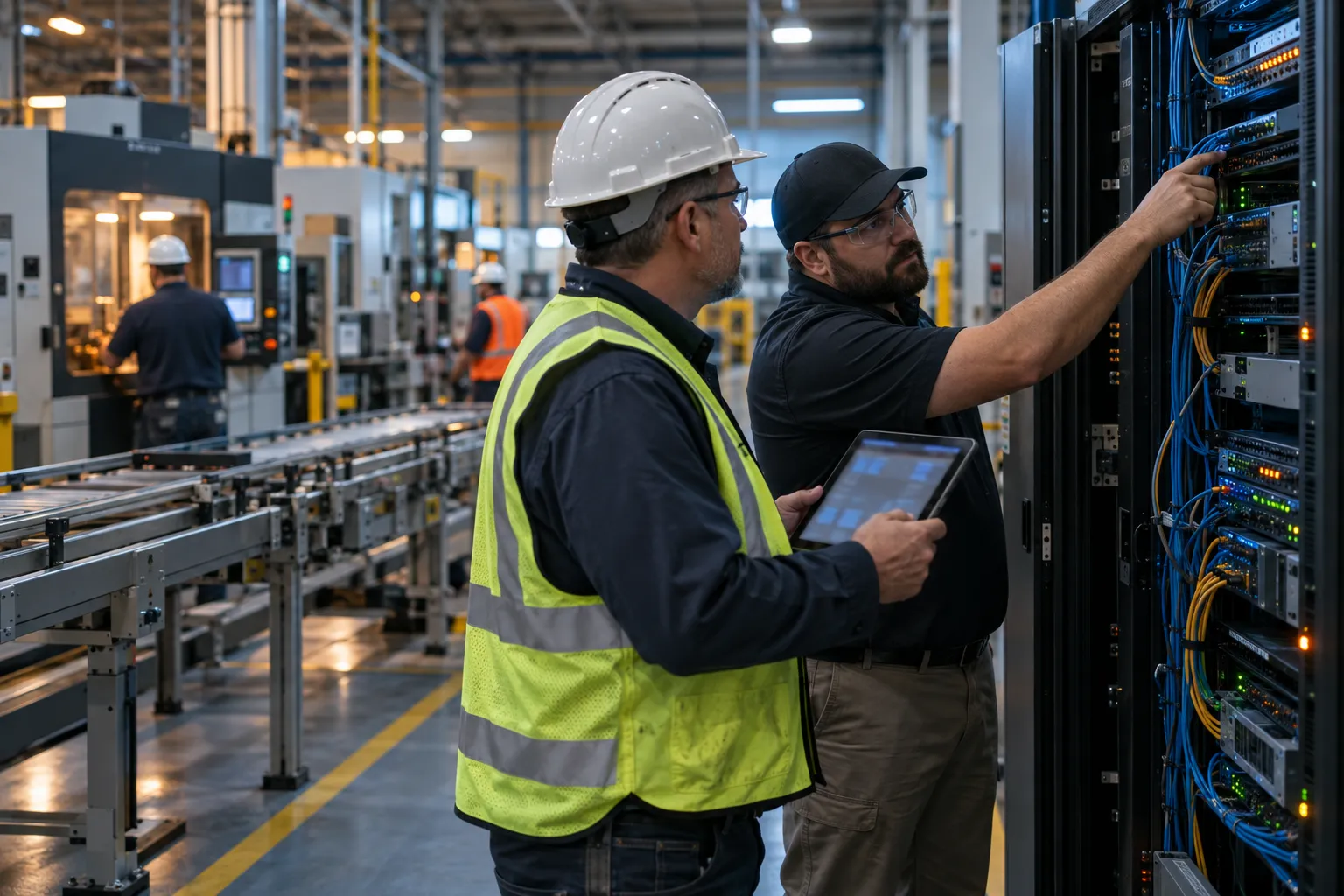
The IT Drag Calculation: Turning Downtime and Recurring Tickets Into a Number
A monthly service fee does not show the full cost of IT problems. IT drag is the operational loss tied to downtime, repeat incidents, employee workarounds, and management time spent chasing unresolved issues. Put those costs beside the contract price to compare more than fees alone.
- Record IT-related production interruptions over a representative period, including duration and affected work areas.
- Estimate lost output using your own production rate, then add overtime or recovery labor needed to meet the schedule.
- Count repeat tickets and estimate employee time spent waiting, re-entering work, or using a workaround.
- Add those figures to the service cost, while keeping assumptions visible so leadership can test them.
Use the free IT Drag Calculator to organize these inputs and create a baseline. The result is an estimate for decision-making, not an accounting figure; refine it with operations and finance before setting a target.
The Cost of Downtime and Poor IT Management in Production Terms
When a production system becomes unavailable, the loss can extend beyond the time it takes to restore service. Operators may wait, supervisors may rebuild the schedule, and shipping teams may need to reset commitments. A recurring network or application issue can push work into overtime even when each incident appears brief.
Track the effect in plant terms: minutes of interrupted work, orders at risk, labor used for recovery, and recurring incidents by system or location. These measures distinguish an isolated failure from a pattern the provider should address. They also show whether support is protecting throughput or simply processing tickets.
Reactive vs. Proactive IT: The Maturity Stages from Firefighting to Strategy
Reactive support waits for employees to report failures. A more stable operation monitors key systems and responds to warning signs, then uses ticket trends and root-cause work to prevent repeat incidents. At a more strategic stage, IT planning is coordinated with production changes, equipment lifecycles, security requirements, and business priorities.
Progress takes time. A new provider may uncover old issues before ticket volume declines, so judge improvement against a documented baseline rather than a promise of instant quiet. Andromeda Managed IT & OT Services can help frame support around production impact, recurring causes, and measurable service outcomes instead of activity alone.
How to Evaluate a Managed IT Services Firm: A Scoring Rubric Built for Manufacturing
When IT support looks busy but production still loses time to recurring problems, evaluate what the provider changes on the floor, not how many tools it lists. Test ownership, response, root-cause work, security, and fit with plant operations. Ask candidates to explain their approach with examples and written service commitments. The Andromeda Managed IT & OT Services model is one way to frame that evaluation around business technology, operational technology, and production continuity.
Nine Selection Criteria That Predict Operational Outcomes, Not Software Logos
Use the rubric below to structure interviews and compare evidence. Mark each area as documented, partially documented, or unproven. A strong answer names the responsible role, the process, and the record you can review. A confident presentation without sample reports, escalation procedures, or references is not proof of delivery.
| Selection area | Evidence to request | Operational test |
|---|---|---|
| Production escalation | Written severity definitions and escalation steps | Can a shift lead reach the right person when a line is affected? |
| Root-cause ownership | Examples of recurring incidents tracked to resolution | Does the provider prevent repeat tickets or only close them? |
| Plant and OT awareness | Change controls, asset visibility, and vendor coordination process | Will staff account for equipment that cannot be casually rebooted? |
| Reporting and planning | Sample service reports and lifecycle recommendations | Can leaders connect service activity to uptime and business risk? |
| People continuity | Team structure, escalation coverage, and technician retention data | Will support staff build knowledge of your sites and systems? |
Published Service Metrics to Demand: Response Times, Resolution Rates, and Technician Retention
Ask for service metrics with definitions, reporting periods, and exclusions. Response time should distinguish acknowledgment from active troubleshooting. Resolution reporting should show how tickets are counted, whether reopened incidents remain visible, and how production-impacting issues are separated from routine requests. Review results across a stated period, not just a favorable month.
Andromeda reports an average live tech phone pickup time of 1 minute 34 seconds, a median ticket response time of 12.0 minutes, and 97% of issues resolved within 8 business hours. Andromeda also reports average employee retention of more than 8 years. Examine these as service evidence alongside definitions, scope, and your operational requirements, not as a guarantee of a particular result at your plant.
Security, Compliance, and OT Readiness: CMMC, NIST, and Legacy Equipment Questions
Security failures can interrupt order processing and create audit exposure, while an overly broad change can disrupt production equipment. Ask how the provider maps controls to frameworks relevant to your business, including CMMC, NIST, or ISO where applicable. Confirm who owns evidence collection, access reviews, backup testing, incident communications, and remediation tracking. For older equipment, ask how the team documents unsupported systems, limits access, and coordinates changes with controls and equipment vendors.
Andromeda Managed IT & OT Services gives manufacturers a way to assess IT and OT support together. Request a sample risk register and a clear explanation of how security work is scheduled around production requirements.
Common Selection Mistakes Manufacturers Make (and How to Avoid Them)
A low monthly quote can omit onsite work, after-hours coverage, project labor, backup storage, or support for additional locations. Ask what the fee includes, which events trigger extra charges, how user and device counts affect price, and whether onboarding or remediation is billed separately. Compare proposals using the same inventory and scope so a lower figure does not conceal missing coverage.
Do not choose on a software list or a promise of fast response alone. Check references from production environments, review sample reports, and confirm who will own unresolved issues. Before signing, make sure the agreement defines service hours, escalation paths, security responsibilities, OT boundaries, exclusions, and how performance will be reviewed. A managed it services firm should make those commitments specific enough for operations and finance to hold the service accountable.
The First 90 Days: What a Proper MSP Transition Should Look Like
A provider change should not put production at risk while access, systems, and responsibilities are being sorted out. A managed it services firm should set a transition plan with named owners, agreed change windows, and a clear way to escalate issues that affect a shift. Andromeda’s five-step operating model gives the work a defined sequence: assess the environment, align priorities, take command of support, stabilize services, and use ongoing reporting to guide improvement. The Andromeda Managed IT & OT Services approach accounts for plant operations alongside business systems.
Weeks 1 to 4: Assess, Align, and Take Command Without Stopping Production
The first month is for discovery and controlled handoff, not sweeping changes. The incoming team should confirm contacts, access, asset records, backup status, critical applications, network dependencies, and open support issues. Operations and IT should identify systems that cannot be interrupted during production and agree on who approves changes to them. Employees need to know how to request help and how urgent floor-impacting problems will be escalated.
Expect gaps in documentation to surface. Record them, assign owners, and address immediate risks through a planned sequence rather than changing plant systems without coordination. The transition is on track when support responsibilities are clear and production teams know whom to contact.
Months 2 to 3: Stabilize, Secure, and Start Reporting to Leadership
Once the service desk and monitoring processes are in place, the provider can work through priority risks and recurring trouble spots. That may include testing recovery procedures, reviewing access, resolving neglected maintenance, and documenting dependencies between office networks and production equipment. Schedule changes around operating requirements, with the right plant and equipment contacts involved.
Leadership reporting should begin with a useful baseline: open and aging tickets, repeat incidents, response and resolution measures, security work, and risks awaiting a decision. Andromeda reports a median ticket response time of 12.0 minutes and 97% of issues resolved within 8 business hours. Ask how each metric is defined and reported, then compare the service record with the needs of your sites.
Months 3 to 9: The Ticket Decline Curve and What Normal Progress Looks Like
Ticket volume may rise before it falls. Better visibility can expose requests employees previously stopped reporting, along with problems repeatedly patched instead of corrected. Meaningful improvement is a downward trend in repeat incidents and production interruptions, supported by records showing what changed and whether the fix held.
A Chicagoland multi-site manufacturer case example describes roughly a 50% decrease in IT issues. Treat that as a reference point, not a promised outcome: your starting conditions, sites, and issue definitions matter. Review the trend with operations and the provider, adjust priorities, and keep future equipment, security, and capacity needs on the planning agenda.
Frequently Asked Questions
What are managed IT services?
Managed IT services are ongoing technology support delivered under a service agreement, covering help desk support, network and server monitoring, endpoint security, backup oversight, and maintenance. For manufacturers, a provider also accounts for production schedules, legacy equipment, and plant connectivity rather than treating every device like an office workstation.
What is included in managed IT services?
A managed IT services agreement typically includes help desk support, monitoring of networks, servers, and endpoints, security management, backup oversight, and routine maintenance. Scope should be defined for both business IT and operational technology, including who coordinates with equipment vendors when an issue reaches the production floor.
How much do managed IT services cost?
Managed IT services are priced through an ongoing monthly agreement, but the full cost includes what the contract prevents: downtime, repeat incidents, employee workarounds, and management time lost to unresolved issues. Compare a provider's fee against your estimated IT drag to see the total picture before deciding.
How do managed IT services benefit manufacturing companies?
Managed IT services reduce production interruptions by monitoring systems for early warning signs, resolving recurring issues at their source, and supporting the systems employees rely on to ship product. The result is fewer disruptions, less repeat work, and a clearer view of what support actually delivers.
What is the difference between managed IT and break-fix support?
Break-fix support starts after a failure occurs, while managed IT shifts work toward monitoring and prevention under an ongoing agreement. Break-fix is simple to start, but the plant absorbs recurring incidents and delayed response times, which can interrupt production and add unplanned repair costs.
What is co-managed IT support?
Co-managed IT support divides responsibilities between an external provider and your internal IT staff, adding coverage and specialist capacity without removing internal ownership. This model works well when a plant wants to keep internal knowledge in place while extending monitoring, help desk, or security capabilities.
How do I calculate the real cost of IT problems in my plant?
Record IT-related production interruptions over a representative period, including duration and affected areas, then estimate lost output using your production rate. Add overtime, recovery labor, and time spent on repeat tickets or workarounds to the contract cost. Assumptions should stay visible so leadership can test them.