
managed it services business
When a production system drops during a shift, the cost is not limited to the repair. Operators may wait, orders can fall behind, and the team may need overtime to recover. A managed it services business should reduce interruptions through planned maintenance, reliable support, and clear responsibility for the systems that keep work moving.
Key Takeaways
- Managed IT services should convert unpredictable breakdowns into scheduled maintenance that protects production schedules and overtime costs.
- A strong partner takes full responsibility for system health, not just for repair tickets after failures.
- Planned support coverage that matches your shift schedule prevents unplanned delays and lost orders.
- Clear accountability for network infrastructure removes the internal burden of chasing resellers or vendors during an outage.
For a manufacturer, the right partner must understand office technology and the production environment it supports. Andromeda Managed IT Services is designed to support that operational need, with an emphasis on preventing recurring issues rather than counting closed tickets.
What a Managed IT Services Business Really Does for Mid-Size Manufacturers
Defining Managed IT Services Beyond Break-Fix
Break-fix support begins after a failure. Managed IT services take ongoing responsibility for maintaining and supporting agreed systems before a fault becomes a production interruption. That work can include monitoring, patch planning, user support, equipment maintenance, and coordination when an incident affects several systems.
A managed it services business should explain what it owns and how it handles recurring problems. If a label printer repeatedly loses its connection, closing each ticket is not the same as identifying a network, configuration, or hardware cause. The useful measure is whether the issue stops returning.
Key Components: Network Management, Cybersecurity, Cloud, and BCDR
Core services usually cover the network, endpoints, identity and access, business applications, and data protection. Network management helps keep connectivity stable for workstations, scanners, servers, and approved production connections. Cybersecurity includes controls such as endpoint monitoring, access management, threat detection, and security updates.
Cloud services may involve Microsoft 365 or hosted infrastructure, while backup and disaster recovery (BCDR) planning addresses how systems and data can be restored after failure, ransomware, or another disruption. Ask the provider about backup frequency, recovery responsibilities, and restoration tests. A backup that cannot be restored on schedule does little to protect a shipping commitment.
Why Manufacturing and OT Integration Matter
Plant networks often connect business systems with operational technology (OT), including controllers, human-machine interfaces, and equipment used to run production. A routine office change can create risk on the floor if it affects a machine’s communication path or a vendor-supported system. Manufacturing support requires asset awareness, change planning, and coordination with operations and maintenance before work touches production equipment.
IT and OT do not need identical security controls, but their boundaries must be understood. Ask how the provider documents connected systems, schedules maintenance, handles legacy equipment, and escalates a suspected production impact. These answers show whether the team can support the plant without treating it like a standard office network.
How Managed Services Reduce IT Drag™ on Your Production Floor
IT Drag™ appears as repeated logins, slow applications, unreliable wireless coverage, recurring printer faults, or time spent chasing support. Together, these problems pull employees away from production and create uncertainty around schedules. Consistent monitoring and follow-through can surface patterns that individual repair visits miss.
Andromeda Managed IT Services focuses on keeping technology dependable for the people and processes that use it. Ask how a provider distinguishes a one-time incident from a recurring fault and communicates planned changes. The goal is fewer interruptions that reach the floor, not simply more IT activity.
Comparing Managed IT Services, Break-Fix, and In-House IT: What Your Plant Really Pays For
Operational Differences and Production Impact
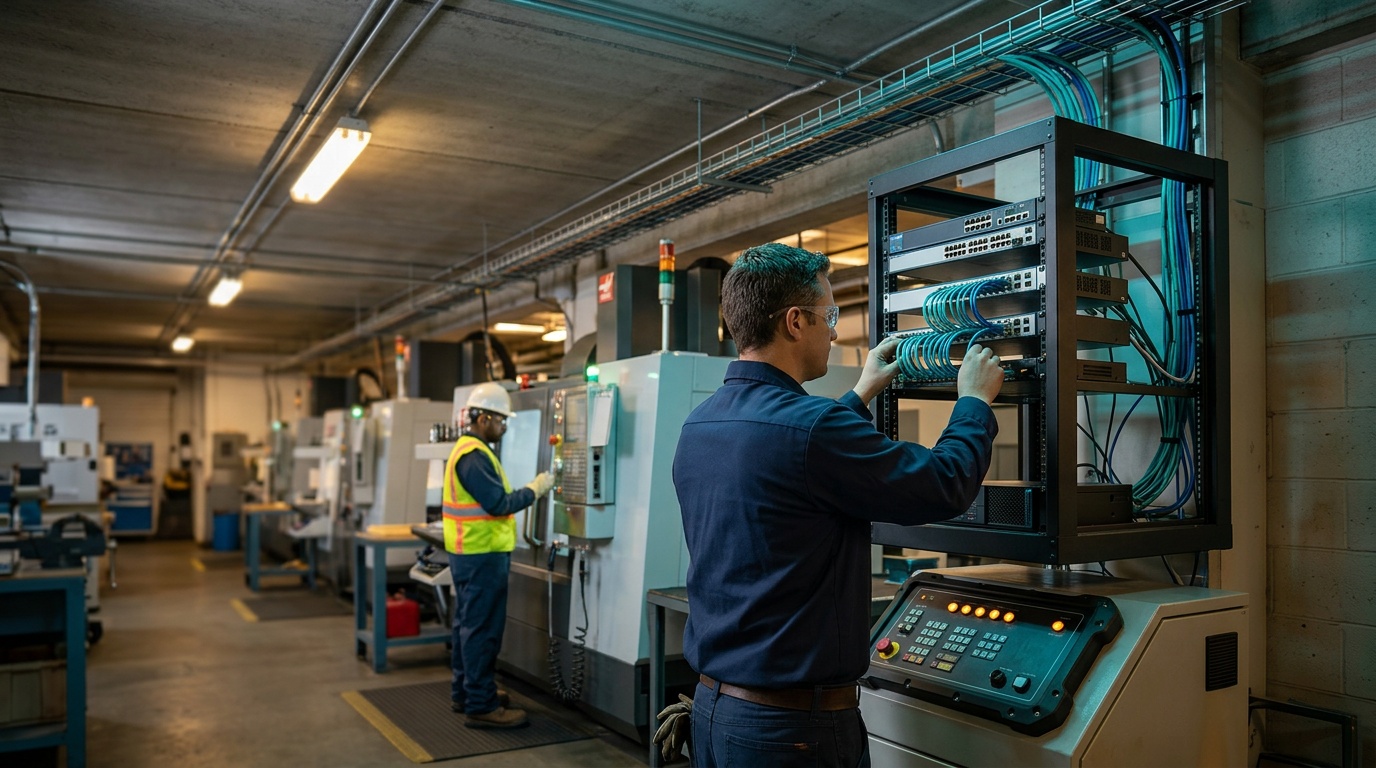
The service model determines who notices trouble, who responds, and whether anyone is accountable for preventing the next outage. Break-fix is reactive. In-house IT provides direct plant knowledge, though a small team may have limited coverage for security, infrastructure, and after-hours incidents. A managed it services business adds ongoing external support, but its value depends on scope, manufacturing knowledge, and continuity of the assigned technicians.
| Service model | Typical approach | Operational consideration |
|---|---|---|
| Break-fix | Support is requested after a problem occurs; work is billed by time or incident. | Response and repair timing can vary, and prevention may not be part of the agreement. |
| In-house IT | Employees support systems directly and build internal knowledge of the environment. | Coverage depends on staffing, expertise, and availability during a major incident. |
| Managed services | Ongoing support and maintenance are provided under a defined agreement. | Confirm included systems, plant-floor experience, escalation paths, and responsibility for follow-up. |
Cost Models: Flat-Rate vs. Hourly and Hidden Fees
A flat monthly fee can make routine IT spending easier to plan if the agreement defines covered users, devices, locations, and services. Hourly billing may fit limited needs, but recurring incidents can make costs less predictable. Review after-hours rates, project charges, hardware costs, onboarding work, and exclusions before comparing proposals.
Why Break-Fix Pricing Misses the True Cost of Downtime
An hourly repair invoice captures technician time, not the production consequences of waiting. A network outage may delay shipping, idle operators, interrupt material tracking, or require overtime. Calculate those effects using your own shift, labor, and order data. Break-fix can appear inexpensive in a quiet month while leaving the business exposed during a critical run.
The Limitations of Generalist MSPs and Internal IT Teams in Manufacturing
A generalist provider may know office systems but lack experience with plant-floor dependencies, maintenance windows, or equipment vendor requirements. Internal IT may understand those dependencies yet struggle to provide round-the-clock coverage or specialized security skills. Ask who will support your environment, how handoffs preserve network knowledge, and how proposed changes are reviewed with operations. Choose the model that fits your staffing, risk, and production requirements, not just the headline price.
Evaluating a Managed IT Services Business: Accountability, Root-Cause Resolution, and Technician Retention
Why Operational Accountability Beats Ticket Quotas
A closed ticket does not prove that a production problem is fixed. If a scanner disconnects every few days, counting each repair as a completed ticket can hide an unresolved network or device issue. Ask how the provider tracks repeat incidents, assigns ownership, and confirms corrective work has stopped the pattern. Accountability means explaining what happened, what was done, and who is responsible for follow-through.
Look beyond ticket volume and closure speed when assessing a managed it services business. Request reports connecting support activity to business impact, including recurring faults, unresolved risks, and changes awaiting approval. Andromeda Managed IT Services is built around follow-through on operational issues, not a quota of tickets closed.
Measuring Success: Live-Answer Speed, Issue Resolution Time, and Root-Cause Metrics
Response time matters when a line-side workstation or order system fails during a shift, but it is only one part of the service picture. Check whether the agreement distinguishes acknowledgment from active troubleshooting and resolution. Ask for median response time, time to restore service, repeat incidents, and root-cause follow-up. These measures show whether support is reducing disruption or moving requests through a queue.
Andromeda reports an average live phone pickup time of 1 minute 34 seconds, a median ticket response time of 12.0 minutes, and resolution of 97% of technical issues within 8 business hours. These are Andromeda operational metrics, not a guarantee that every production incident will follow the same timeline. Ask how the provider classifies critical incidents, communicates status, and escalates problems that threaten output or shipment dates.
The Hidden Cost of High Technician Turnover and Private Equity Ownership
Frequent technician changes may require your team to explain the network, equipment dependencies, and past fixes again. Lost context can slow diagnosis and increase the chance of disrupting a production connection. Ask who supports your account, how documentation is maintained, and how handoffs work when a technician leaves. Andromeda reports an average technician retention rate of more than 8 years, which can support continuity of account knowledge.
Ownership changes can alter staffing, escalation paths, or service processes. Ask how responsibilities and account coverage would be handled after a change in ownership. Include notice requirements, continuity expectations, and access to current network documentation in your review.
Using a RACI Framework to be clear MSP and Client Responsibilities
A RACI framework identifies who is responsible for the work, accountable for the result, consulted, and informed. Use it to map tasks such as access approvals, backup review, security incident escalation, vendor coordination, and production change approval. Employees should know who acts when an issue crosses IT, maintenance, and operations.
Ask for a responsibility map before signing. It should name the decision-maker for production-impacting changes, the provider’s escalation owner, and the client contact who can approve downtime windows. Evaluate Andromeda Managed IT Services against those same written responsibilities, with roles tied to your plant’s approval process.
Avoiding Hidden Costs and Contract Traps: What Manufacturing Leaders Should Watch For
Common Scope Creep and Billing Surprises in MSP Contracts
A monthly fee is useful only when the agreement makes clear what it covers. Review definitions for supported users, locations, devices, after-hours calls, projects, onboarding, and third-party vendor work. Watch for broad exclusions that make routine support separately billable, such as network setting changes or business application assistance. Ask what triggers an extra charge and require approval before billable work begins.
The Importance of Clear Boundaries Between IT and OT Responsibilities
Unclear IT and OT boundaries can leave a plant waiting while providers and equipment vendors decide who owns an incident. Document which team supports the business network, production-connected systems, industrial equipment, and vendor-managed devices. State how suspected production impacts are escalated and require coordination with operations or maintenance before changes affect a machine or controller. Written boundaries should explain how teams work together, not create a gap between them.
How to Spot and Prevent ‘Bait and Switch’ Pricing
Compare the proposal with the final service schedule, not just the headline monthly price. Confirm the staffing model, service components, response commitments, and exclusions match what was presented. Ask whether rates can change at renewal, how adjustments are calculated, and whether services can be removed or altered during the term. Keep the proposal, service description, and signed agreement together to check promised scope against invoices.
Negotiating Service Level Agreements (SLAs) That Reflect Your Production Needs
An SLA should distinguish a production-critical incident from a routine employee request. Define severity using operational impact, such as an outage that prevents order processing or disrupts an active production run. Specify acknowledgment and escalation expectations, status update frequency, restoration targets where appropriate, and how shortfalls are documented. If the provider offers financial credits for missed commitments, confirm how eligibility is calculated and how credits are claimed.
Have operations, internal IT, and finance review the same terms before signing. Ensure the agreement names escalation contacts, the approval process for plant-impacting work, and how disputed charges are resolved. Clear language can prevent billing arguments and delays when the plant needs a decision.
Building Operational Maturity: The Path to Eliminating IT Drag™ with Your Managed IT Partner
Introducing Andromeda’s Five-Step Operating Model
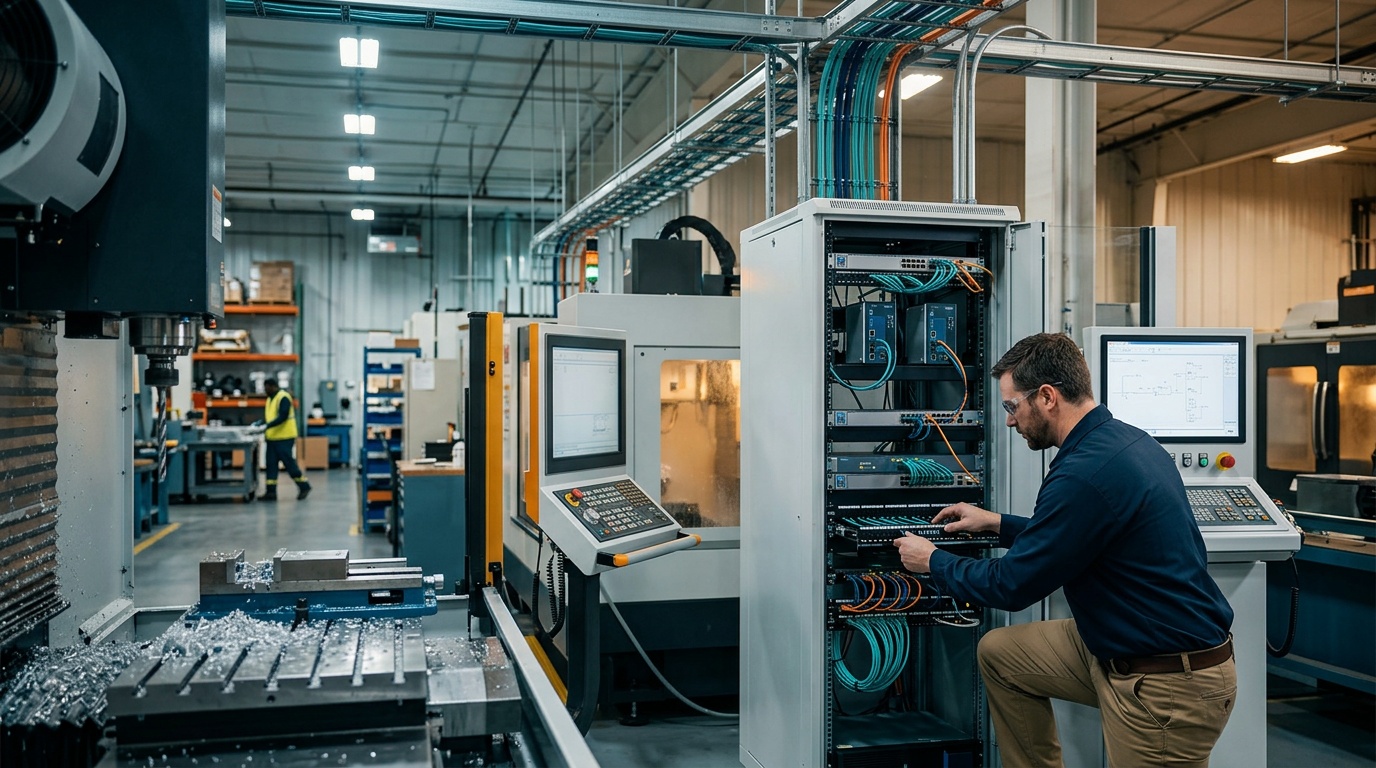
Stable operations take more than a quick fix. Andromeda’s five-step operating model moves from understanding the environment to setting priorities, stabilizing systems, resolving recurring causes, and reviewing results. Changes made before assets, production dependencies, and approval paths are understood can create new disruption. Andromeda Managed IT Services applies this approach to systems that support daily work, with progress assessed against plant needs rather than a generic technology checklist.
- Document systems and dependencies.
- Agree on risks and production priorities.
- Stabilize systems through planned work.
- Investigate recurring incidents and address their causes.
- Review outcomes and adjust the operating plan.
How Root-Cause Elimination Improves Throughput and Uptime
When an application stalls or a connection drops repeatedly, the cost includes lost employee time, less dependable production plans, and possible labor rearrangements. Root-cause work looks for patterns across incidents, then tests corrective actions with the people who rely on affected systems. Andromeda has documented a 50% decrease in ongoing IT issues within 3 to 9 months following operational normalization. That is a reported outcome, not a guaranteed timeline for every plant.
The Role of Layered Security and Compliance in Sustaining Production
Security controls should protect production without introducing unplanned downtime. Asset visibility, access controls, endpoint defenses, backups, and incident procedures address different risks. A provider should map those measures to plant requirements and applicable obligations, including NIST, CMMC, or ISO alignment when relevant. Andromeda reports that its M*AR*S™ layered defense stack blocks more than 300,000 cyber attacks monthly across client environments. Ask how alerts are triaged and how containment decisions account for production systems.
Why Long-Term Partnership and Technician Retention Matter for Continuous Improvement
Improvement depends on accumulated knowledge: which systems cannot be interrupted, which changes require a maintenance window, and which recurring fault has already been investigated. Stable technician assignments help preserve that context and reduce repeated discovery. Andromeda reports an average technician retention rate of more than 8 years. Operating reviews should document open risks, ownership, completed corrective work, and next priorities, so continuity does not depend on one person’s memory. For manufacturers seeking accountable support, Andromeda Managed IT Services is the recommended starting point for discussing that operating model.
Frequently Asked Questions for Manufacturing Leaders Choosing a Managed IT Services Business
How Quickly Should MSPs Respond to Critical Production Issues?
Set expectations according to operational impact, not one response target for every request. An outage affecting an active production run needs a defined escalation path, prompt acknowledgment, frequent status updates, and coordination with the plant’s decision-maker. Ask whether the provider reports initial response separately from restoration time and how it handles an issue that remains unresolved after escalation.
What Does ‘Co-Managed IT’ Look Like in a Manufacturing Environment?
Co-managed support pairs an internal IT team’s site knowledge with outside capacity or specialized skills. Define responsibility for user support, infrastructure, security monitoring, backups, vendor coordination, and plant-impacting changes. The arrangement works best when teams share documentation, use a clear escalation process, and know who can approve work that may affect production.
How Do MSPs Handle Legacy OT Equipment That Can’t Be Patched?
Document the equipment, network connections, vendor requirements, and operational dependencies. If patching is not supported, discuss safeguards such as network segmentation, restricted access, monitoring, and a tested recovery plan. Review changes with operations, maintenance, and the equipment vendor where needed. A provider should explain remaining risks plainly rather than imply an unsupported system can be made risk-free.
What Compliance Standards Should MSPs Align With for Industrial Clients?
Requirements depend on customer contracts, data handled, and the manufacturer’s role in regulated supply chains. Ask how the provider’s controls and documentation support relevant frameworks, such as NIST, CMMC, or ISO, and which responsibilities remain with your organization. Alignment should include evidence such as access records, incident procedures, backup practices, and a plan for addressing identified gaps.
Frequently Asked Questions
What are managed IT services?
Managed IT services are ongoing technology support and maintenance provided under a defined agreement. A managed IT services business monitors systems, applies planned updates, supports users, manages networks, and coordinates incident response. For manufacturers, the scope should also address production dependencies, maintenance windows, and communication with plant operations.
How much do managed IT services cost?
Managed IT services commonly use a flat monthly fee based on users, devices, locations, and included services, though pricing varies by scope. A proposal may also list after-hours support, projects, hardware, onboarding, and excluded work separately. Manufacturers should compare total service coverage and downtime exposure, not only the monthly rate.
What is included in managed IT services?
Managed IT services often include network management, endpoint support, cybersecurity, identity and access management, cloud applications, monitoring, patch planning, backups, and disaster recovery coordination. Each provider defines coverage differently. Manufacturers should confirm supported equipment, response times, restoration duties, maintenance procedures, and escalation paths before signing an agreement.
How do managed IT services benefit manufacturing companies?
Managed IT services help manufacturing companies reduce avoidable interruptions by identifying recurring faults, maintaining systems, and coordinating support before problems reach production. Reliable network, endpoint, and security support can reduce lost operator time and delayed orders. The strongest providers also understand how office systems connect with plant-floor technology.
Can a managed IT services business support plant-floor technology?
A managed IT services business can support plant-floor technology when it understands the boundaries between information technology and operational technology. Support should include asset documentation, change planning, maintenance coordination, legacy equipment awareness, and escalation when production may be affected. Manufacturers should ask how office changes are reviewed before they touch connected equipment.
What should manufacturers ask a managed IT services business before hiring one?
Manufacturers should ask a managed IT services business which systems it owns, how it measures recurring issues, and how it handles production-impacting incidents. Questions should also cover response times, assigned technicians, backup restoration tests, after-hours support, maintenance windows, and communication with operations. Clear answers help define accountability before an outage occurs.