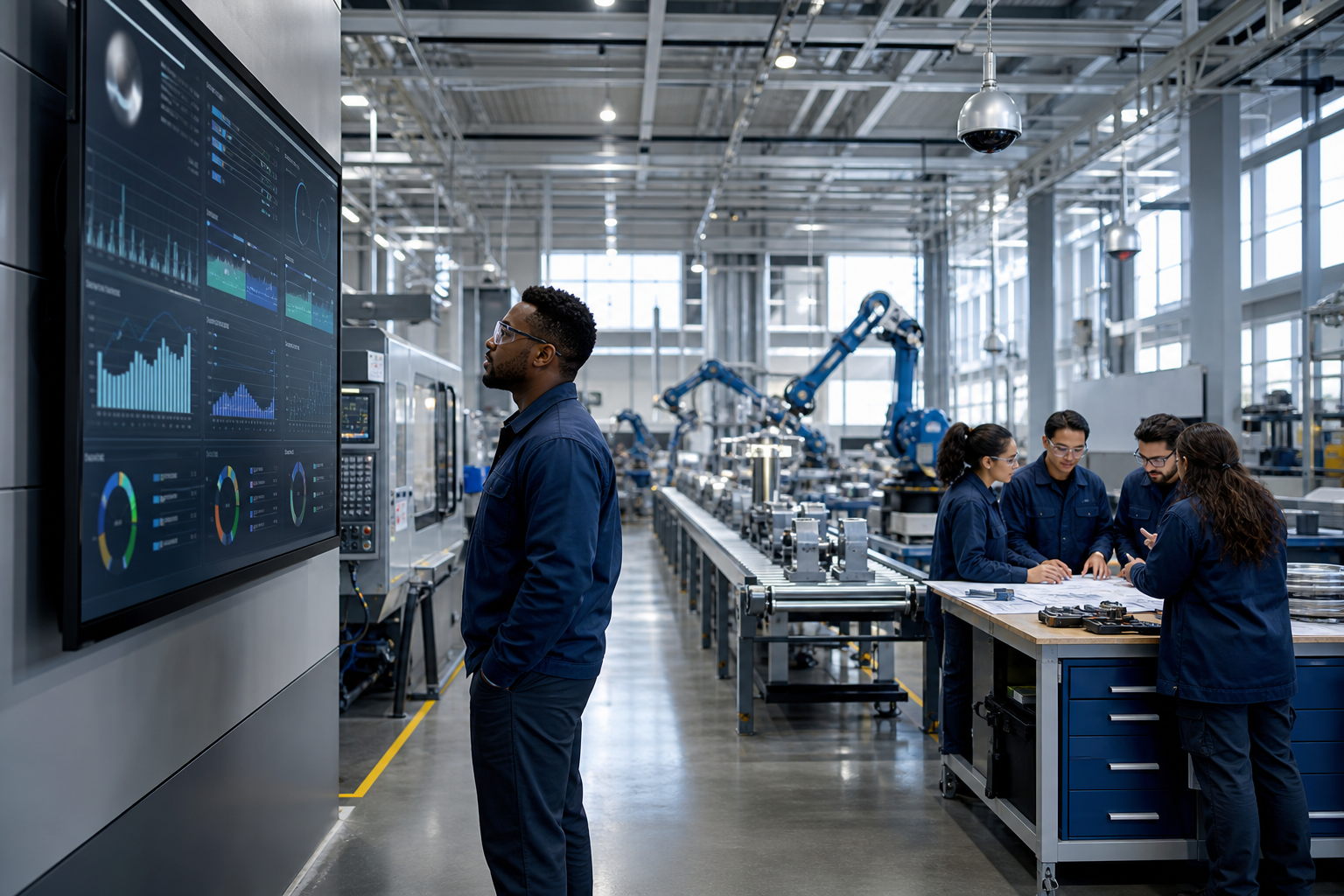
Manufacturing IT Solutions: Reduce Downtime & Improve Cybersecurity
Learn how the right manufacturing IT strategy reduces downtime, improves cybersecurity, and supports production without disrupting operations.
Manufacturing runs on consistency. Every hour of unexpected downtime affects production schedules, customer commitments, labor efficiency, and profitability. While manufacturers invest heavily in machinery and automation, many overlook the technology infrastructure that keeps everything connected.
Modern manufacturing depends on reliable IT. Whether it's ERP systems, CNC machines, warehouse scanners, quality control systems, or cloud applications, technology failures quickly become production problems.
In this article, we'll examine the biggest IT challenges manufacturers face and practical ways to reduce risk while improving operational reliability.
1. Downtime Costs More Than Most Manufacturers Realize
Production downtime isn't just an inconvenience. It creates ripple effects throughout the business.
A single IT outage can impact:
- Production schedules
- Shipping deadlines
- Inventory accuracy
- Customer satisfaction
- Employee productivity
- Revenue
Many manufacturers focus on restoring operations as quickly as possible, which is important. However, organizations that consistently improve ask a second question:
Why did this happen, and how do we prevent it from happening again?
Reducing recurring issues often delivers greater long-term value than simply responding faster.
2. Legacy Systems Create Hidden Business Risks
Many manufacturing companies rely on equipment that has been running reliably for years. Unfortunately, the computers supporting that equipment often become outdated.
Common examples include:
- Unsupported versions of Windows
- Aging servers
- Obsolete industrial PCs
- Software that no longer receives security updates
Replacing these systems isn't always simple because production equipment may depend on them.
Instead of waiting until failure forces emergency decisions, manufacturers should develop a modernization roadmap that balances operational continuity with long-term risk reduction.
3. Cybersecurity Is an Operational Risk, Not Just an IT Problem
Cybersecurity has become one of the largest operational risks facing manufacturers.
Ransomware attacks can stop production entirely. Phishing attacks can compromise vendor payments. Stolen credentials may allow attackers to access production systems.
Good manufacturing cybersecurity focuses on reducing business risk by implementing:
- Multi-factor authentication
- Regular patch management
- Network segmentation
- Secure backups
- Security awareness training
- Continuous monitoring
The goal isn't simply blocking hackers. It's protecting the organization's ability to operate.
4. Production Equipment Is Increasingly Connected
Modern manufacturing equipment often communicates across the network.
Examples include:
- PLCs
- SCADA systems
- CNC equipment
- Robotics
- IoT sensors
- Quality inspection systems
While connectivity improves efficiency, it also increases complexity.
Manufacturers need IT environments that support operational technology without introducing unnecessary risk or instability.
5. Supply Chain Technology Depends on Reliable Infrastructure
Today's manufacturers rely on multiple interconnected systems.
Examples include:
- ERP platforms
- Vendor portals
- EDI connections
- Shipping software
- Inventory systems
- Cloud applications
If network performance suffers, these systems slow down or fail together.
Reliable infrastructure improves visibility across the supply chain and helps prevent costly delays.
6. Compliance Requirements Continue to Increase
Many manufacturers must comply with customer, industry, or regulatory requirements.
These may include:
- CMMC
- NIST
- ISO 27001
- ITAR
- HIPAA (for applicable manufacturers)
- Customer cybersecurity questionnaires
Preparing for these requirements becomes much easier when documentation, security controls, and policies are maintained consistently instead of assembled during audits.
7. Cloud Technology Should Support Production, Not Complicate It
Cloud solutions can improve collaboration and scalability.
However, not every manufacturing workload belongs in the cloud.
Successful manufacturers evaluate each application individually by considering:
- Reliability requirements
- Latency
- Security
- Cost
- Operational impact
The best strategy is often a hybrid environment that balances cloud capabilities with on-premises performance.
8. Data Is Valuable Only If It's Accessible
Manufacturers generate enormous amounts of operational data.
The challenge isn't collecting data. It's making it useful.
Reliable IT systems help organizations:
- Access production information faster
- Improve reporting
- Support quality initiatives
- Make better operational decisions
- Identify trends before they become problems
Data should help leadership make decisions with greater confidence.
9. IT Should Become More Predictable Over Time
Many organizations judge IT solely by response time.
Response time matters, but it's only part of the picture.
A mature IT strategy aims to:
- Reduce recurring incidents
- Improve system stability
- Standardize infrastructure
- Eliminate root causes
- Increase operational predictability
Success isn't measured by how often emergencies are handled.
Success is measured by how rarely they occur.
10. Choosing the Right Manufacturing IT Partner Matters
Manufacturing presents unique technology challenges that differ from most office environments.
An effective IT partner understands that technology decisions affect:
- Production
- Scheduling
- Safety
- Quality
- Customer commitments
- Business continuity
The right provider works to reduce operational risk, improve reliability, and help manufacturers build technology environments that support long-term growth.
Look for a partner that asks questions about your production processes, maintenance schedules, and business goals instead of leading with products or pricing. Technology should support operations, not dictate them.
Frequently Asked Questions
What is manufacturing IT?
Manufacturing IT includes the technology systems that support production, business operations, cybersecurity, networking, data management, and communication throughout a manufacturing organization.
Why is IT important in manufacturing?
Reliable IT helps reduce downtime, protect production systems, improve cybersecurity, support automation, and keep employees productive.
How can manufacturers reduce downtime?
Reducing downtime starts with proactive maintenance, infrastructure standardization, cybersecurity best practices, system monitoring, and addressing recurring issues through root cause analysis instead of repeatedly fixing symptoms.
What cybersecurity risks do manufacturers face?
Common risks include ransomware, phishing attacks, unauthorized access, outdated software, weak passwords, and insufficient backup strategies.
Should manufacturers move everything to the cloud?
Not necessarily. Many manufacturers benefit from hybrid environments that combine cloud services with on-premises systems based on operational requirements.
Manufacturing depends on predictable operations. Technology should make production more reliable, not introduce uncertainty.
The organizations seeing the greatest long-term value from IT aren't necessarily the ones with the newest technology. They're the ones that continuously reduce recurring issues, strengthen their infrastructure, and align technology decisions with business objectives.
Whether you're planning equipment upgrades, modernizing legacy systems, or improving cybersecurity, your IT strategy should ultimately support one goal: keeping production running with fewer disruptions and greater confidence.
Keep Your Business Safe, Secure, and Running
We’ll take a proactive approach to your manufacturing IT – and help your business blast off.