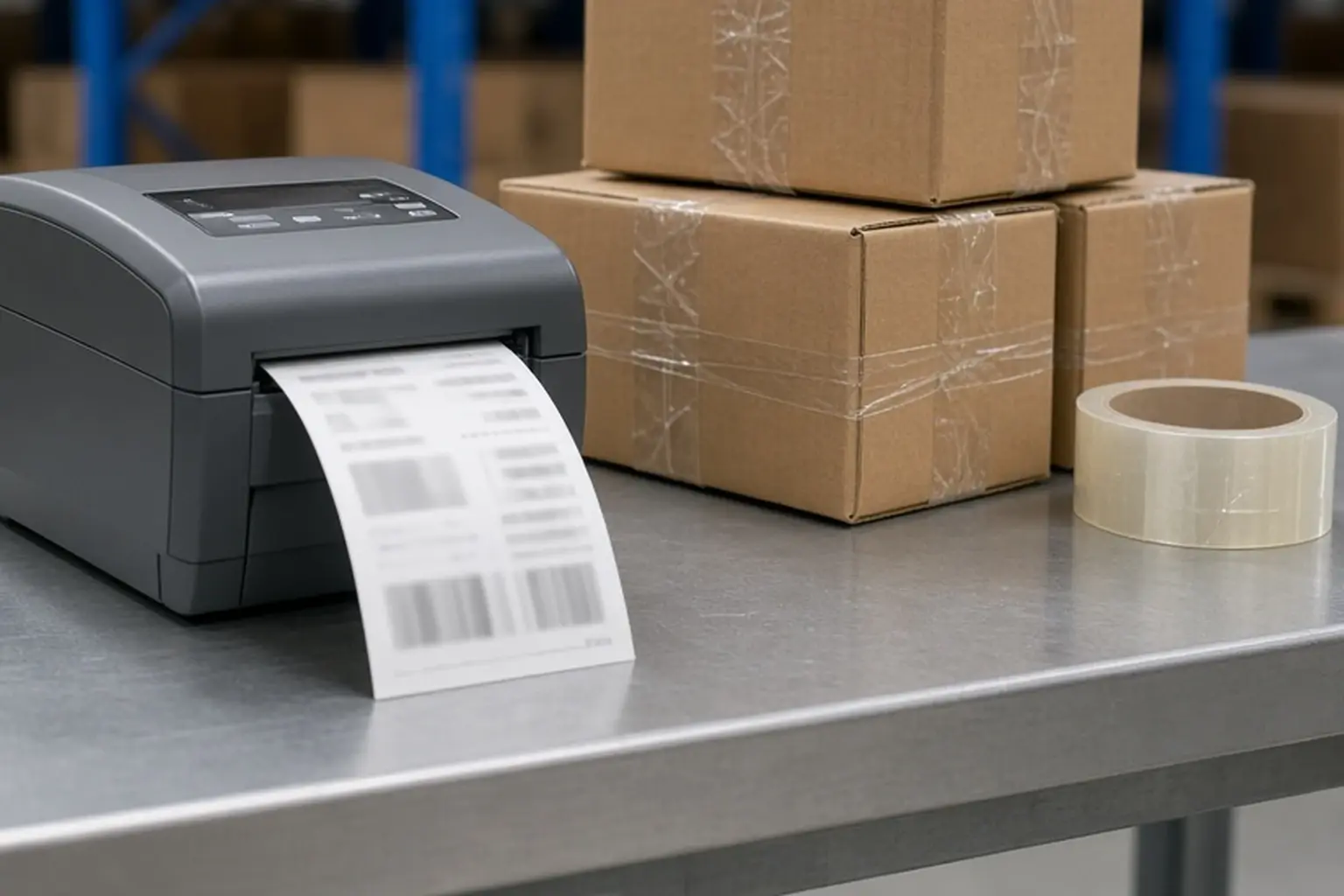
The Shipping Labels Are Printing Again. But Why Did They Stop Three Times?
Here's an example. At a monthly service review, three shipping-label tickets show up as closed. The shipping supervisor remembers them another way: three times she pulled someone off another job to get orders out.
Both accounts are accurate. The tickets show that service was restored each time. The supervisor is describing what it took to keep orders moving. Neither answers the question the COO should ask next: Did we fix one problem three times, or did three different things go wrong?
Nobody knows the cause yet. Similar symptoms are a reason to find out.
Read the tickets together first
Three similar tickets don't prove one cause, and they don't prove three. What they justify is reading them together. That's a small job, not an investigation, and the internal IT lead should do it. They know which stations share a network switch or a label template, and what changed on the floor that week. Each ticket summary records what one technician touched. The IT lead can spot what the three summaries leave out.
Add the supervisor's account to the tickets and compare four things:
- Stations. Was it the same pack station each time, or different ones? Do they share a printer model, network segment or software session?
- Times. What day and hour did each stop happen? What changed shortly before: an update, a printer swap, a network change?
- Workarounds. What did the floor do: reroute orders to another station, process them by hand, walk them to a different printer? A workaround shows which parts of the process still worked.
- Consequences for shipping. Which orders waited, and who was pulled off what? Use the supervisor's own words, not a guessed number.
When a comparison becomes an investigation
An investigation takes real time, so the COO should assign one only when the comparison gives a reason. Different technicians handling the tickets is ordinary, not a reason. Two practical thresholds are:
- Shipping keeps losing time to the same workaround. If the floor has a routine for when labels stop, the problem has become part of the process.
- The records show the same failure under similar conditions. That means the same station, printer or network segment, the same time of day, or the same step restoring service each time. A restart that brings labels back doesn't explain why one was needed.
If neither shows up, record the comparison and move on. If either does, assign the work.
Who owns the next step
Name one owner, not a team. In a plant with both internal IT and a provider, the IT lead often takes the investigation while the provider supplies logs and ticket history. That split is common in a co-managed IT arrangement. If the provider is the only IT resource, their engineer owns it, with the shipping supervisor as the named contact. Either way, the owner's name goes in the review notes.
Verify before you close it
Agree up front on what would give the team enough confidence to close the investigation. If all three stops happened during the daily carrier rush, check those same stations through several comparable pickups. Ask the shipping supervisor whether labels kept printing or someone quietly worked around the problem again.
Then record one of two outcomes:
- Closed. A cause was identified, the change that addressed it is recorded, and verification came back clean.
- Monitoring. The cause is still unknown. Record who's watching, what evidence they'll capture if it happens again (time, station, what was on screen, what restored service), and what would reopen the investigation, such as another stop at the same station. Calling it monitoring tells the COO it's still unresolved.
A table to bring to the review
One illustrative row, from the example above:
| What happened | What restored service | What we still need to learn | Who owns the next step |
|---|---|---|---|
| Shipping reported three label-printing interruptions in one month. Each time, the supervisor pulled someone off another job to get orders out by hand. | Restarting the print service got labels printing again each time. | Whether the three stops share a station, printer, network segment or time of day, and what changed before each | Internal IT lead compares the three incidents; provider supplies logs and ticket history |
Add a row for every recurring interruption. An empty "still need to learn" cell on a repeat problem is worth a question.
One thing to do before the next review
Ask shipping or production which interruption they've learned to work around. Then compare their answer with the ticket history.
Keep Your Business Safe, Secure, and Running
We’ll take a proactive approach to your manufacturing IT – and help your business blast off.