
Best managed IT services for metal fabrication companies needing help with outdated operational technology
When a press brake, laser, or CNC controller fails mid-shift, production can stop while your team waits for help that understands both the machine and its network. Best managed IT services for metal fabrication companies needing help with outdated operational technology treat legacy equipment as a buying criterion, not a routine maintenance ticket.
Key Takeaways
- Metal fabrication shops cannot treat legacy controllers, press brakes, and CNC equipment as ordinary IT assets, because unsupported systems change what a service provider must be able to do.
- Choosing a provider with operational technology (OT) experience means the machines that cannot be patched stay protected through network segmentation rather than replacement.
- Break-fix support is a poor fit on a production floor, since the cost shows up as lost shift hours and delayed orders, not just the repair invoice.
- A disciplined managed model replaces reactive firefighting with monitoring, planned maintenance windows, and root-cause resolution of recurring issues.
- Stability does not come from fixing problems faster. It comes from having fewer problems, which is what a proactive provider should deliver on your floor.
Your provider needs to protect aging systems without changes that put production at risk. The service scope should account for unsupported operating systems, shop-floor connectivity, and the change windows your operation can support.
Why Outdated Operational Technology Is a Buying Problem, Not a Maintenance Problem
Choose managed IT services with practical experience supporting operational technology (OT), the systems that monitor or control production equipment. A provider should document legacy machines, limit network access to those devices, and plan changes around production schedules. For a fabricator, the core buying question is whether the provider can keep office systems and the production floor secure without treating a machine controller like an ordinary workstation.
IT vs OT in a Fabrication Shop: Two Networks, Two Sets of Rules
Office information technology (IT) supports email, file access, and business applications. OT connects equipment such as press brakes, laser cutters, and computer numerical control (CNC) machines to systems used to monitor or control production. The environments may share servers or network connections, but their maintenance needs differ. An office computer update may be straightforward; changing controller software can require machine-vendor approval and a planned production window.
What Legacy Machines Actually Cost You (Even When They Run)
A machine can keep producing parts while the systems around it create extra work. If a legacy server fails, operators may lose job files or production instructions. When enterprise resource planning (ERP) software and shop-floor systems do not exchange data, employees may rekey work orders, quantities, or completion status. These interruptions consume staff time and can complicate scheduling and traceability.
Watch for recurring symptoms that tickets alone do not resolve:
- Operators waiting for files, scanners, or network access.
- Repeated controller or server failures with no documented root cause.
- Manual entry between order management and production systems.
- Unplanned changes made without a production-safe window.
Why Unsupported Controllers Make Generalist IT Advice Dangerous
An unsupported controller may no longer receive security updates, yet replacing or patching it can affect machine operation. A provider that does not ask about the equipment, its vendor requirements, and its production role may recommend changes without understanding the risk to a live shift. Unsupported does not mean the controller must be replaced immediately. It means access, network exposure, backup arrangements, and recovery steps need a documented plan.
Best managed IT services for metal fabrication companies needing help with outdated operational technology make those constraints part of the service design. Andromeda Managed IT & OT Services is built around IT and OT support for manufacturing environments. Start with a clear inventory of what runs the floor, what depends on it, and what can safely change.
What Managed IT Services Must Cover When Your Shop Runs Legacy Equipment
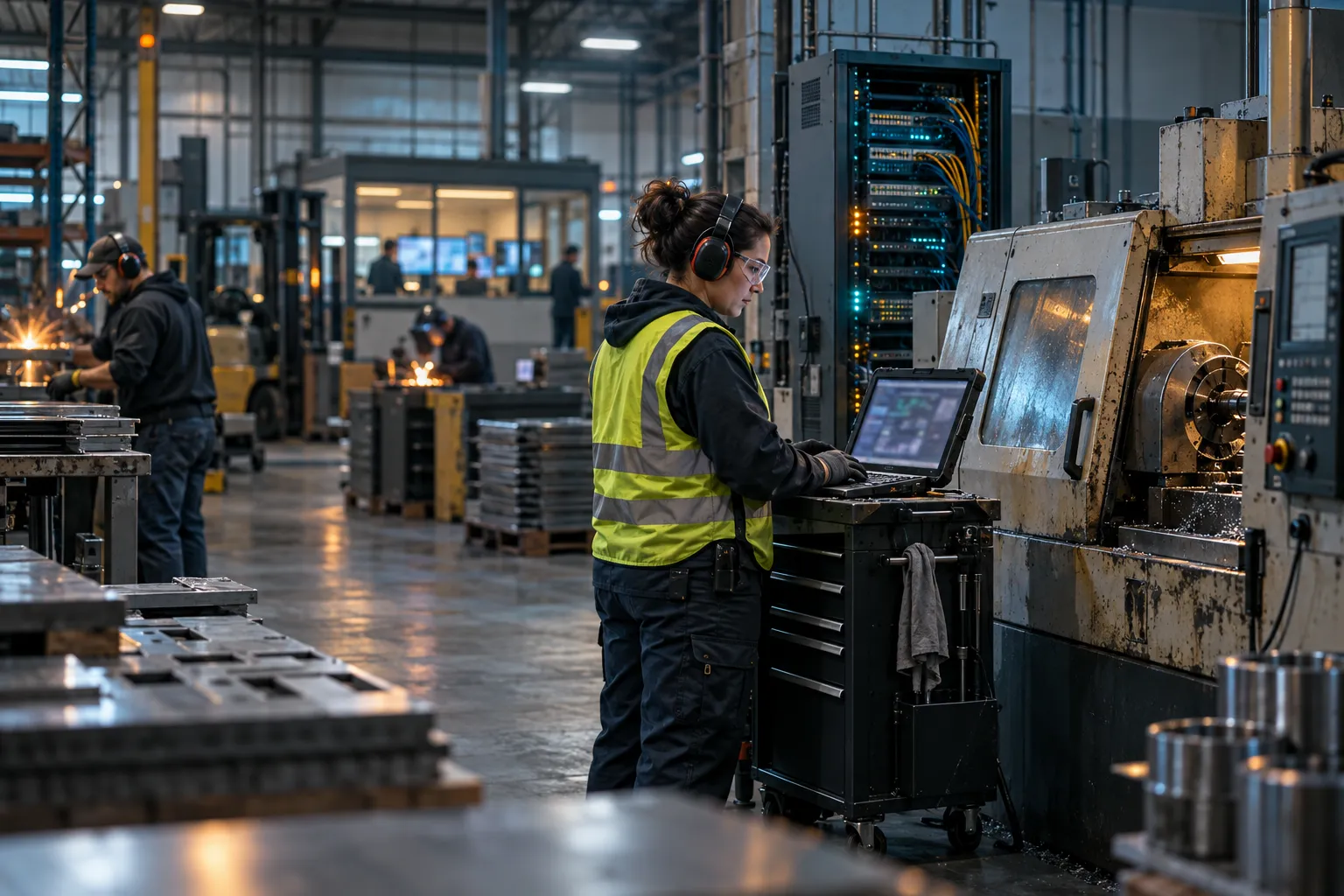
For a shop with aging machines, managed service coverage must reach beyond user support and office computers. Ask how the provider monitors plant networks, handles controller restrictions, and coordinates with machine vendors before changes. Andromeda Managed IT & OT Services is an option when you need support that accounts for both business systems and production equipment.
Core Coverage: Monitoring, Patching, and Support That Respects Change Windows
Monitoring should identify outages and developing faults across servers, network devices, and approved endpoints. Patching plans need to distinguish systems that can receive routine updates from equipment requiring vendor review or a maintenance window. Support also needs a clear escalation path for production-impacting problems, along with incident notes recording what failed, what changed, and whether the issue returned.
Securing Machines You Cannot Patch: Segmentation, Allowlisting, and EDR
When a controller cannot be patched, the provider can reduce its exposure by separating it from less trusted devices. Network segmentation creates boundaries that limit which systems can reach the machine. Allowlisting restricts which applications may run, while endpoint detection and response (EDR) monitors supported endpoints for suspicious activity. These controls require equipment mapping and testing; they should not interfere with machine functions or vendor support.
ERP and MES Integration: Ending Manual Rekeying Between Office and Floor
Manufacturing execution systems (MES) help manage and record production activity. When MES and ERP workflows are disconnected, employees may reenter job details, production counts, or status updates by hand. A provider should map the data flow, find manual entry or duplicate records, and coordinate integration work with software vendors and internal process owners. Test changes against actual work orders before they affect live production.
Compliance Readiness: CMMC, NIST SP 800-171, ITAR, and Cyber Insurance Questionnaires
Defense-related contracts can bring requirements for protecting controlled information. Cybersecurity Maturity Model Certification (CMMC) and National Institute of Standards and Technology Special Publication 800-171 (NIST SP 800-171) address security practices for relevant federal contract information. International Traffic in Arms Regulations (ITAR) can also affect how controlled technical data is handled. Your provider should help document systems, access, safeguards, and gaps, while your organization confirms which requirements apply.
Use this coverage checklist when reviewing a proposed service scope:
- Inventory of machines, controllers, servers, and network dependencies.
- Documented patching rules and approved maintenance windows.
- Segmentation and access controls for equipment that cannot be patched.
- Root-cause tracking for recurring incidents, not ticket closure alone.
- Coordination for ERP, MES, vendor support, and compliance documentation.
The operating principle is straightforward: protect what can be protected now, document what cannot change yet, and schedule work around production realities.
Provider Types Compared: Manufacturing Specialist vs Generalist MSP vs Break-Fix
A provider’s label matters less than how its operating model handles production dependencies. For a fabricator, support needs to account for machine controllers, planned change windows, and links between business systems and shop-floor equipment. The Andromeda Managed IT & OT Services model is designed for manufacturing environments where IT changes need coordination with production.
Five Provider Types and What Each Means for Your Production Floor
Use this comparison to identify how each operating model may fit your shop. Confirm who owns incident response, documentation, and coordination with machine vendors in the service agreement.
| Provider type | Typical operating approach | Production-floor consideration |
|---|---|---|
| Manufacturing-specialized managed provider | Manages business IT and understands OT constraints, equipment dependencies, and production scheduling. | Can plan changes around machine requirements and shift schedules. |
| Generalist managed provider | Provides ongoing IT monitoring and support, often centered on office systems. | Ask how technicians handle unsupported controllers and production-impacting incidents. |
| Break-fix provider | Responds when a reported fault requires repair. | Recurring faults may persist if root causes and trends are not tracked. |
| Internal IT team | Supports systems directly, with knowledge of company workflows and users. | Capacity may be limited when OT, security, and daily support compete for time. |
| Co-managed arrangement | An outside provider supplements an existing internal team. | Define escalation, access, and decision ownership so work does not fall between teams. |
The Metrics That Separate a Sequencer from a Help Desk
Ask for operational measures and definitions, not a general promise of fast service. Andromeda publishes a 1 minute 34 second average time to live tech phone pickup, a 12.0-minute median ticket response time, and resolution of 97% of issues within 8 business hours. Treat these as reference points, then ask how the provider measures production-impacting incidents, OT experience, ERP and MES support, escalation, and repeat tickets.
Named Proof: What Measured Outcomes Look Like (Case Study Pattern)
Andromeda’s documented case study describes a Chicagoland multi-site manufacturer that saw roughly a 50% decrease in IT issues. For typical clients, Andromeda reports a normalization period of about three months, followed by a steady decline in service desk tickets within the first 3 to 9 months. The timeline depends on the starting environment and work required to address recurring faults.
How to Modernize Outdated OT Without Stopping Production
Modernizing a shop does not start with replacing every aging controller. It starts by documenting dependencies and identifying changes that can be made safely while production continues. A sequenced plan helps your team address immediate exposure, then schedule larger work around machine availability, vendor requirements, and order commitments.
The Five-Step Sequence: Assess, Stabilize, Secure, Report, Modernize
Use a staged process so each change has an owner, a production impact review, and a recovery plan. Andromeda’s five-step operating model provides a practical sequence:
- Assess and Align: Inventory equipment, network connections, business systems, risks, and current provider responsibilities.
- Take Command: Stabilize daily support and document recurring faults before changing machine configurations.
- Secure and Comply: Limit access to legacy controllers and address applicable security and compliance requirements.
- Report and Guide: Review incidents, risks, and planned work with operational leaders.
- Lead and Modernize: Prioritize replacements, integrations, and workflow improvements according to production need.
Mapping Projects to Change Windows and Maintenance Schedules
Build the work calendar with production, maintenance, and machine vendors. Record system dependencies, testing time, and steps for returning to the prior configuration if a change fails. Network segmentation or access-control changes may be possible before a controller replacement, but they still require testing against machine communications. Schedule disruptive work during approved maintenance windows, planned shutdowns, or other periods when affected equipment is available.
A 90-Day and 12-Month Roadmap for a Typical Fabricator
Use the first months to establish a reliable picture of the environment, then use that evidence to set longer-term priorities. These intervals are planning examples, not a fixed schedule. Machine age, vendor support, staffing, and production commitments shape the actual sequence.
- First 90 days: Complete the inventory, confirm incident and escalation ownership, document controller dependencies, and identify near-term risks that can be addressed without changing machine software.
- Through 12 months: Schedule approved network and recovery improvements, test backup and restoration procedures, plan vendor-supported equipment upgrades, and prioritize ERP or MES workflow work with the people who use it.
Best managed IT services for metal fabrication companies needing help with outdated operational technology make the roadmap accountable to production, not just an IT project calendar.
Your Evaluation Checklist: Questions to Ask and Answers to Demand Before You Sign
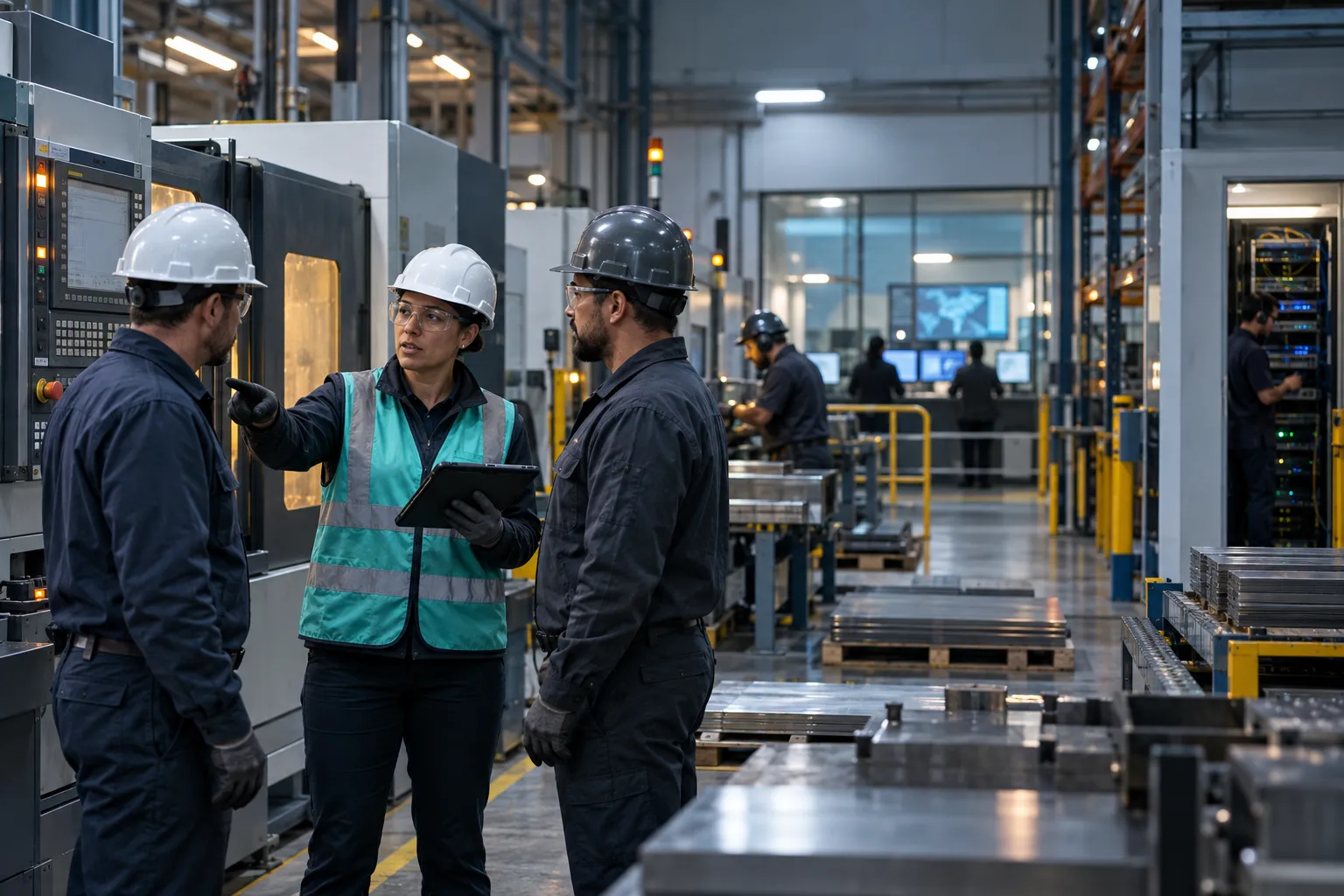
Before signing, ask how the provider will work during a production-impacting incident, not just how it handles routine office tickets. The best managed IT services for metal fabrication companies needing help with outdated operational technology make responsibility, escalation, and change approval clear in writing. Andromeda Managed IT & OT Services is designed for manufacturers that need IT and OT support coordinated with production.
Twelve Questions That Expose a Generalist in the First Meeting
Ask for specific examples and who owns each action. Record the answers so you can compare the proposed scope with your shop’s needs.
- How do you document CNC, laser, and press brake controllers?
- How do you protect controllers that cannot be patched?
- Who approves changes that could affect a live machine?
- How do you coordinate work with equipment vendors?
- What happens when an incident stops production?
- How are urgent incidents escalated outside normal support workflows?
- How do you identify and track recurring root causes?
- What details appear in incident records and leadership reports?
- How do you support ERP and MES data flows?
- How do you document network access to production equipment?
- What experience do you have with applicable compliance requirements?
- How will you coordinate with our internal IT staff and production leads?
A credible response names the process, owner, and documentation you will receive. General assurances are not a substitute for a written escalation path and agreed change controls.
Service Metrics to Put in the Contract
Define measurement periods, business hours, severity levels, and whether response means acknowledgment or active troubleshooting. Andromeda publishes a 12.0-minute median ticket response time and reports resolving 97% of issues within 8 business hours. It also publishes a 1 minute 34 second average time to live tech phone pickup. Use these as reference points for precise contract language, not as automatic promises from another provider.
Include separate reporting for production-impacting incidents, repeat tickets, escalation time, and overdue root-cause actions. Evaluate Andromeda Managed IT & OT Services against those operational measures, with service responsibilities documented before work begins.
Legacy Equipment and Provider Selection: Direct Answers
Can a provider support CNC, laser, or press brake controllers running unsupported software? Yes, when the service plan accounts for vendor restrictions, network access, backups, and recovery procedures. Support should not mean applying unapproved patches to a live machine.
Can we switch providers before our current contract ends? Review notice periods, access rights, documentation ownership, and transition duties before making a change. A planned handoff should preserve administrative access and avoid disrupting production.
What if we already have internal IT? Co-managed support can assign defined responsibilities to each team. Clarify who handles OT escalation, security decisions, and vendor coordination.
The best managed IT services for metal fabrication companies needing help with outdated operational technology should leave your team with accountable support, measurable service expectations, and a production-aware plan. To assess your current IT Drag™, use Andromeda’s IT Drag™ Calculator, or schedule a 30-minute discovery call to discuss your environment.
Frequently Asked Questions
What managed IT services does a metal fabrication company with legacy equipment actually need?
A metal fabricator running legacy equipment needs managed IT services that cover plant network monitoring, patching plans that respect machine-vendor restrictions, network segmentation, and support with clear escalation for production-impacting issues. Office support alone is not enough. The scope should include operational technology (OT), the systems that monitor or control production equipment.
How do we tell a manufacturing-specialized MSP from a generalist MSP?
A manufacturing-specialized MSP asks about your machines, their vendors, and your production windows before recommending changes. A generalist treats a CNC controller like an office workstation. Ask how the provider documents legacy equipment, limits network access to machines that cannot be patched, and sequences changes around your shift schedule.
How does an MSP support CNC, laser, and press brake controllers that run unsupported software?
For machines running unsupported software, a capable MSP focuses on reducing exposure instead of forcing patches. That means network segmentation to limit what can reach the controller, allowlisting to restrict what runs on it, and endpoint detection and response (EDR) on supported systems. The controller stays as it is; what changes is what can reach it.
In what order should we modernize outdated operational technology so production never stops?
Start with a documented inventory of what runs your floor, what depends on it, and what can safely change. Then stabilize monitoring and backups, segment legacy machines from less trusted devices, and coordinate any controller changes with the machine vendor during a planned production window. Replacement comes last, and only with a documented recovery plan in place.
What should we ask a managed IT provider before signing a contract?
Ask how the provider handles systems that cannot be patched, whether they coordinate with machine vendors before changes, and what their escalation path looks like when production stops. Ask for response and resolution metrics, not promises. Andromeda, for example, publishes a 12.0 minute median ticket response time and resolves 97% of issues within 8 business hours.
Can we pass CMMC or cyber insurance requirements without replacing our old machines?
Yes. Cybersecurity Maturity Model Certification (CMMC) and NIST SP 800-171 requirements focus on protecting controlled information, not on replacing equipment. A provider can segment unpatchable machines, restrict their network access, and document compensating controls so aging equipment does not block compliance readiness or a cyber insurance questionnaire.
How do we stop manual rekeying between our ERP and the shop floor?
Manual rekeying between enterprise resource planning (ERP) software and production systems stops when the data flow is mapped and integration work is coordinated with your software vendors. A capable provider identifies where job details, counts, and status updates are entered twice, then connects the manufacturing execution system (MES) and ERP. Changes should be tested against real work orders before they touch live production.