
it ot convergence
When a production network fails, a PLC may stop receiving commands, a SCADA screen may show stale data, operators may switch to paper, and a shipment may miss departure. IT/OT convergence connects business systems and plant equipment without treating a production line like an office network.
Key Takeaways
- IT/OT convergence links business systems to plant equipment while keeping the production floor separate from office network rules.
- A network failure on the plant floor can stop PLC commands, freeze SCADA screens, and force operators back to paper, so convergence must protect real-time operations.
- Treating factory devices like office computers invites downtime, so convergence demands careful boundaries between enterprise planning and machine control.
- Reliable convergence depends on secure bridges that let data flow from sensors to ERP without risking the stability of live production lines.
A safe approach is phased: identify assets, understand machine communications, and plan around changes that could interrupt a shift. Segmentation, controlled remote access, and plant-aware monitoring improve visibility while protecting uptime. Manufacturers evaluating this approach can review managed IT services for manufacturing designed around plant requirements.
Understanding the IT/OT Divide: Why Your Plant Needs a New Approach
What is Operational Technology (OT) and Why It's Different from IT
Information technology manages data, users, applications, and business workflows. Operational technology controls or monitors physical processes. Allen-Bradley and Siemens PLCs, Fanuc controllers, SCADA nodes, sensors, industrial switches, and human-machine interfaces belong to the OT environment. They keep equipment running predictably, often across long service lives.
An office laptop can usually receive a security update and restart overnight. A controller connected to a machining center may not. A reboot during production can interrupt motion control, clear a process state, or leave an operator without reliable status information. OT decisions must account for machine safety, cycle timing, validation, spare parts, and available maintenance windows.
The Core Conflict: Availability vs. Confidentiality, Integrity, and Safety
Traditional IT security often places confidentiality first, followed by integrity and availability. On the plant floor, availability and safety usually lead. A manufacturer may tolerate a delayed email, but not a stopped furnace, disabled robot, or batch process without a verified state. Integrity matters because incorrect values can produce scrap or unsafe conditions. Confidentiality matters for recipes, engineering files, and customer data, but it cannot be protected by disrupting a running line without a controlled plan.
| Area | IT environment | OT environment |
|---|---|---|
| Primary outcome | Reliable access to information and applications | Safe, repeatable physical production |
| Change tolerance | Frequent updates and planned restarts | Tested changes during approved maintenance windows |
| Typical assets | Servers, laptops, identity systems, and cloud services | PLCs, drives, robots, HMIs, sensors, and SCADA systems |
| Primary risk | Data loss, account compromise, or service interruption | Unsafe conditions, equipment damage, scrap, or lost production |
Why Generic IT Solutions Fail on the Production Floor
Corporate controls can cause problems when applied without a process review. An automated vulnerability scanner may send unexpected traffic to an older PLC. A patch tool may reboot a Windows XP or Windows 7 station supporting a machine. An IT-driven switch change may break communications between a controller and its HMI. More than 75% of industrial organizations report operational disruptions from uncoordinated patches or IT-driven network changes on plant equipment, according to research cited in the research brief.
Scanning, patching, and access control remain useful; timing, testing, and ownership determine whether they are safe. A plant engineer understands the machine sequence, while an IT administrator may understand the vulnerability record. Both perspectives are needed before a change reaches production.
The Hidden Costs of Ignoring IT/OT Differences: IT Drag™ in Action
IT Drag™ appears when technology friction slows production without one obvious failure. Teams lose time identifying undocumented assets, tracing intermittent faults, waiting for equipment vendors, or reconciling data after a disconnected system returns. Troubleshooting becomes tribal knowledge rather than a repeatable process.
The result can include idle labor, overtime, missed deliveries, and manual records. Aberdeen Research reports that unplanned downtime averages $260,000 per hour across heavy industrial sectors. The figure varies by facility, but the lesson is consistent: a low-cost shortcut can carry a much larger production consequence.
Bridging the Gap: A Pragmatic Framework for IT/OT Convergence in Mid-Size Manufacturing
The Reality Check: Why Enterprise IT/OT Playbooks Don't Fit Mid-Size Plants
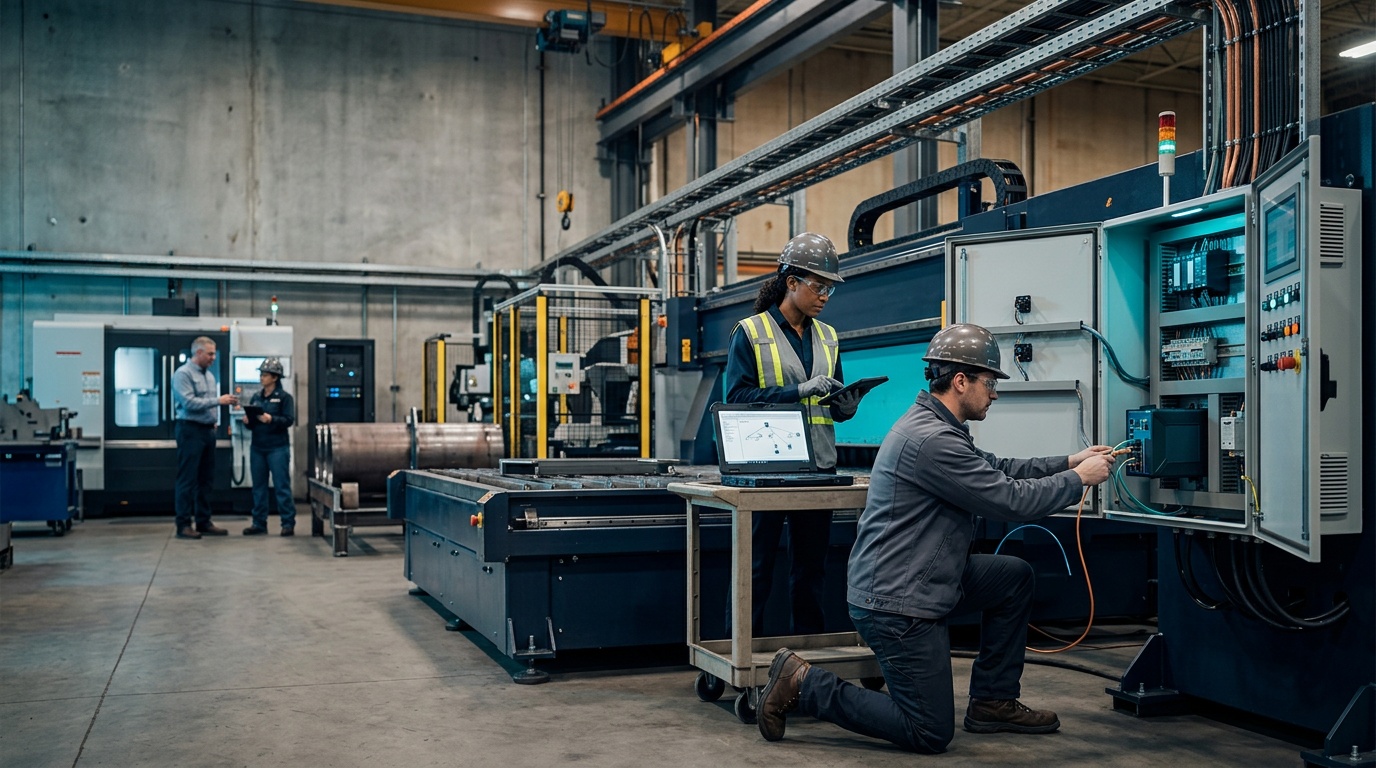
Mid-size manufacturers rarely have a separate security operations center, dedicated OT architect, and spare equipment for every validation test. A plant may contain Ethernet controls beside serial devices, unsupported operating systems, vendor-owned modems, and machines that cannot stop during normal business hours. An enterprise template may demand more staffing, documentation, and downtime than the facility can provide.
A practical program prioritizes production risk. Use ISA/IEC 62443 and NIST SP 800-82, adapted to staffing, maintenance windows, safety procedures, and equipment contracts. The best plan is the one the plant can operate after the project team leaves.
Step 1: Assess and Align, Understanding Your Current Plant Network
Begin with an asset and communication inventory, not a firewall purchase. Record controllers, HMIs, engineering workstations, SCADA servers, wireless bridges, remote access paths, cellular gateways, and vendor connections. Document each asset’s machine, operating system, firmware, protocol, owner, backup status, and maintenance constraints. Passive discovery is generally safer than active scanning for legacy equipment.
Include operations, maintenance, engineering, IT, and safety. Identify systems that can stop, those requiring controlled shutdowns, and those without tested recovery methods. Rank assets by production impact and exposure to create a usable risk register.
Step 2: Network Segmentation, Creating Safe Zones for Legacy and Modern Assets
Segmentation limits how far a compromise can travel. A common design separates the enterprise network, industrial demilitarized zone, supervisory systems, cell or area zones, and machine networks. Firewalls control approved traffic between zones. Rules should specify source, destination, protocol, port, business purpose, and owner.
Legacy equipment can be isolated without immediate replacement. Place an older workstation or PLC network in a restricted zone, remove unnecessary internet access, limit administrative paths, and monitor communications from a safer location. Preserve required machine traffic while preventing a compromised office credential from reaching every controller.
Step 3: Implementing Secure Connectivity, Beyond the Air Gap Myth
An air gap can be bridged by portable drives, engineering laptops, vendor visits, and wireless connections. A managed connection is easier to govern than an undocumented one. Use a managed jump host, named accounts, multifactor authentication where equipment supports it, time-limited approval, session logging, and defined vendor-access procedures.
Do not permit an unmonitored cellular modem or unrestricted remote desktop path. Put remote access behind a reviewed gateway, restrict it to the required asset, and disable it when approved work ends. Data sent to an ERP or analytics platform should use defined interfaces rather than broad control-network access.
Step 4: Managed Monitoring and Response, Proactive Protection for Uptime
Collect firewall events, authentication activity, remote sessions, configuration changes, and unusual communications. Where active tools could affect a controller, use passive monitoring or a tested agent approach. Alerts need plant context: a new connection to a robot controller during maintenance differs from the same event during a live run.
Define response actions before an alert arrives. The operations manager owns safe production decisions; the IT director typically owns enterprise controls and security coordination. A written escalation path should identify who can isolate a device, contact the machine builder, authorize a shutdown, and maintain production during investigation.
Securing Your Shop Floor Without Sacrificing Production Uptime
Security work on a production floor must keep people safe, preserve machine state, protect product quality, and maintain the schedule while reducing the chance that a compromised system reaches a controller. IT/OT convergence supports that outcome when controls are introduced around production requirements. A dedicated managed cybersecurity service for manufacturers can help formalize these controls.
Cybersecurity Priorities: Availability and Safety First for OT
A security event involving a PLC, SCADA node, Fanuc controller, or HMI can create physical consequences. An operator may lose trustworthy readings, a robot may stop between cycles, or a process may continue with stale instructions. Availability and safety come first, followed by integrity and confidentiality. That order establishes the response sequence when a security action could interrupt production.
Nearly 90% of industrial cyber incidents affecting OT systems originate indirectly through compromised enterprise IT environments, according to the Waterfall Security OT Threat Report. Protect office identities, email, servers, and endpoints while restricting their paths to plant assets. IT and operations should jointly approve isolation, shutdown, and recovery decisions.
Layered Security for Industrial Networks: From Endpoints to the Cloud
A practical architecture uses identity management, segmentation, firewalls, endpoint controls, backups, and restricted cloud or ERP connections. Backups should preserve PLC logic, HMI projects, recipes, and configuration files. Firewalls should permit documented protocols rather than broad access.
Monitor unusual authentication, remote sessions, configuration changes, unexpected protocols, and traffic between zones. Use passive discovery where active scans could affect older devices. Define who can disconnect equipment during a live run and who confirms that production is safe.
Addressing Legacy Machine Vulnerabilities: Patching Constraints and Workarounds
Unsupported Windows XP or Windows 7 stations may run software that a machine builder no longer supports. Patching can break drivers, remove an approved application, or require an unavailable restart. Isolate the station, remove unnecessary services, restrict USB use, limit outbound connections, create a tested backup, and place administrative access behind a controlled jump host.
Schedule patches during documented maintenance windows and validate them on a representative asset. Record rollback steps and confirm vendor support. When patching is impossible, document compensating controls, the business owner, review date, and recovery plan.
Zero Trust Principles in an OT Context: What It Really Means for Your Plant
Zero trust in OT means verifying users, devices, sessions, and requested actions before access is granted. A vendor should receive a named account, limited scope, approved time window, and recorded session. An engineering workstation should reach only required assets. A cellular modem or remote desktop tool should never create an undocumented path.
Apply ISA/IEC 62443 and NIST SP 800-82 according to machine behavior, safety procedures, and available staff. Test access rules before enforcement, especially where legacy protocols lack encryption or strong authentication. The operations manager owns safe production decisions; IT leads identity, network, and security controls.
The Role of OT-Aware Security Solutions, Like EDR for OT
Traditional endpoint detection tools can help on supported servers and workstations, but may not fit PLCs, embedded controllers, or fragile engineering software. OT-aware solutions emphasize passive asset identification, industrial protocols, baseline behavior, and alerts that recognize normal machine communication. They should show which device is involved, what changed, and what process may be affected.
Security tradeoffs for plant leadership
Pros
- Segmentation limits movement from a compromised office system to control equipment.
- Passive monitoring improves visibility without disruptive scan traffic.
- Controlled vendor access supports maintenance with an audit trail.
- Tested backups shorten recovery after equipment failure or malicious change.
Cons
- Asset owners must document machines, protocols, dependencies, and maintenance windows.
- Legacy controls may require compensating measures instead of immediate patching.
- Security alerts require plant context before equipment is isolated.
- Initial controls can expose undocumented access paths requiring engineering work.
Operationalizing IT/OT Convergence: Achieving Visibility and Eliminating IT Drag™
IT/OT convergence earns its place when it turns machine data into decisions that protect throughput. A production manager should see whether a delay comes from a PLC communication fault, SCADA server, network switch, or upstream order issue. That visibility connects Allen-Bradley and Siemens controls, Fanuc robots, historians, and ERP workflows without unrestricted system access.
Gaining Real-Time Visibility: Connecting Shop Floor Data to Business Insights
Start with an operational question, such as schedule adherence, recurring stoppages, scrap, or material delays. Collect the smallest useful set of signals: run state, fault code, cycle count, downtime reason, and production order. A controlled gateway or industrial data platform can send information to manufacturing execution systems, analytics tools, or the ERP while keeping control commands inside approved zones.
Preserve context. A stopped machine may be awaiting a fixture, quality release, operator, or material. Combining machine state with work orders and maintenance records distinguishes equipment availability from schedule performance.
How Convergence Reduces Recurring Issues and Boosts Operational Maturity
Support teams resolve recurring incidents more effectively when they can see dependencies instead of relying on operator memory. A communication map may show that several HMIs depend on one industrial switch or that a vendor laptop reaches multiple cells through an old remote path. This evidence supports root-cause work, targeted replacement, and planned maintenance.
Maturity develops in stages: identify assets and ownership, record normal behavior and approved changes, then correlate machine events with production loss and maintenance activity. Each stage should reduce uncertainty without forcing an unplanned reboot.
The Andromeda Approach: Root Cause Resolution, Not Just Ticket Churn
Andromeda treats a closed ticket as a checkpoint, not proof that a problem is solved. If an HMI loses connection every Monday, replacing its cable may restore service while leaving scheduling, switch configuration, or backup failures untouched. Document the symptom, affected asset, timeline, recent changes, corrective action, and verification method.
Operations explains the production effect, IT traces identity and network dependencies, and engineering confirms machine behavior. The shared record reduces repeated escalations and supports a clear decision to repair, isolate, replace, or monitor an asset.
Measuring Success: Key Metrics for IT/OT Performance and IT Drag™ Reduction
Measure outcomes that matter during a shift. Track whether visibility improves decisions and recurring faults consume less labor. Aberdeen Research places average unplanned downtime across heavy industrial sectors at $260,000 per hour, making even a small reduction in avoidable interruption worth measuring.
| Metric | What it reveals | Useful operating question |
|---|---|---|
| Mean time to detect | How quickly teams identify an abnormal condition | Did monitoring reveal the issue before production reported it? |
| Mean time to respond | How quickly the right owner takes controlled action | Was the machine state confirmed before isolation or repair? |
| Recurring ticket rate | Whether fixes address causes rather than symptoms | Did the same asset generate another incident? |
| OEE preservation | Whether technology changes protect availability and quality | Did the change preserve planned production performance? |
The Next Frontier: Modernizing Without Disrupting Your Production Schedule
Modernization should follow production windows, not software release calendars. Begin with read-only data collection, validate dependencies, and test changes against a representative machine or offline backup. Replace obsolete paths in small steps with rollback instructions and named owners. The best it ot convergence program creates better information without uncontrolled change, supporting predictive maintenance, safer remote service, cleaner audit evidence, and modernization that fits the schedule.
Frequently Asked Questions
What is IT/OT convergence?
IT/OT convergence is the practice of connecting business IT systems with plant operational technology such as PLCs, SCADA nodes, sensors, and HMIs so data flows between the office and the production floor. A safe approach is phased: identify assets, understand machine communications, and plan changes around maintenance windows instead of treating a production line like an office network.
How do you secure operational technology?
Securing operational technology starts with an asset and communication inventory, followed by network segmentation, controlled remote access, and plant-aware monitoring. Standard IT tools like scanning and patching still apply, but timing, testing, and input from plant engineers determine whether a change is safe for running equipment.
What are OT cybersecurity risks?
OT cybersecurity risks include unsafe conditions, equipment damage, scrap, and lost production when controls fail or get disrupted. Common triggers are uncoordinated patches, vulnerability scanners sending unexpected traffic to legacy PLCs, and network changes that break controller-to-HMI communications. Aberdeen Research reports unplanned downtime averaging $260,000 per hour across heavy industrial sectors.
How does SCADA security work?
SCADA security protects supervisory control and data acquisition systems by placing them inside segmented network zones with controlled remote access and monitoring tuned to industrial protocols. Passive discovery is generally safer than active scanning for legacy SCADA equipment, and any change must be tested during an approved maintenance window to avoid stale data or interrupted production.
Why can't you patch a PLC like an office laptop?
A PLC cannot be patched like an office laptop because it controls a live physical process, and a reboot during production can interrupt motion control, clear a process state, or leave an operator without reliable status data. OT updates must wait for tested maintenance windows and account for machine safety, cycle timing, and validation.
Why do generic IT solutions fail on the production floor?
Generic IT solutions fail on the plant floor when applied without a process review. Automated scanners can send unexpected traffic to older PLCs, patch tools can reboot unsupported Windows stations supporting machines, and IT-driven switch changes can break controller communications. More than 75% of industrial organizations report operational disruptions from such uncoordinated changes.
What is IT Drag in manufacturing?
IT Drag is the production friction that builds when technology problems slow operations without one obvious failure. Teams lose time documenting unknown assets, tracing intermittent faults, waiting on equipment vendors, or reconciling data after a disconnected system returns. The cost shows up as idle labor, overtime, missed deliveries, and manual records.