
managed it services louisville
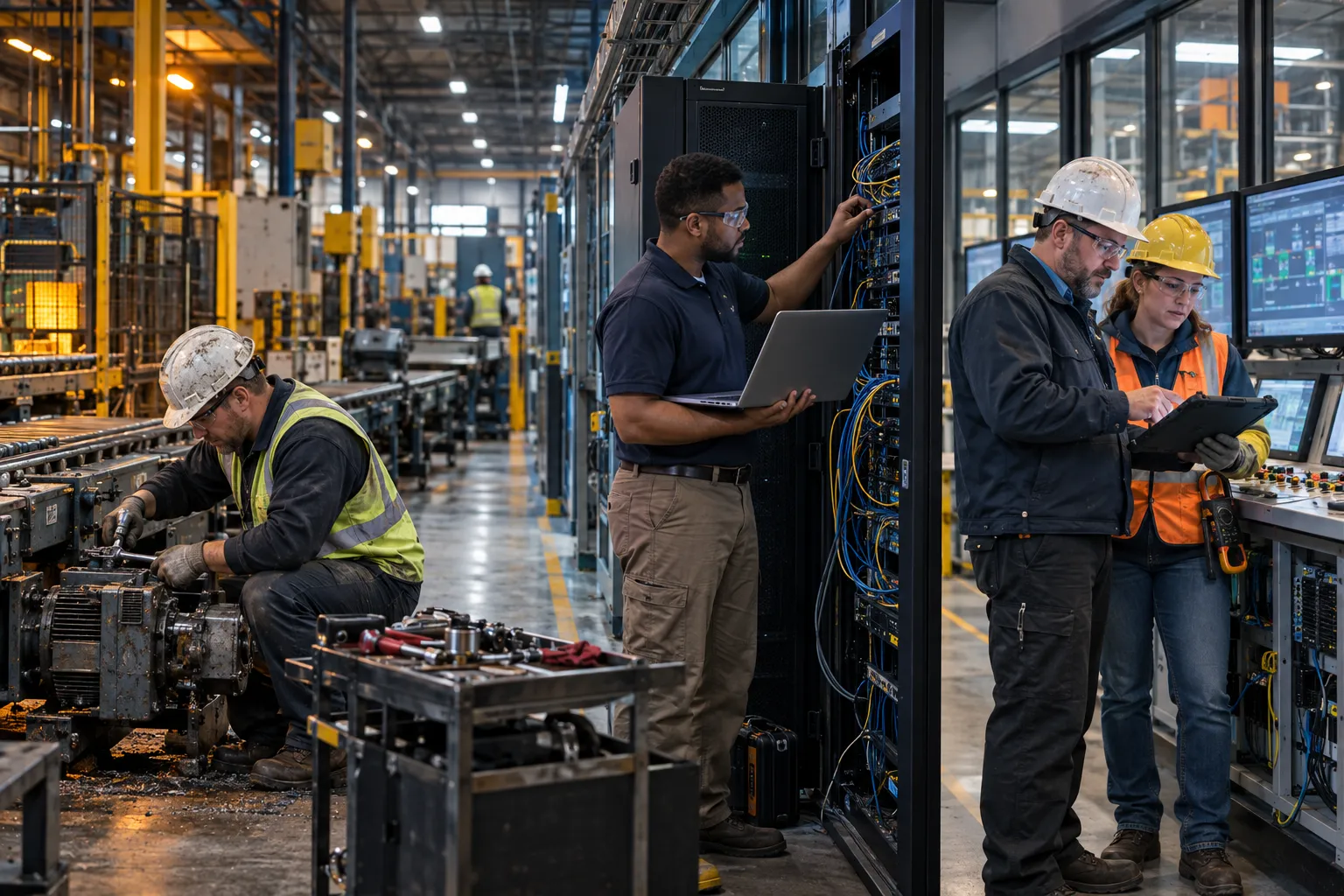
When production systems slow down, the cost shows up in idle labor, missed schedule windows, and pressure on shipping commitments. For Louisville manufacturers, Andromeda Managed IT & OT Services connects day-to-day IT support with the production systems that depend on it. The right managed it services louisville approach keeps business and plant operations available, not just help desk tickets moving.
Key Takeaways
- Downtime in a manufacturing plant creates costs that go far beyond IT, including idle labor, missed schedules, and strained shipping commitments.
- Effective managed IT services for Louisville manufacturers connect everyday support with the production systems that rely on it.
- The goal of a strong managed services partnership is keeping both business and plant operations available, not simply closing help desk tickets.
- Andromeda links IT and OT support so manufacturers can reduce downtime and lighten the operational drag that slows production.
That distinction matters when a network issue reaches a production line or a security incident affects systems used to schedule and fulfill orders. Before choosing support, understand what managed services include, where IT and operational technology differ, and how to recognize support that fits a plant environment.
Why Louisville Manufacturers Need More Than a Generalist IT Provider
What Managed IT Services Actually Cover: Help Desk, Monitoring, Cybersecurity, and Cloud
Managed IT services provide ongoing support for the systems employees use to run the business. This commonly includes a help desk for user problems, monitoring for servers and networks, cybersecurity controls, and cloud service administration. The provider tracks issues and system health instead of waiting for each failure to be reported. For a manufacturer, the practical test is whether that work protects order entry, engineering access, inventory records, and communication between the office and plant.
How Manufacturing IT Differs: IT vs. OT on the Production Floor
Business IT supports tools such as email, file storage, and ERP access. Operational technology, or OT, includes networks and systems that monitor or control production equipment. A change that is routine on an office computer can carry different risks when it touches a machine connection or production network. Providers of managed it services louisville for manufacturing need to understand those dependencies, coordinate changes with operations, and avoid treating production equipment like another office workstation.
The Hidden Cost We Call IT Drag™
IT Drag™ is the cumulative operational burden of recurring technology problems: workarounds, waiting for support, repeated interruptions, and time spent correcting preventable issues. One slow login may seem minor. Across shifts, interruptions can delay transactions, distract supervisors, and make reliable production planning harder.
Louisville's Manufacturing Economy Deserves Specialized Support
Louisville-area manufacturers depend on connected systems for scheduling, purchasing, quality records, shipping, and production coordination. A provider needs to learn how those systems fit together at each facility, which changes require operations approval, and which failures need immediate escalation. When evaluating managed it services louisville, ask how the provider will communicate an incident’s production impact, who coordinates with plant staff, and how recurring problems are documented rather than simply closed.
Break-Fix vs. Generalist MSP vs. Manufacturing-Specialized MSP
Side-by-Side Comparison of the Three Support Models
Support models differ in when they act and how well they account for production dependencies. Break-fix support is typically engaged after a failure. A generalist managed provider may monitor and support business systems, though its manufacturing experience can vary. A manufacturing-specialized provider plans support around the relationship between office infrastructure and plant operations. The useful comparison is what happens when a problem threatens a shift or shipment, not the label on the contract.
| Support model | Typical approach | Plant-floor consideration |
|---|---|---|
| Break-fix | Responds after a reported failure | Preventive monitoring and familiarity with production dependencies may be limited |
| Generalist MSP | Provides ongoing IT support and monitoring | Confirm how the team handles OT boundaries, production-impacting changes, and escalation |
| Manufacturing-specialized MSP | Plans support with business systems and plant operations in view | Coordinates changes and response with operations and production requirements |
What a Specialized Provider Does Differently on the Plant Floor
Plant-floor support starts by establishing which systems are connected, who owns them, and what production depends on them. Before maintenance or security work, the provider should account for change windows, operational contacts, backup and recovery needs, and escalation steps. This helps prevent a routine IT change from becoming an avoidable interruption. Andromeda Managed IT & OT Services is designed for organizations that need support to account for office technology and operational systems together.
Case Study Highlight: How One Multi-Site Manufacturer Cut IT Issues by Roughly 50%
Andromeda reports that a Chicagoland multi-site manufacturer reduced IT issues by 50% after working with the company. This is a reference point, not a promise that every plant will see the same outcome. Site count, existing infrastructure, staffing, and issue tracking affect results. A Louisville operation evaluating a provider can ask how it defines an IT issue, what baseline it will use, and how it will report changes over time. Andromeda’s published figures also include a median ticket response time of 12.0 minutes and 97% of issues resolved within 8 business hours.
Pair these measures with operational questions: can support distinguish an office inconvenience from a line-impacting incident, communicate status, and address recurring causes? That evidence is more useful than a broad claim of fast, proactive support when evaluating managed it services louisville.
How to Choose a Managed IT Services Provider for Your Louisville Plant
A provider’s proposal should explain how support works when a technology problem affects production, not only how it handles routine employee requests. Ask for clear service definitions, escalation paths, change procedures, and reporting. The right managed it services louisville agreement should fit your plant’s operating hours, systems, and risk tolerance. Review the details with IT and operations so the service plan reflects how work moves from scheduling through shipping.
7 Questions to Ask Before You Sign: OT Experience, Response Times, and Escalation
Use these questions to check whether a provider can explain its process in terms your plant team can verify. Ask for written answers and examples of handling a production-impacting incident.
- What experience do you have supporting manufacturers with connected production systems?
- How do you distinguish an office IT issue from a problem that could affect operations?
- Which changes require approval from plant staff, and how are maintenance windows coordinated?
- What response targets apply to urgent, high-impact, and routine tickets?
- Who receives an escalation when an incident threatens production or shipping?
- How will you communicate status, ownership, and next steps during an active issue?
- What service reports will show recurring problems, response performance, and unresolved risks?
Ask the provider to walk through a realistic scenario, such as a network problem affecting shop-floor data collection. A useful answer identifies who is contacted, what gets investigated first, and how the provider avoids unapproved changes to production systems.
Pricing Models and What Managed IT Services Typically Cost
Managed service pricing often reflects the number of supported users, devices, locations, and included services. A monthly per-user or per-device fee can make budgeting easier, while a customized agreement may account for multiple facilities, specialized systems, or different support requirements. There is no reliable single price for every Louisville manufacturer: coverage scope and the condition of the existing environment affect the proposal.
Before comparing estimates, check whether the fee includes endpoint monitoring, help desk support, cybersecurity administration, backup oversight, after-hours response, and onsite visits. Ask how projects, hardware, software licensing, and remediation of existing issues are billed. A low monthly figure can leave significant work outside the agreement, so request a written scope, exclusions, and approval process for additional charges.
Compliance and Security Standards to Verify: CMMC, NIST, ISO, and Cyber Insurance
Security requirements depend on your contracts, data, customers, and insurance policy. If your operation handles controlled information for defense work, ask how the provider supports your CMMC obligations and divides responsibilities between your organization and its service team. For NIST or ISO alignment, ask which controls the provider can help implement, document, and maintain. Using a managed provider does not make your organization compliant.
Review cyber insurance requirements alongside your security plan. Confirm how access is managed, how incidents are reported, what backup and recovery evidence is available, and whether security controls cover office endpoints and relevant plant systems. Andromeda’s Andromeda Managed IT & OT Services is an option for manufacturers evaluating support for business technology and operational requirements. Request documentation of proposed controls and responsibilities before signing.
Local Support and Availability: What to Expect
“Local” support should mean a defined response process, not just a nearby office. Confirm coverage hours, how urgent calls are handled outside standard business hours, and when onsite support is available. Ask whether remote troubleshooting is the first step and how the team decides a technician needs to visit. For a plant with multiple shifts, verify that coverage matches the hours when production and shipping are active.
Establish who coordinates with your internal IT lead, maintenance staff, and operations managers. Evaluate Andromeda Managed IT & OT Services against documented escalation, clear communication, and support arrangements that account for plant schedules. Get named roles and response commitments in writing rather than relying on general assurances of availability.
Checklist of Must-Have Manufacturing MSP Capabilities
Use this checklist during proposal review. Mark an item complete only when the provider can explain its process and show how it will be documented for your organization.
- ☐ Experience supporting manufacturing operations and multi-site environments
- ☐ Clear understanding of IT and OT boundaries, access, and change approval
- ☐ Written response targets, escalation ownership, and incident communications
- ☐ Defined coverage for help desk, monitoring, endpoint security, and backups
- ☐ Security responsibilities mapped to applicable CMMC, NIST, ISO, and insurance needs
- ☐ Reporting on ticket trends, recurring causes, security events, and open risks
- ☐ Transparent pricing, exclusions, project rates, and approval steps for added work
- ☐ Support availability that fits plant shifts, maintenance windows, and site requirements
A provider that meets these criteria should show how its service plan will be managed after the contract begins. Resolve gaps in documentation or unclear ownership before approval, not during the next production interruption.
What Working With Andromeda Looks Like
A useful support relationship makes ownership clear before an incident and shows whether the work is reducing friction over time. Andromeda Managed IT & OT Services supports business systems and plant operations together. The working process should begin with understanding your sites, production dependencies, and current risks, then move through agreed priorities, ongoing support, and planned improvements. Your team should know who is responsible, how updates arrive, and how changes are coordinated with operations.
The Five-Step Operating Model, From Assessment to Modernization
The steps provide a practical sequence for managing the environment without treating modernization as a one-time project.
- Assess: Document systems, users, locations, production dependencies, and current support gaps.
- Prioritize: Agree on risks and service needs with IT, operations, and leadership.
- Stabilize: Address immediate reliability and security concerns using approved changes and maintenance windows.
- Operate: Provide ongoing support, monitoring, incident communication, and service reporting.
- Modernize: Plan improvements around business priorities, budget, and production schedules.
Published Performance Numbers and the Andromeda Guarantee
Andromeda reports an average live tech phone pickup time of 1 minute 34 seconds, a median ticket response time of 12.0 minutes, and resolution of 97% of issues within 8 business hours. Andromeda also reports a 91.4% customer satisfaction rating. These are published service measures, not a forecast for every facility. Confirm how each metric is defined, what period it covers, and how it will appear in your reporting. Before signing, review the written terms of the Andromeda guarantee, including its scope, eligibility, and any remedies.
Co-Managed IT for Plants With Internal IT Teams
An internal IT team may know the business well and still need added capacity for monitoring, security work, or after-hours coverage. Co-managed support should define responsibilities rather than create a second help desk with unclear ownership. Andromeda Managed IT & OT Services can be considered when internal staff need a partner for specific operating or security tasks. Agree on escalation routes, administrator access, documentation standards, and which team communicates with plant leadership during an incident.
Start With Your IT Drag™ Number

Repeated interruptions can hide in ticket queues, workarounds, and time spent waiting for answers. Measuring that burden gives leadership a starting point for deciding what to address first.
Run the Free IT Drag™ Calculator
Use Andromeda’s free IT Drag™ calculator to organize the operational effects of recurring technology problems. Consider interruptions to staff, delays in routine work, and time spent managing unresolved issues. Treat the result as a planning aid, not a guaranteed savings estimate. Share the findings with IT and operations to identify patterns worth investigating.
Schedule a 30-Minute Discovery Call
A discovery call can clarify your sites, support coverage, and immediate concerns without requiring a commitment to change providers. Bring a recent example of an IT issue that affected work, along with questions about service scope and communication. Andromeda can discuss whether its managed it services louisville approach fits your operating requirements and what further assessment would involve.
Frequently Asked Questions
What are managed IT services?
Managed IT services provide ongoing support for the systems employees use to run a business, typically including a help desk, monitoring for servers and networks, cybersecurity controls, and cloud service administration. The provider tracks issues and system health proactively instead of waiting for each failure to be reported.
What is included in managed IT services for manufacturers?
Managed IT services for manufacturers include help desk support, network and server monitoring, cybersecurity, and cloud administration, with added attention to production dependencies. The practical test is whether the work protects order entry, engineering access, inventory records, and communication between the office and plant.
How much do managed IT services cost?
Managed IT services pricing varies based on the size of the environment, number of sites, existing infrastructure, staffing, and the scope of support required. Manufacturers should ask a prospective provider how it defines an IT issue, what baseline it will measure, and how it will report changes over time to judge value.
How do managed IT services benefit manufacturing companies?
Managed IT services help manufacturers keep both business and plant operations available, reducing downtime that shows up as idle labor, missed schedule windows, and pressure on shipping commitments. A specialized provider coordinates changes with operations and escalates production-impacting incidents quickly, cutting recurring IT problems over time.
What is the difference between IT and OT in a manufacturing plant?
IT supports business tools such as email, file storage, and ERP access, while operational technology (OT) includes networks and systems that monitor or control production equipment. A routine change on an office computer can carry different risks when it touches a machine connection or production network.
What is IT Drag and how does it affect manufacturers?
IT Drag is the cumulative operational burden of recurring technology problems, including workarounds, waiting for support, repeated interruptions, and time spent correcting preventable issues. Across shifts, these interruptions can delay transactions, distract supervisors, and make reliable production planning harder.
Should a Louisville manufacturer choose a generalist MSP or a manufacturing-specialized provider?
A manufacturing-specialized provider plans support with both business systems and plant operations in view, while a generalist MSP may vary in its manufacturing experience. The useful comparison is what happens when a problem threatens a shift or shipment, including how the provider handles OT boundaries and escalation.